Demystifying the Program: The Foundation of Computing
In modern technology, few concepts are as ubiquitous yet misunderstood as the program. At its most fundamental level, a computer program is a structured collection of instructions formulated to perform a specific task when executed by a digital processor. While casual users often conflate programs with end-user applications, a program encompasses everything from low-level boot firmware and operating system kernels to distributed web services and computational simulations.
Without a program, computer hardware is essentially inert silicon and circuitry. The program supplies the logic, rules, and sequence necessary to transform raw electrical pulses into meaningful computations. Understanding how these instructions are designed, interpreted, and executed provides indispensable clarity into the architecture of modern digital systems.
From Human Thought to Machine Logic: Source Code and Compilation
Human beings do not intuitively communicate in binary voltage levels, nor can central processing units (CPUs) directly decipher human natural language. The bridge between human conceptual problem-solving and machine execution is established through programming languages.
The Layers of Translation
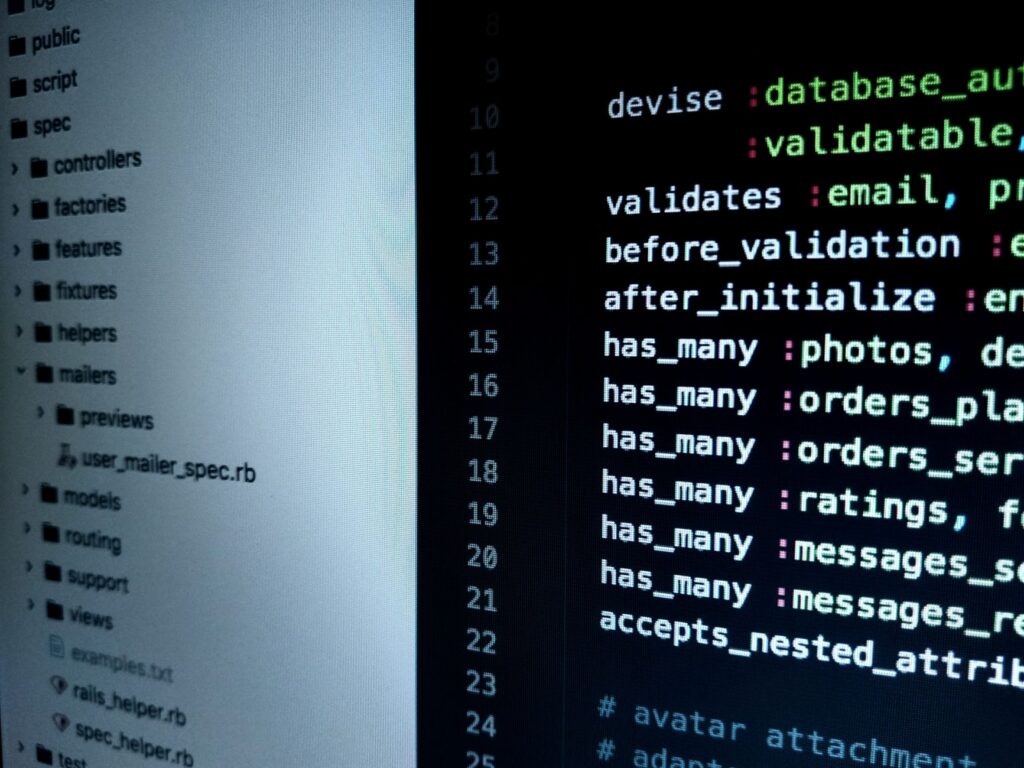
Software development begins with source code, written in high-level programming languages such as C, Rust, Python, or Go. These languages offer syntactic abstractions—such as variables, control loops, conditional branches, and functions—that mirror algorithmic reasoning. However, hardware executes only primitive machine code: streams of zeros and ones corresponding to architectural opcodes.
- Compilers: Specialized software tools that translate entire source code files into target machine architecture before runtime, generating standalone binary executables.
- Interpreters: Engines that read, parse, and execute instructions line-by-line or produce intermediate bytecode evaluated inside a virtual runtime environment.
- Assemblers: Low-level translation utilities converting human-readable assembly mnemonics directly into binary machine instructions.
The Lifecycle of Program Execution
Writing and compiling code is only the precursor to execution. The moment a program is invoked by an operating system, it undergoes a structured transition from a passive storage entity into an active process.
From Storage to Memory
When stored on disk or non-volatile memory, an executable program is a static binary file containing metadata headers, instruction segments, and initialized data tables. Upon invocation, the operating system’s loader inspects the file, allocates dedicated address space within random-access memory (RAM), and maps instruction segments into system memory.
The Processor Fetch-Decode-Execute Cycle
Once loaded, the central processing unit interacts with the active process through a continuous, lightning-fast loop known as the instruction cycle:
- Fetch: The program counter retrieves the address of the subsequent instruction from memory or CPU cache.
- Decode: The internal decoding unit analyzes the instruction opcode to determine which arithmetic logic units, registers, or memory pathways are required.
- Execute: The designated execution units carry out the instruction, altering register values, performing arithmetic operations, or branching to alternative execution paths.
- Writeback: The result of the operation is persisted back into internal registers or system memory for subsequent consumption.
A program remains purely static until the operating system grants it memory and scheduler time; only then does abstract code manifest as real-time computational work.

Structural Paradigms and Architectural Patterns
As the complexity of computational tasks expanded, developers developed structural methodologies to manage instruction organization, memory safety, and maintainability. A program is rarely a monolithic sequence of linear instructions; instead, it is organized around established programming paradigms:
- Procedural Programming: Organizes instructions into modular procedures or subroutines that manipulate state systematically.
- Object-Oriented Programming (OOP): Encapsulates data attributes and behavioral procedures into unified structures called objects, promoting modular reuse and domain modeling.
- Functional Programming: Treats computation as the evaluation of mathematical functions, minimizing shared mutable state and eliminating unwanted side effects.
- Concurrent and Asynchronous Models: Divides program execution into concurrent threads or coroutines, allowing modern multi-core processors to handle input/output operations simultaneously without blocking execution.
Quality, Maintenance, and the Software Lifecycle
Writing a working program is only a minor fraction of engineering. The long-term efficacy of any program hinges on deterministic reliability, error handling, and structured maintenance. Modern engineering teams subject programs to rigorous automated testing suites, static analysis, continuous integration pipelines, and profilers to locate computational bottlenecks and memory leaks.
As software systems scale, programs evolve through iterative refactoring and vulnerability mitigation. A resilient program is one designed not merely to function under optimal conditions, but to fail gracefully when confronted with erroneous inputs, hardware anomalies, or network disruptions.
The Enduring Significance of Program Design
From early mechanical looms and mainframe punch cards to the distributed microservices powering modern cloud infrastructure, the concept of the program remains the core organizing principle of automation. Understanding what a program is—and how its constituent instructions orchestrate physical hardware—demystifies the digital tools that define our contemporary world. As technology progresses toward edge computing and intelligent automation, the disciplined craft of structuring programmatic logic will continue to serve as the bedrock of innovation.