In the late nineteenth century, a report emerged of a ruined city deep in southern Africa’s Kalahari Desert. The account described stone structures where few outsiders expected to find them. No confirmed archaeological remains have since settled the claim, leaving a question that is both historical and methodological: was there ever a lost city to find?
The story is usually associated with the explorer and showman Guillermo Antonio Farini, the pen name of William Leonard Hunt. In 1885, Farini traveled through the region with his son, Lulu, and a local guide. After returning, he described what he had seen as ruins, including a long arrangement of stones. His account reached readers through lectures and publications, helping the supposed city acquire a life beyond the expedition itself.

A report shaped by the journey
Farini’s account belongs to an era when exploration narratives often blended observation with dramatic presentation. The Kalahari was unfamiliar to many European audiences, and a report of ancient masonry offered a compelling image: a forgotten settlement swallowed by a harsh, remote landscape. But a vivid description is not the same as a documented archaeological site.
Details of the expedition and the reported structures have been repeated in varying forms. The location was not recorded with the precision expected of modern field archaeology, and the surviving account does not provide the kind of systematic measurements, mapped context, or securely documented artifacts that could establish a city’s age and purpose. That gap makes it difficult to distinguish direct observation from interpretation or later embellishment.
What could the stones have been?
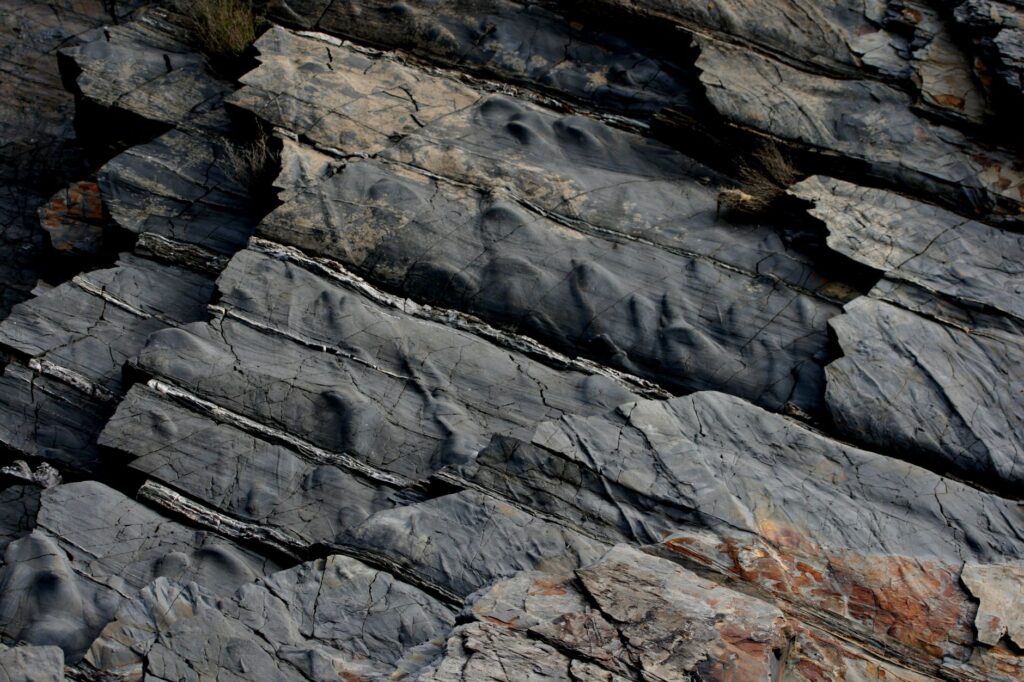
Several explanations have been considered over time. The stones may have formed a natural geological pattern that looked arranged to an observer crossing unfamiliar terrain. They could also have been remnants of human activity, such as walls or enclosures, without representing a large or ancient city. A third possibility is that the description grew more elaborate as it circulated, with separate details gradually combined into one dramatic account.
These possibilities are not equally provable from the available evidence. The key point is that stones resembling masonry do not, by themselves, demonstrate the presence of an urban settlement. Archaeologists look for context: construction methods, associated objects, traces of occupation, and a location that can be revisited and independently assessed.
The difficulty of searching the desert
The Kalahari is not a single, uniform expanse of sand. It includes varied landscapes, and travel across it can be demanding. A vague or imprecise location makes any later search harder: routes change, landmarks may be interpreted differently, and a traveler may see formations that seem significant without being able to identify them again.
Later expeditions and searches did not produce a generally accepted confirmation of Farini’s city. That absence does not prove that no human-made structure was ever observed. It does mean that the stronger claim—a substantial lost city with a verifiable history—remains unsupported by confirmed archaeological evidence. Careful accounts therefore treat the episode as a reported discovery, not an established ancient settlement.
Why the mystery endured
The tale persists because it sits at the boundary between exploration history and archaeological uncertainty. A lost city is an irresistible possibility, but the episode also shows how expectations influence what people notice. In a remote setting, unusual natural forms can acquire meaning through the observer’s assumptions, especially when the journey is later retold for an audience.
There is a further caution in the way absence is interpreted. The failure to confirm the site is not a license to declare every detail false; nor is the original report enough to prove the city existed. Historical inquiry often has to hold those positions together. The evidence may be incomplete, while the most dramatic conclusion remains unverified.

A useful lesson in historical mysteries
The Kalahari story is less a solved puzzle than a case study in how claims are tested. A persuasive account can launch a search, but a durable conclusion needs evidence that other investigators can locate, examine, and interpret. Until such evidence appears, the alleged city belongs to the history of exploration and to the record of a mystery—not to a confirmed map of the ancient world.
That distinction does not make the story uninteresting. It shifts the focus from imagining what the ruins might have been to asking how a report becomes accepted as history. In this case, the answer remains open, bounded by what the expedition recorded and what later searches could verify.