A book that refuses to explain itself
Among the world’s enduring unsolved mysteries, the Voynich manuscript stands out not because it vanished or was hidden, but because it remains in plain sight. Its pages contain lines of unfamiliar writing, accompanied by drawings of plants, star-like diagrams, and small human figures. The manuscript has been examined by historians, linguists, cryptographers, and computer researchers, yet no interpretation has established itself as a reliable reading of the text.
The book is held at Yale University’s Beinecke Rare Book and Manuscript Library. Its name comes from Wilfrid Voynich, a rare-book dealer who acquired it in 1912. The manuscript’s earlier history is incomplete, and the surviving record does not reveal who created it or what its text was meant to communicate.
What the physical evidence can tell us
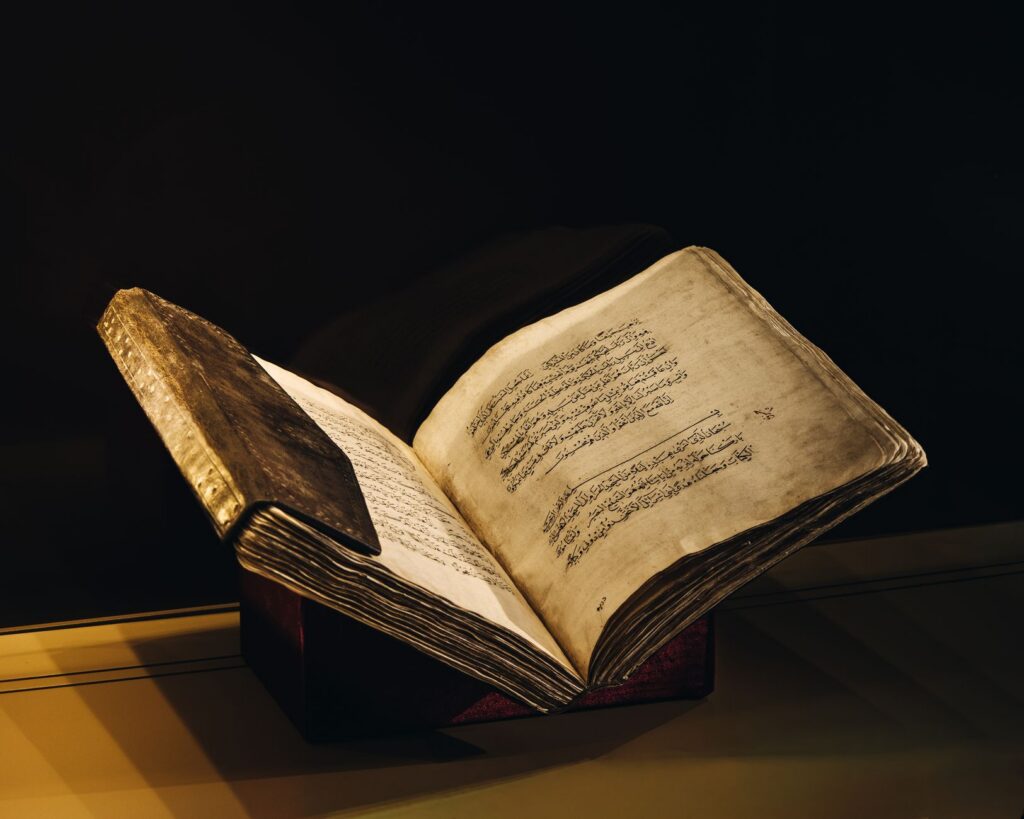
The manuscript is made from parchment, and radiocarbon analysis dated that material to the early fifteenth century, approximately 1404–1438. This date applies to the parchment, not necessarily to the moment when every word or illustration was added. Still, it places the object in a historical period when handwritten books were produced across Europe, offering a useful boundary for research.
The codex is commonly described as having roughly 240 surviving pages, though its leaves have been rearranged and some are missing. Its unusual script consists of recurring characters arranged in patterns that can look language-like. The text is not simply a jumble of symbols: researchers have noted regularities in how signs appear and in the lengths and placement of groups. But statistical structure alone cannot establish whether the writing represents a natural language, an encrypted message, an invented system, or something else.
Its illustrations provide another set of clues, but not an easy key. Some pages show plants that are difficult to identify confidently; others feature circular diagrams and figures in what appear to be pools or channels. These images invite comparison with medieval works on plants, astronomy, medicine, and natural philosophy. Yet resemblance is not proof of a particular subject, and the pictures do not supply an agreed guide to reading the script.
Why decipherment remains difficult
A successful decipherment must explain more than a handful of apparent words. It should account for the manuscript’s repeated patterns, the relationship between text and illustrations, and the way signs are distributed across different sections. It should also produce a reading that can be checked by other researchers rather than relying on a series of flexible guesses.
That standard has been hard to meet. Proposed explanations have included encrypted European languages, an unknown language, and deliberate fabrication. Each faces challenges. A cipher theory needs to show a workable method for transforming the proposed source into the visible text. A language theory must explain why its structure has not yielded a stable translation. A hoax theory must account for the manuscript’s complex, consistent patterns without assuming that apparent regularity automatically proves meaning.
Modern computational analysis can measure recurring sequences and compare sections in ways that would be laborious by hand. Such methods can identify patterns, but they cannot independently determine what a symbol means. Results depend on how researchers segment the text, define characters, and frame their questions. A pattern that resembles a feature of language may be suggestive without being decisive.
Competing explanations, cautious conclusions
The manuscript’s pictures have encouraged attempts to link it to particular regions, medical practices, or communities. Those proposals can generate useful questions, especially when they are tested against dated materials and historical records. But visual similarities are vulnerable to selective matching: an unclear plant can be compared with many species, and a circular diagram can be assigned several possible purposes.
For now, the most responsible account separates what is established from what remains conjecture. The parchment has been dated to the early fifteenth century; the book’s text has not been reliably deciphered; and its illustrations do not settle the question of its purpose. That is a meaningful state of knowledge, even if it does not deliver a dramatic solution.
The Voynich manuscript may preserve information that is recoverable, or it may be a work whose system and context have been lost. Continued study can narrow possibilities through careful comparison of its materials, structure, and historical setting. Until a proposed reading explains the evidence consistently and can be independently tested, the manuscript remains an open case—not a proven secret code, but a carefully documented puzzle.