When OpenAI launched ChatGPT in late 2022, it catalyzed one of the most rapid technological transformations in computing history. What began as a research preview of a conversational interface quickly became the fastest-growing consumer application of its time, surpassing 100 million active users within months. Beyond mere novelty, ChatGPT altered the public and corporate perception of artificial intelligence, transitioning generative models from specialized research labs into everyday productivity stacks.
The Core Mechanism: Transformer Architecture and RLHF
At the foundation of ChatGPT lies the Generative Pre-trained Transformer (GPT) architecture. Unlike earlier recurrent neural networks that processed sequential data token by token, the transformer mechanism leverages self-attention layers to evaluate the relationships between all words in a sequence simultaneously. This structural design enables the model to capture deep semantic dependencies across extensive text contexts, learning grammatical structures, factual associations, and nuanced reasoning patterns from massive corpora.
However, raw pre-trained language models tend to generate erratic, irrelevant, or unaligned text if prompted directly. The crucial breakthrough that shaped ChatGPT into an intuitive assistant is Reinforcement Learning from Human Feedback (RLHF). Through supervised fine-tuning and proximal policy optimization guided by human evaluators, engineers align the model’s raw probability distributions with human expectations of safety, conciseness, and helpfulness.
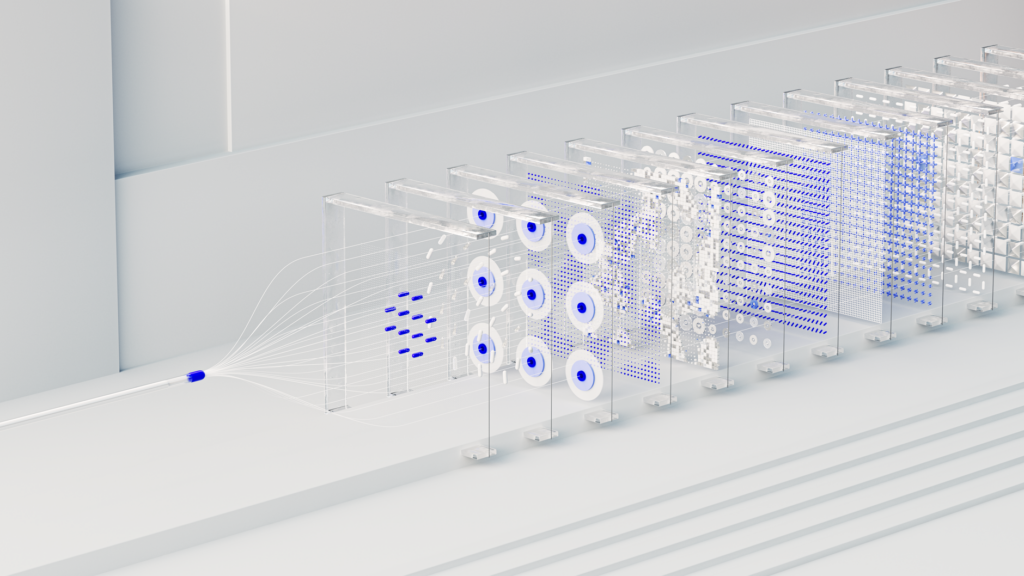
This alignment layer serves as an interactive translation bridge. It steers the probabilistic output away from toxic or unstructured sequences and trains the model to decline harmful requests, clarify ambiguities, and format output according to precise user specifications.
The Multimodal Evolution: Beyond Plain Text
While the initial iterations of ChatGPT operated strictly within textual boundaries, the platform has systematically expanded into multimodal reasoning. Modern iterations integrate native image comprehension, visual generation, voice processing, and real-time auditory synthesis into a unified interface.
This transition fundamentally changes how humans interact with digital tools. Users are no longer constrained to manual text transcription; they can present complex data visualizations, schematics, or hand-written mathematical derivations for instant decomposition. Similarly, advances in low-latency voice models have transitioned conversational AI from a mechanical question-and-answer format to fluid, bidirectional human-machine dialogue capable of recognizing emotional inflection and conversational interruptions.

Advanced Reasoning Paradigms
Recent milestones have expanded ChatGPT’s capacity beyond reactive pattern matching. Advanced reasoning architectures integrate deliberate test-time computation—often referred to as chain-of-thought processing—allowing the model to decompose complex scientific, algorithmic, and mathematical challenges into intermediate logical steps before producing a final answer. This methodology drastically reduces careless calculation errors and enhances performance in competitive programming and academic problem-solving.
Industry Transformation and Workflow Integration
The operational footprint of ChatGPT spans virtually every knowledge-intensive vertical. Rather than replacing entire professional functions wholesale, the tool functions primarily as an intellectual multiplier across specialized domains:
- Software Engineering: Developers utilize the model for boilerplate generation, automated unit testing, documentation generation, and legacy code translation, significantly shortening the development lifecycle.
- Enterprise Knowledge Retrieval: Organizations connect conversational engines with internal document repositories via Retrieval-Augmented Generation (RAG), turning vast intranets into interactive databases.
- Content Strategy and Localization: Marketing and editorial teams leverage contextual drafting, cross-lingual localization, and stylistic adaptation to scale output efficiently.
- Education and Tutoring: The platform offers adaptive learning pathways, explaining advanced conceptual frameworks through personalized analogies and iterative step-by-step guidance.

Operational Bottlenecks and Governance Challenges
Despite its utility, widespread enterprise deployment surfaces notable technical and societal vulnerabilities. Chief among these is the persistent issue of hallucination—instances where the model fabricates factual assertions with syntactical confidence. Because language models operate on probabilistic coherence rather than ground-truth databases, verification remains an indispensable requirement for high-stakes implementations in legal, medical, and financial environments.
“The utility of generative models is not defined by their fluency alone, but by our ability to audit their reasoning and ensure deterministic accuracy in production.”
Data privacy and security also represent significant hurdles. In an era where user prompts can inadvertently contain trade secrets or personally identifiable information, service providers have had to develop robust enterprise confidentiality tiers, zero-data-retention options, and rigorous red-teaming mechanisms. Furthermore, open legal questions surrounding copyright infringement and training dataset provenance continue to challenge regulatory frameworks across jurisdictions.

The Horizon: Autonomous Agents and Ambient AI
Looking forward, ChatGPT is evolving from a passive conversational tool into an autonomous agent platform. Armed with tool-calling capabilities, web browsing functionality, and API orchestration, the model can execute multi-step workflows across external software ecosystems without step-by-step human intervention.
As context windows expand and computational efficiency improves, generative AI is poised to shift from explicit conversational commands to ambient assistance. Understanding the architectural principles and operational limitations of systems like ChatGPT is no longer merely a priority for computer scientists, but an essential literacy for anyone navigating the modern information landscape.