Few concepts have captivated human consciousness as profoundly as the idea of the alien. Once relegated to mythological lore, folklore, and pulp science fiction, the question of whether life exists beyond Earth has matured into a rigorous, multidisciplinary scientific discipline. Today, astronomers, biochemists, and planetary scientists approach the extraterrestrial question not with speculative fantasy, but with precision spectroscopy, space telescopes, and robotic probes. Exploring what lies beyond demands balancing philosophical wonder with rigorous empirical scrutiny.
The Cultural Silhouette: From Cold War Anxiety to Modern Myth
The modern archetype of the extraterrestrial took shape largely during the twentieth century. Amid the geopolitical tensions of the Cold War and the dawn of the Space Age, reports of unidentified flying objects (UFOs) mirrored societal anxieties about technological devastation, foreign invasion, and government secrecy. Pop culture swiftly codified these themes into recognizable tropes: enigmatic grey visitors, hostile invaders, or benevolent cosmic custodians.
While these depictions reveal much about human psychology and sociological pressures, they often obscured the underlying scientific reality. In literature and cinema, fictional aliens usually function as allegories for our own flaws, vulnerabilities, and aspirations. Stripping away the cinematic dramatization reveals a starker, far more profound scientific reality: the universe is unimaginably vast, ancient, and predominantly silent.
The Fermi Paradox: Where Is Everybody?
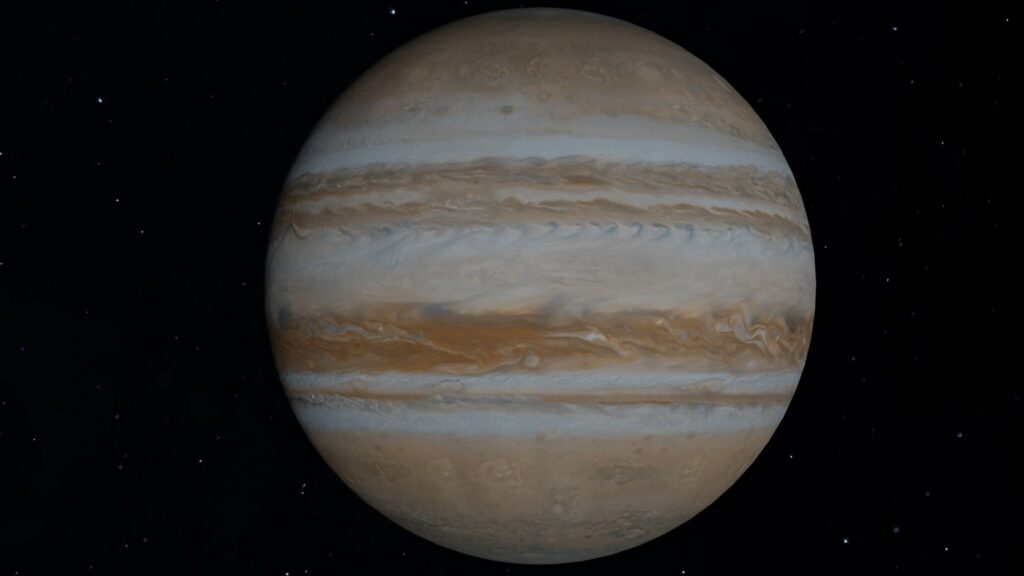
In the mid-twentieth century, physicist Enrico Fermi famously posed a straightforward yet disruptive question: if the universe is so vast and intelligent life possesses the capability to expand across stars, where is everybody? This conundrum, known as the Fermi Paradox, highlights the dramatic discrepancy between the high statistical probability of extraterrestrial intelligence and the absolute lack of observational evidence.
To contextualize this, astronomers consider the Drake Equation, a probabilistic framework used to estimate the number of active, communicative civilizations in the Milky Way. While parameters such as the rate of star formation and exoplanet prevalence are now well-constrained, other factors remain completely speculative, notably:
- The fraction of habitable planets where life actually arises (abiogenesis).
- The likelihood of simple biological organisms evolving into complex, intelligent beings.
- The fraction of intelligent civilizations that develop detectable technologies.
- The average longevity of technologically advanced civilizations before self-destruction or extinction.
Hypotheses resolving the paradox range from the sobering to the radical. The Great Filter concept suggests that an evolutionary bottleneck prevents life from reaching interstellar communication—a hurdle humanity may have either already passed or yet to confront. Other explanations, such as the Zoo Hypothesis, propose that advanced intelligences deliberately avoid interfering with emerging species.
Astrobiology and the Hunt for Biosignatures
While the search for intelligent civilizations captures public imagination, modern astrobiology focuses predominantly on discovering microbial or non-intelligent alien life. Life on Earth emerged relatively early in its history, suggesting that basic organic chemistry might readily take root wherever physical and chemical conditions allow.
Within our own solar system, robotic explorers focus on ocean worlds and ancient riverbeds. Mars remains a primary candidate, where sedimentary rocks preserve clues about a warmer, wetter past. Simultaneously, the icy moons of the outer solar system—such as Jupiter’s Europa and Saturn’s Enceladus—harbor subsurface liquid oceans kept warm by tidal friction, providing potential habitats insulated from cosmic radiation.
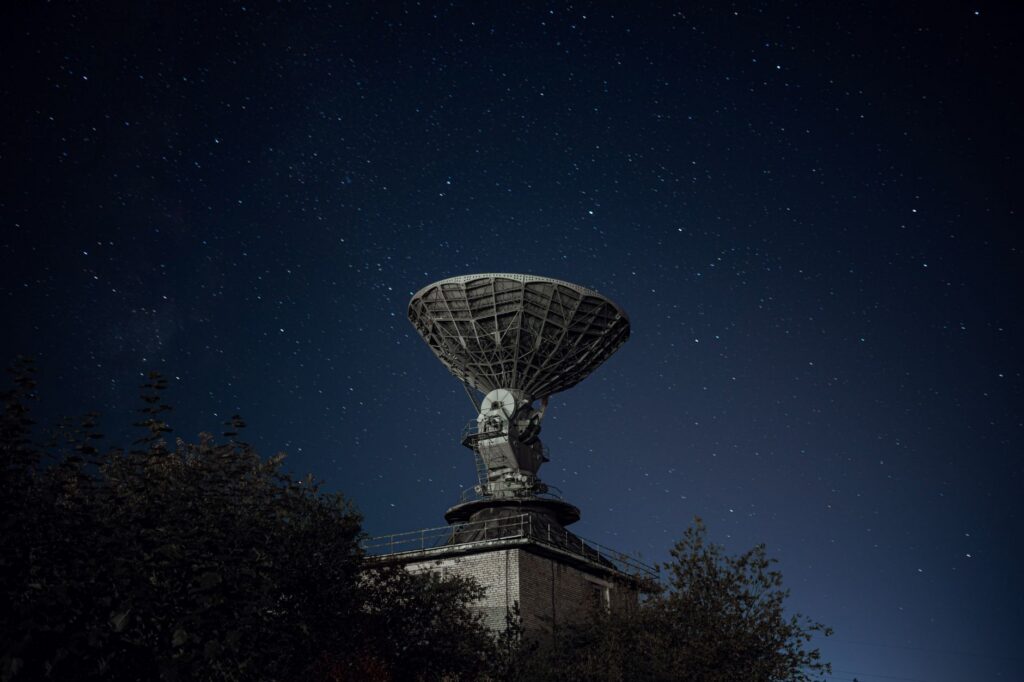
Beyond our solar system, the study of exoplanets has transformed our cosmic perspective. Utilizing space-based observatories such as the Kepler Space Telescope and the James Webb Space Telescope, researchers analyze the atmospheric compositions of distant worlds through transmission spectroscopy. Scientists search for biosignatures: atmospheric anomalies or chemical disequilibria—such as the simultaneous presence of methane and oxygen—that would be difficult to explain through abiotic geochemical processes alone.
Technosignatures: Listening for Cosmic Intelligence
Parallel to astrobiological research, the Search for Extraterrestrial Intelligence (SETI) monitors the cosmos for technosignatures—measurable indicators of artificial activity. Unlike biological markers, technosignatures imply deliberate manipulation of energy or materials on a planetary or interstellar scale.
“The absence of evidence is not evidence of absence, yet extraordinary claims invariably demand extraordinary proof.”
Modern technosignature research spans multiple methodologies:
- Radio Astronomy: Searching for narrowband electromagnetic transmissions that stand apart from natural cosmic static.
- Optical and Laser Surveys: Scanning the skies for rapid, pulsed laser communications that could facilitate interstellar signaling.
- Megastructure Detection: Identifying anomalous stellar dimming or infrared excess that might suggest advanced engineering, such as hypothetical Dyson swarms harvesting stellar energy.
Current initiatives process petabytes of observational data using machine learning algorithms to isolate potential candidates from terrestrial radio frequency interference, significantly accelerating the pace of survey analysis.
Societal and Philosophical Implications
The definitive confirmation of alien life, whether microbial or intelligent, would represent a transformative paradigm shift in human history. Philosophically, it would dismantle anthropocentrism, confirming that biology is an ordinary cosmic outcome rather than an Earth-specific miracle.
To prepare for such an eventuality, scientific organizations and international bodies continue to develop post-detection protocols. These frameworks emphasize transparency, verification through independent global observatories, and coordinated communication to prevent premature or misleading claims. The search for extraterrestrial life is fundamentally a search for context, compelling humanity to view our pale blue dot as a shared home navigating an ocean of stars.