Beyond Folklore: The Reality of Military Aerial Incidents
Public discourse surrounding unidentified flying objects often oscillates between speculative sensationalism and wholesale dismissal. However, military aviation archives present a distinct category of aerospace phenomena: events characterized by concurrent visual confirmation and physical sensor detection. Known within defense spheres as radar-visual incidents, these cases remove sightings from the realm of subjective civilian observation and place them into the rigorous domain of aerospace tracking and instrumentation telemetry.
When an unidentified target registers on both airborne radar and ground-based surveillance while being actively pursued by trained aviators, the event transforms from an optical curiosity into a tangible airspace management concern. Historically, these incidents compel air forces to conduct classified inquiries to determine whether an anomaly represents foreign adversarial surveillance, sensor error, atmospheric propagation anomalies, or uncharted physical phenomena.
The Mechanics of Radar-Visual Validation
In standard civilian reports, human eye accounts are vulnerable to optical illusions, satellite reflections, and astronomical bodies such as planets or meteors. Military encounters, by contrast, rely on multi-sensor redundancy. An aerospace intercept requires a baseline progression of verification:
- Ground-Based Radar Detection: Early warning systems detect an unauthorized or high-speed return traversing controlled airspace.
- Visual Sighting by Air Traffic or Flight Crews: Pilots observe an illuminated or structured object maintaining erratic speeds or uncharacteristic trajectories.
- Airborne Intercept Radar Lock: Onboard fire-control radars register a hard physical contact consistent with the visual bearing.
- Telemetry Anomalies: Unexpected electronic interference affecting navigational instruments, communication arrays, or weapons guidance systems.
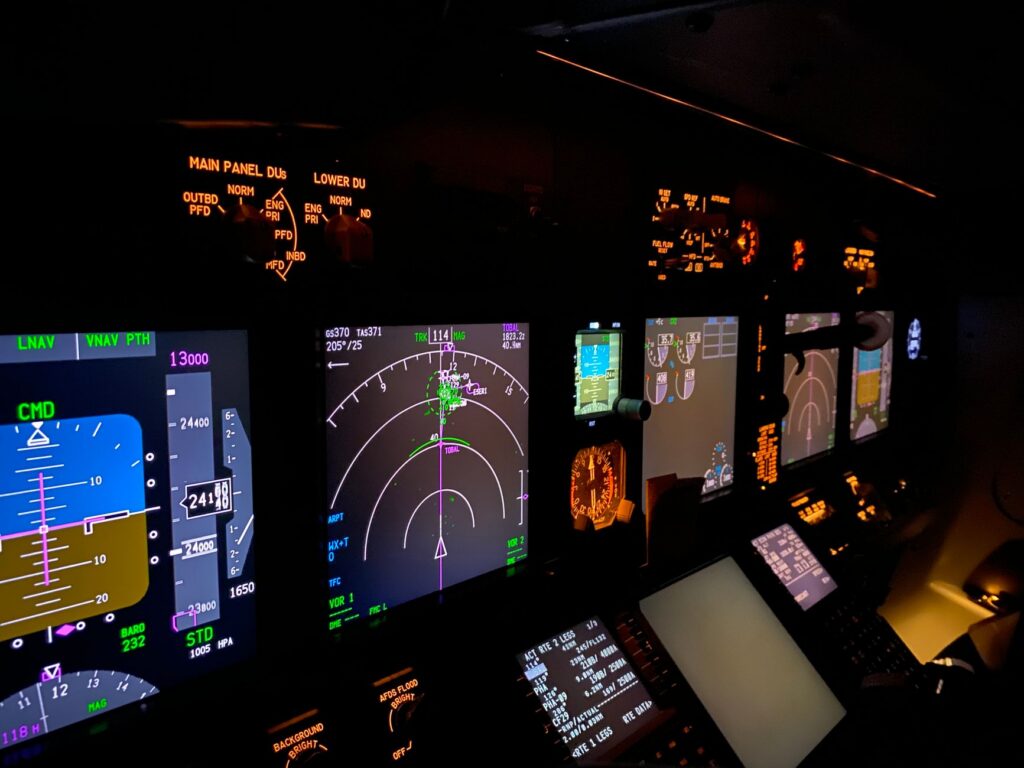
Case Study: The 1976 Tehran Encounter
Among the most exhaustively documented multi-sensor events in modern aviation history is the September 1976 Tehran incident. Over the capital of Iran, civilians and control tower personnel witnessed an intense, pulsating light moving across the night sky. In response, the Imperial Iranian Air Force scrambled two separate F-4 Phantom II jet interceptors to investigate the airspace intrusion.
The engagement quickly moved beyond passive tracking into documented electronic disturbance. As the initial F-4 approached the target within roughly twenty-five nautical miles, the jet experienced a comprehensive loss of instrumentation and ultra-high frequency communications. These systems instantly returned to full operation once the pilot turned the aircraft away from the anomalous light.
A second F-4 crew managed to achieve a solid radar lock on the object, assessing its physical cross-section as comparable to a mid-size transport aircraft. However, when the object reportedly accelerated away at extraordinary velocity, the jet’s weapon systems malfunctioned just as the crew prepared to launch defensive countermeasures. Commercial airliners operating nearby reported simultaneous radio communication blackouts. The correlation of multiple military flight crews, tower controllers, ground radar, and independent radar locks makes this engagement a premier reference point in anomalous aerospace investigation.

Evaluating Hypotheses: Between Interference and Technology
Analytical reviews of historical radar-visual encounters typically divide explanations into three broad categories:
- Sensor and Electronic Vulnerabilities: Radar returns can result from temperature inversions creating anomalous propagation, where radar beams refract along atmospheric ducts and mirror ground terrain. However, atmospheric ducts do not account for synchronized visual pursuit or selective avionic failures.
- Electronic Warfare and Covert Testing: Classified electronic countermeasure (ECM) platforms under development by geopolitical superpowers could theoretically disrupt aviation avionics and generate spoofed radar tracks. Yet, deploying such sensitive experimental technologies over foreign populated regions carries extreme diplomatic risks.
- Unresolved Atmospheric or Plasma Phenomena: Rare geophysical events, such as ball lightning or high-altitude ionized plasmas, possess reflective electromagnetic signatures capable of affecting analog avionic systems, though their persistence and apparent maneuverability remain difficult to replicate in laboratory settings.
“The value of investigating high-reliability aerospace encounters lies not in confirming preconceived beliefs, but in addressing critical operational blind spots in airspace domain awareness.”
The Shift Toward Sensor-Driven Science
The historical legacy of military UFO incidents underscores a vital lesson for contemporary defense and scientific analysis: reliable investigation requires calibrated, multi-spectrum data. The transition from anecdotal reporting to systematic aerospace tracking has led modern aviation authorities to formalize reporting standards for unidentified anomalous phenomena.
Rather than treating these historical incidents as unsolvable myths, aerospace researchers approach them as case studies in sensor fusion, atmospheric physics, and electronic resilience. Whether an incident resolves into advanced electronic warfare, exotic atmospheric physics, or an unknown technological platform, methodical analysis of verified military telemetry remains the only pathway to definitive understanding.