A discovery on the hillside
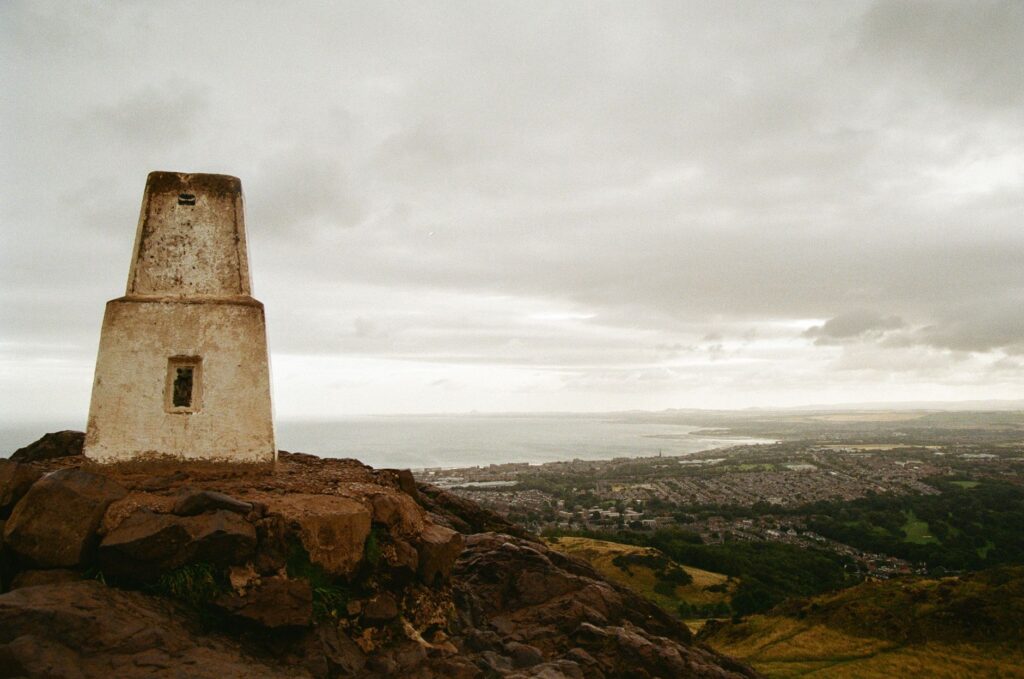
In late June 1836, a group of boys exploring Arthur’s Seat, the volcanic hill overlooking Edinburgh, noticed a small opening in the ground. Inside, they found a collection of tiny coffins arranged in tiers. The discovery was strange enough to attract attention, but the objects offered no clear explanation for their presence.
There were 17 coffins in all. Each was only a few inches long and contained a small wooden figure dressed in cloth. The boys reportedly removed the objects and took them back into the city. Over time, most disappeared. Eight are now held by National Museums Scotland, where they remain among the most unusual objects in its collections.

What the surviving coffins show
The surviving examples are small, carefully made objects rather than hurriedly assembled toys. Their wooden figures are shaped to resemble people, and scraps of clothing cover their bodies. The coffins themselves were constructed from pieces of wood and fitted with lids. Their size and repeated form suggest a deliberate project, but craftsmanship alone cannot identify its maker or purpose.
The figures do not provide an obvious clue to a particular person or event. No names or inscriptions have been found to settle their identity. Nor does the arrangement offer a conclusive explanation: it may reflect how the coffins were placed in the hiding spot, or simply how they were stored. The objects preserve evidence of careful making, but little direct evidence about the maker’s intentions.

Why the Burke and Hare theory persists
One of the best-known explanations connects the coffins with the Edinburgh murders committed by William Burke and William Hare. Between 1827 and 1828, the pair murdered people and sold their bodies to the anatomist Robert Knox. The case shocked the city and became closely associated with Edinburgh’s history of body-snatching and the demand for cadavers for medical teaching.
The connection is tempting: the coffins are human-shaped, and the murders were recent history when the objects were discovered. Yet no firm evidence ties them to Burke, Hare, Knox, or any victim. The figures do not correspond to a known list of murdered people, and the objects cannot be treated as a direct record of the crimes. The theory gives the coffins a dramatic context, but it does not solve their origin.
Other possibilities, and their limits
Proposals have included memorial objects, charms, or items connected with folk beliefs. These interpretations draw on the figures’ miniature scale and their deliberate construction. But there is no surviving note, maker’s mark, or reliable account from the person who placed them in the hillside. Without that evidence, it is difficult to distinguish a ritual purpose from private commemoration, play, or another use that has not been imagined.
The discovery itself also leaves questions. The boys’ find was reported after the fact, and the surviving objects are only part of the original group. Details about the exact arrangement and the circumstances of their deposit are therefore limited. Later retellings have added atmosphere, but a vivid story is not the same as a documented chain of evidence.

What investigation can establish
Careful examination can describe the coffins’ materials, construction, and condition. Comparisons with other objects may help place them in a broad historical setting. But even a more precise date would not, by itself, reveal who made them or what the figures meant. Physical evidence can narrow possibilities; it cannot always recover a private intention that was never recorded.
That distinction matters in an enduring mystery. The surviving coffins are tangible objects, and their discovery in 1836 is part of the historical record. Their purpose, however, remains uncertain. The Burke and Hare connection is a hypothesis, not an established explanation, while other proposed meanings also lack decisive proof.

An unanswered question in plain sight
The Arthur’s Seat coffins are striking because they combine precise physical details with a missing human story. Eight small figures survive, yet the maker’s identity and motive have not come down with them. The objects invite interpretation, but responsible accounts must keep what is known separate from what is imagined. Nearly two centuries after the boys found them, the most accurate answer remains a limited one: someone made and concealed the coffins, and the reason is still unknown.