A landscape marked by circles
In parts of Namibia’s arid grasslands, thousands of nearly round patches interrupt the surrounding vegetation. Each is a pocket of bare ground, often edged by taller grass. Seen from above, the circles appear arranged in a pattern that can stretch across the landscape. Their regularity has earned them the name “fairy circles,” though there is nothing supernatural required to explain their presence.
The circles are most familiar in the Namib, where rainfall is scarce and unpredictable. Their size and spacing vary, and not every patch looks perfectly round. Some persist for years, while others fade as grasses grow back. The striking question is not simply why the ground is bare, but why similar bare patches recur in such orderly arrangements.
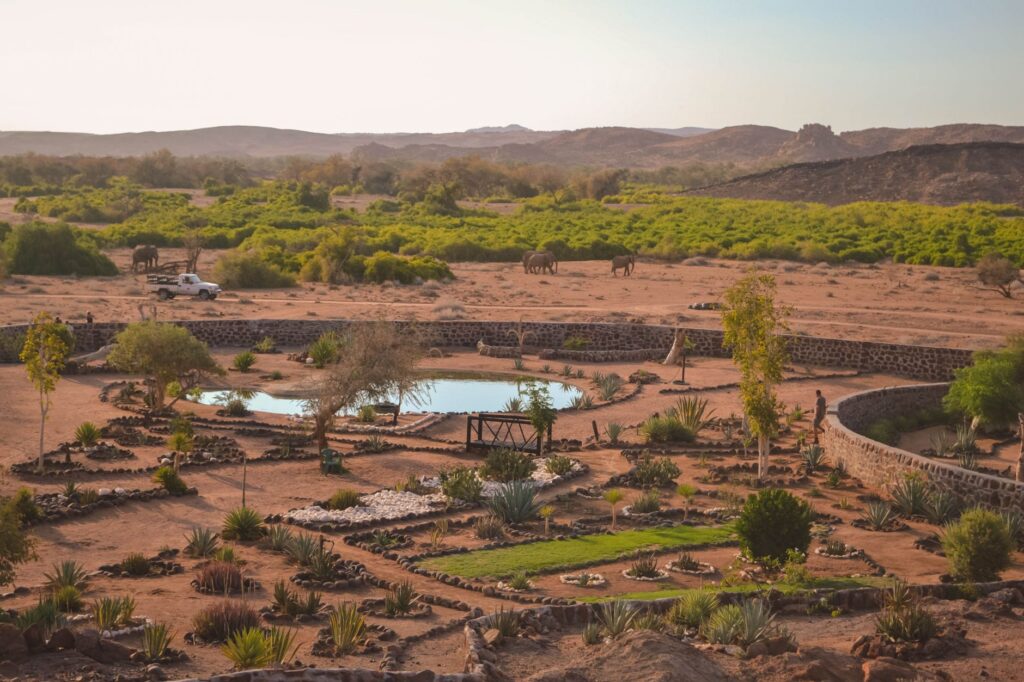
Why a bare patch can be useful to plants
In a dry environment, water is a limited resource. When rain falls, it may be absorbed quickly or evaporate before plants can use it. Grasses growing close together compete for that moisture, particularly near their roots. One explanation for fairy circles is that plants themselves shape the pattern: vegetation around a bare patch may benefit from water that flows toward the patch’s edge, while growth in the center remains difficult.
This idea connects the circles to a broader ecological process called spatial self-organization. Under certain conditions, plants can form repeated bands, gaps, or spots without any central planner. The pattern emerges from interactions among vegetation, soil, and water. In drylands elsewhere, comparable patterned landscapes have been studied as ways ecosystems respond to environmental stress.
That does not mean the circles are simply “made” by grasses in a straightforward way. Soil properties, slope, rainfall, and the timing of wet and dry periods can all affect how water moves and where plants survive. The same visible pattern may arise through several linked processes, and their relative influence may vary from place to place.
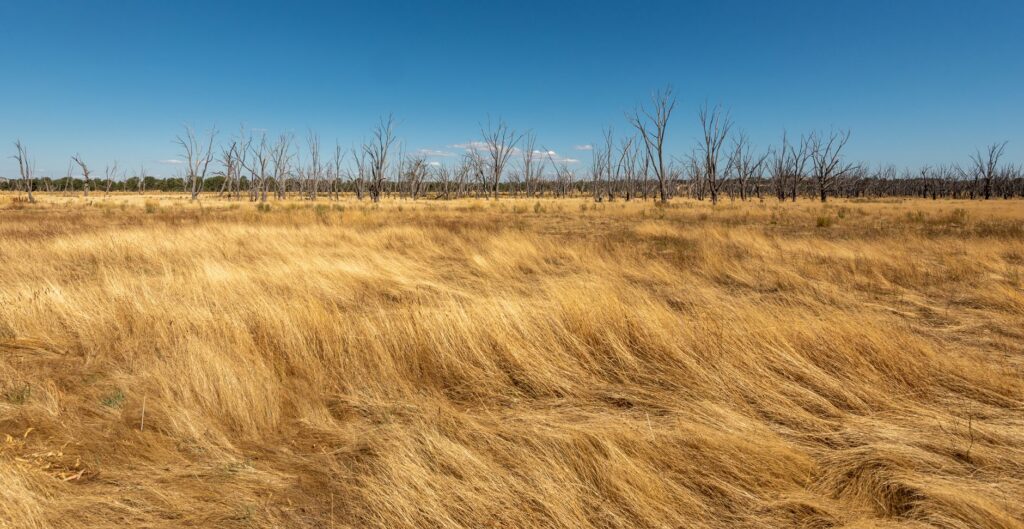
The termite hypothesis
A second explanation focuses on sand termites. Researchers have reported termite activity in or near some fairy circles, prompting the proposal that insects damage roots or consume young plants, leaving the ground bare. Termites can alter soil and vegetation, so their presence is ecologically significant. The harder question is whether they can account for the circles’ characteristic spacing and broad distribution.
Evidence has not settled the issue in favor of one universal cause. Termites are not found consistently in every circle, and finding them does not by itself establish that they created the pattern. Conversely, a plant-and-water model must account for observations in which insect activity appears relevant. Researchers therefore examine multiple lines of evidence rather than treating a single field observation as a complete answer.
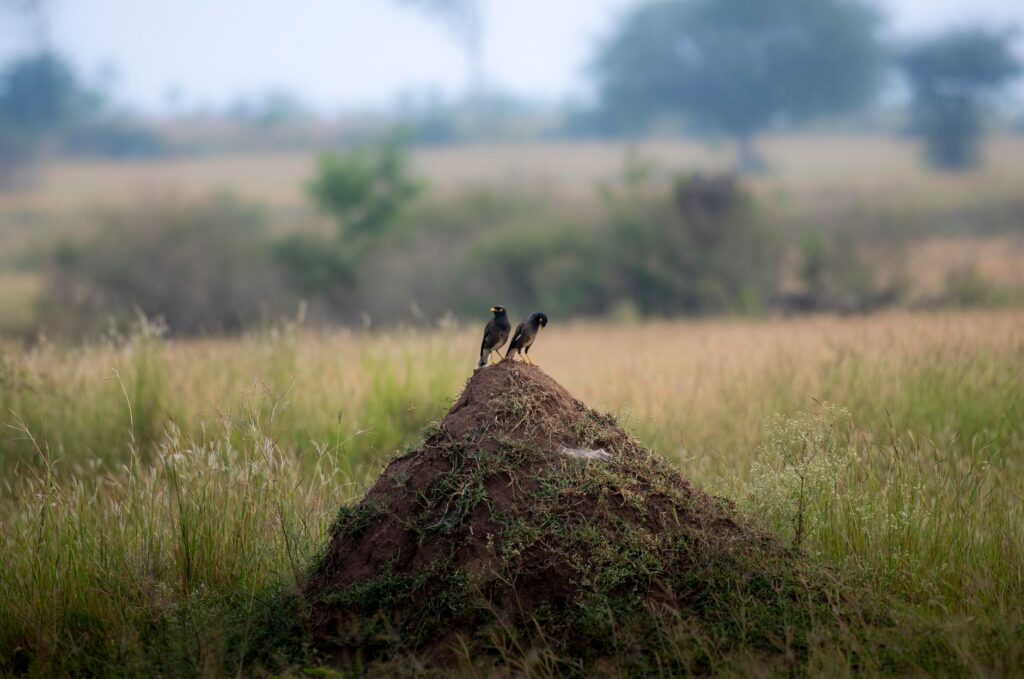
Patterns, measurements, and uncertainty
To distinguish the explanations, scientists compare circle size and spacing with vegetation, soil conditions, and signs of insect activity. They also monitor how patches change after rainfall. A useful hypothesis must explain more than the existence of bare ground: it should help account for why circles form, how they are distributed, and what happens to them over time.
Remote images make it possible to map large areas, but an aerial pattern cannot reveal every process beneath the surface. Field studies add close observations of roots, soil, and organisms. Experiments and repeated measurements can test whether proposed mechanisms match changes on the ground. This combination matters because a tidy pattern can invite an overly tidy explanation.

What the mystery tells us
Fairy circles are a reminder that a landscape’s appearance may be the outcome of several interacting forces rather than one hidden cause. Water stress may shape plant growth; insects may influence local vegetation; and soil conditions may determine how either process plays out. The scientific challenge is to establish which factors matter, where, and under what conditions.
That uncertainty is not a failure of research. It is a reason to make explanations testable and to distinguish what is observed from what is inferred. The circles are visible, measurable features of a real ecosystem. Their origin remains an active question precisely because researchers are comparing explanations against evidence rather than relying on the pattern’s mysterious appearance.
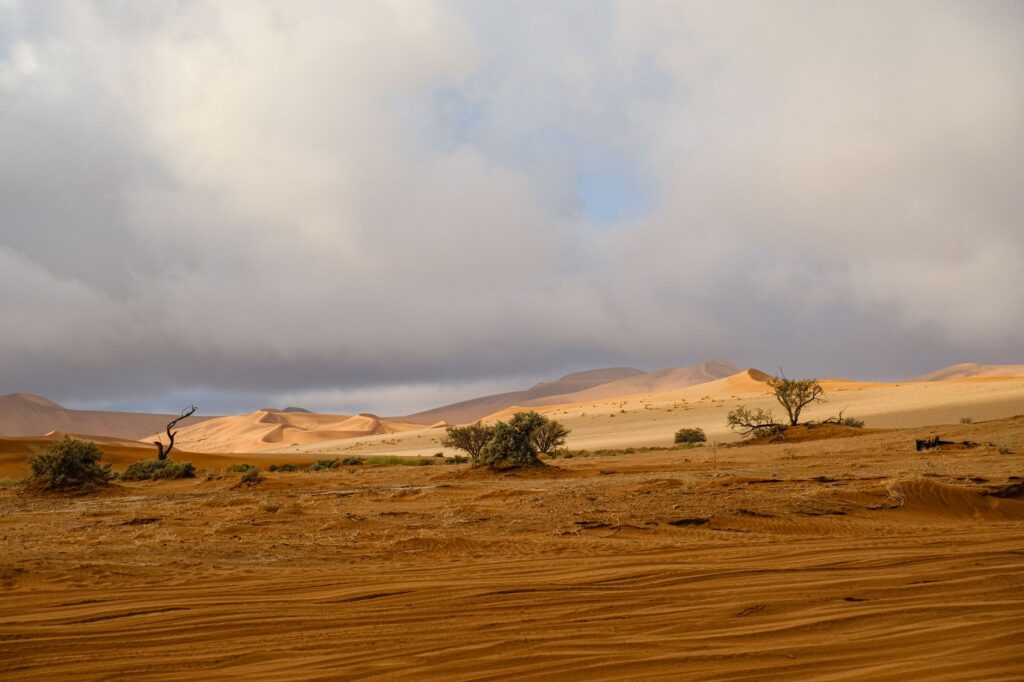
For visitors, the Namibian circles can look almost designed when viewed across a wide plain. For ecologists, they offer a natural experiment in how life responds to scarcity. Whether the balance tilts toward vegetation dynamics, termites, or a combination of processes, the broader lesson is clear: even familiar ingredients can produce patterns that are difficult to explain without careful observation.