The Evolution of Unidentified Aerial Phenomena
For more than seven decades, the phenomenon of Unidentified Flying Objects (UFOs)—increasingly referred to by scientific and defense communities as Unidentified Anomalous Phenomena (UAP)—has occupied a unique space at the intersection of public fascination, state secrecy, and scientific inquiry. What began in the late 1940s as fragmented reports of anomalous aerial sightings has matured into a rigorous subject of multidisciplinary investigation. Moving past sensationalism requires separating empirical observation from speculative folklore, examining how geopolitical tensions, classified technology, and atmospheric conditions have historically converged.
Historically, aerial anomalies were often dismissed as optical illusions, weather events, or cognitive misinterpretations. However, the consistent involvement of trained military observers, radar tracking, and instrument-recorded data has sustained serious investigation. Today, the central objective of researchers is neither debunking nor validating extraterrestrial hypotheses; rather, it is the systematic identification of unknown contacts to ensure aviation safety and airspace sovereignty.
The Cold War Crucible: Roswell and Strategic Secrecy
The modern UFO narrative largely crystallized in the summer of 1947 near Roswell, New Mexico. The initial press release issued by the local airfield, stating that military personnel had recovered a ‘flying disc,’ triggered global curiosity. While the military quickly amended the statement, identifying the debris as a standard weather balloon, decades of classified documentation subsequently revealed a more complex reality: the recovered materials were part of Project Mogul.
Project Mogul was a top-secret Cold War initiative utilizing high-altitude balloon arrays fitted with acoustic sensors. Its mission was to detect low-frequency sound waves generated by Soviet nuclear detonations in the upper atmosphere. Because the program’s existence was tightly guarded, government authorities could not disclose the true nature of the exotic debris, which included lightweight structural beams and reflective metallic foil. This operational necessity for secrecy inadvertently left an explanatory vacuum, one that popular culture rapidly populated with narratives of downed alien craft and government cover-ups.
Complex Military Encounters: The 1976 Tehran Incident
While many sightings dissolve under standard meteorological analysis, a distinct category of events involves multiple correlated observation vectors, including visual confirmation from aircrew and ground radar tracking. A notable historical example is the 1976 Tehran incident. During this event, civilian and military personnel reported a luminous object over the capital, prompting the Imperial Iranian Air Force to scramble two F-4 Phantom II interceptor aircraft.
The incident stands out in archival literature because of the simultaneous instrumentation anomalies reported by the flight crews. As the interceptors closed distance with the target, pilots experienced intermittent loss of communications, navigation suites, and weapons release systems. Crucially, normal avionics function resumed as soon as the jets increased separation from the target. Ground-based military radar and air traffic control systems corroborated an airborne contact exhibiting unusual flight characteristics. While conventional explanations suggest intense electronic warfare counter-measures, severe atmospheric electromagnetic interference, or simultaneous sensor degradation, the incident remains an emblematic case where empirical telemetry and human perception overlap without a neat, definitive conclusion.
The Transition to Multi-Sensor Science
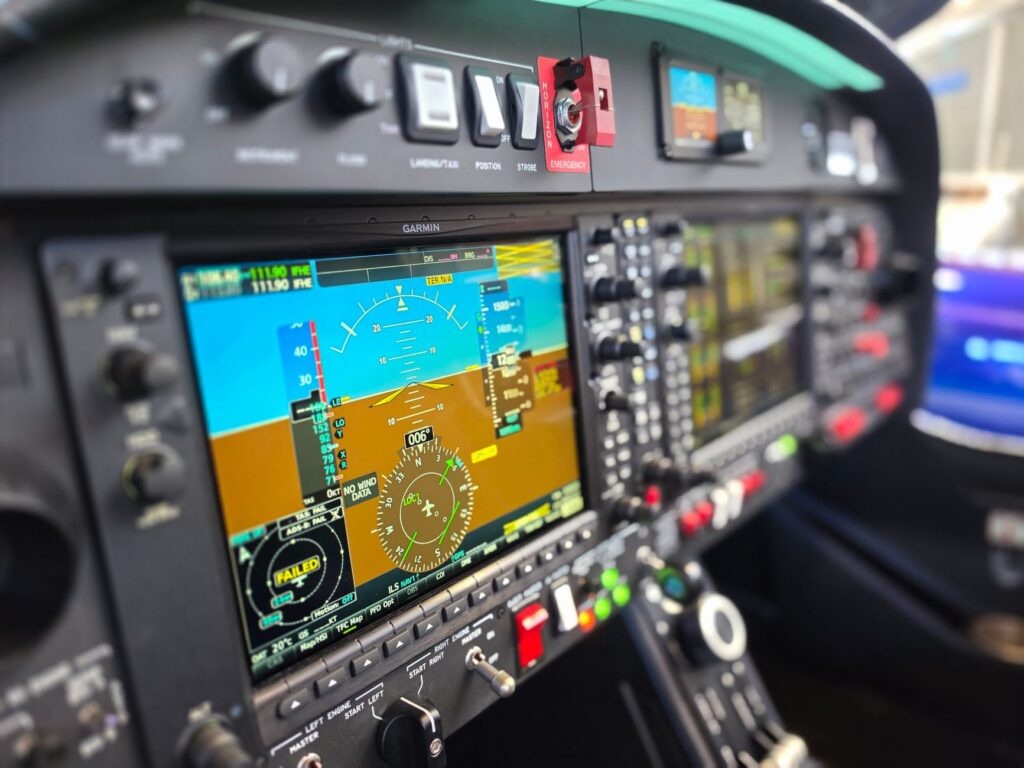
The contemporary study of unidentified objects has moved away from reliance on subjective human testimony toward objective, calibrated instrumentation. Human perception is vulnerable to environmental factors, including parallax error, cloud motion relative to celestial bodies, and optical illusions such as autokinesis. In contrast, modern aerospace analysis relies on layered data architectures:
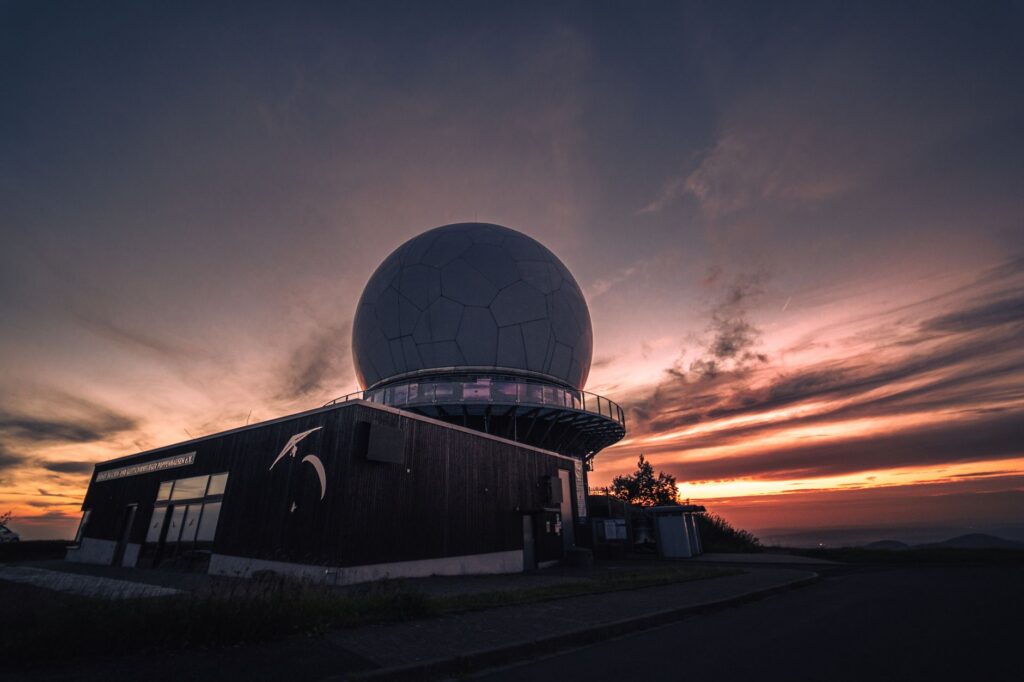
- Active Electronically Scanned Array (AESA) Radar: High-resolution radar platforms capable of tracking fast-moving targets while rejecting clutter.
- Infrared and Electro-Optical Sensors: Forward-Looking Infrared (FLIR) cameras that register thermal signatures regardless of ambient illumination.
- Radio Frequency (RF) Spectrum Analyzers: Equipment designed to detect electromagnetic emissions or communication signals emanating from unidentified craft.
By synchronizing these data feeds, modern aerospace analysts can reconstruct the precise trajectory, velocity, and signature of an object, systematically eliminating common false positives such as high-altitude surveillance drones, commercial airliners observed at deceptive angles, space debris reentry, or meteorological phenomena like ball lightning.
Institutional Accountability and the Path Forward
In recent years, government institutions and academic bodies have adopted a more transparent posture. The establishment of dedicated research programs, such as the U.S. Department of Defense’s All-domain Anomaly Resolution Office (AARO) and independent study teams convened by scientific agencies like NASA, reflects an institutional effort to de-stigmatize the reporting of anomalies. Pilots and commercial operators are now actively encouraged to log unexplainable encounters without fear of professional marginalization.
Ultimately, the rigorous investigation of UFOs and UAPs reinforces fundamental scientific principles. Every unexplained contact represents either an unrecognized natural mechanism, a previously undisclosed human technology, or a calibration error in sensor arrays. Approaching the sky with methodical skepticism and technological precision ensures that, regardless of the explanation, truth is rooted in verifiable evidence.