Throughout human history, the pursuit of creativity has always been shrouded in an aura of mystery. Where do original ideas come from? Why does inspiration strike like lightning in one moment and evaporate entirely in the next? For thousands of years, civilizations across the globe have assigned a distinct name to this elusive creative catalyst: the muse. While the concept originated in antiquity as divine figures bestowing genius upon mortals, the word has since evolved into a rich, multifaceted cultural icon encompassing romantic ideals, boundary-pushing rock music, and contemporary artificial intelligence.
The Classical Origins: Divine Patrons of the Mind
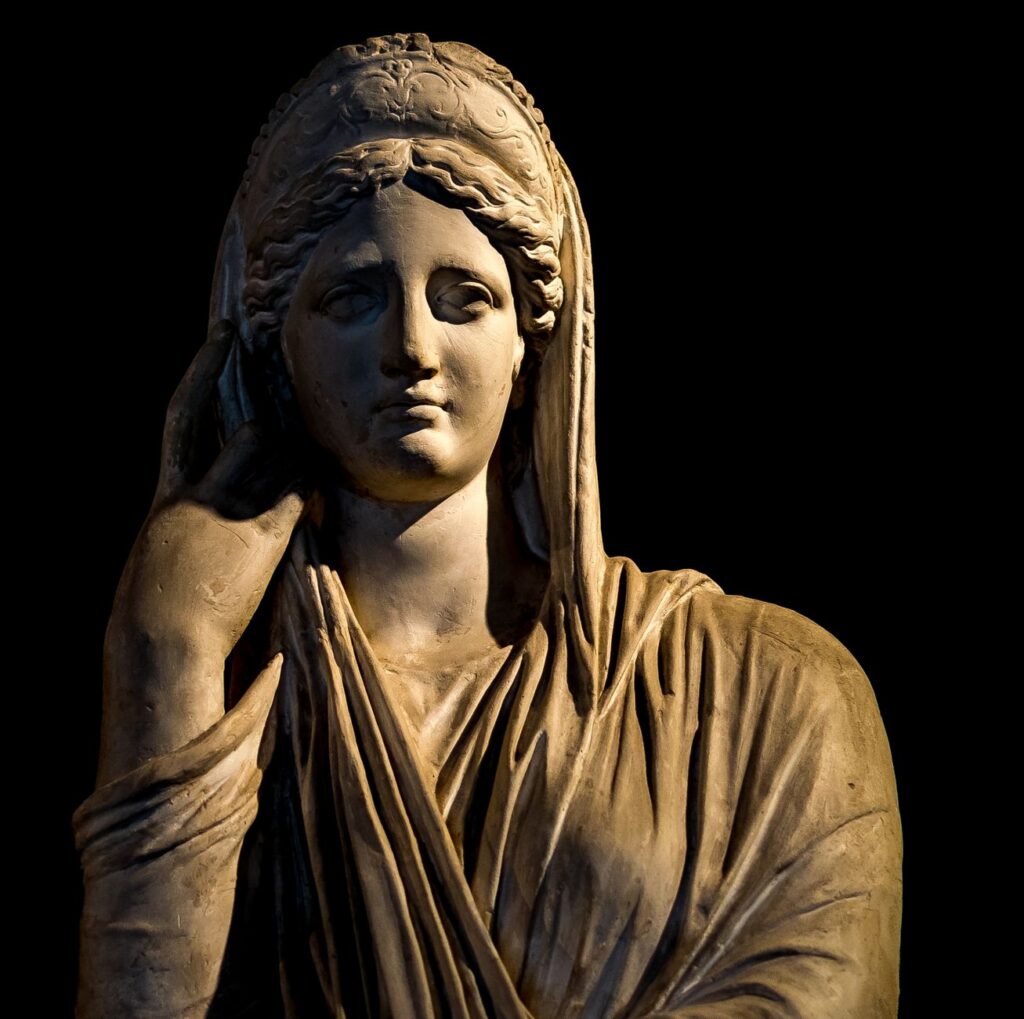
In ancient Greek mythology, the Muses were revered as water nymphs and divine personifications of knowledge, literature, the arts, and the sciences. Classical tradition, established famously by the poet Hesiod in his Theogony, identifies nine Muses, born of Zeus and Mnemosyne, the Titaness of memory. This lineage is deeply telling: ancient thinkers believed that true creativity was inextricably bound to memory, preservation, and divine intervention.
Each of the nine sisters governed a specific discipline of artistic and intellectual inquiry:
- Calliope: Muse of epic poetry and eloquence, often portrayed holding a writing tablet.
- Clio: Muse of history, responsible for celebrating heroic deeds.
- Euterpe: Muse of lyric poetry and flute playing.
- Thalia and Melpomene: Presiding over comedy and tragedy respectively.
- Terpsichore: Patroness of dance and choral song.
- Erato: Muse of love poetry and mimicry.
- Polyhymnia: Guardian of sacred hymns and rhetoric.
- Urania: Overseer of astronomy and theoretical science.
Ancient poets rarely claimed personal ownership over their masterpieces. Homer began both the Iliad and the Odyssey with direct invocations to the Muse, begging the goddess to sing through him. In this classical framework, the human artist was essentially an instrument, a receptive vessel through which celestial order and beauty entered the earthly realm.
The Romantic Paradigm: The Muse as Human Catalyst
As Western thought transitioned through the Renaissance and into the Enlightenment, the concept of the muse began to shift from external divine beings to earthly human figures. Artists, poets, and sculptors began recognizing living men and women who ignited their imaginations, altered their worldviews, and propelled their creative outputs to new heights.
History provides numerous examples of such profound relationships. Dante Alighieri found immortal literary inspiration in Beatrice Portinari, crafting a vision of paradise guided by her memory despite rarely speaking to her in life. In the nineteenth and twentieth centuries, the muse became both celebrated and contested, often spotlighting brilliant figures who were artists in their own right, such as Camille Claudel to Auguste Rodin, or Dora Maar to Pablo Picasso.
“To inspire another mind is a creative act in itself; the human muse is neither passive ornament nor mere spectator, but an active collaborator in the creative friction that brings art to life.”
Modern criticism has progressively re-evaluated this dynamic, shedding light on how these human muses contributed intellectual vigor, emotional resonance, and critical feedback to works once credited solely to solitary geniuses.
The Sonic Muse: Electric Power and Symphonic Ambition
In modern popular culture, the word evokes an entirely different sensory experience: the monumental sonic landscapes of the English rock band Muse. Formed in Teignmouth, Devon, in 1994, the trio consisting of Matt Bellamy, Chris Wolstenholme, and Dominic Howard redefined the boundaries of alternative rock by merging visceral distortion with classical romance and operatic grandeur.

Emerging with their 1999 debut Showbiz, the band quickly distinguished themselves through Bellamy’s soaring falsetto and introspective lyrics. However, it was their sophomore record, Origin of Symmetry (2001), that crystallized their signature sound. Drawing heavy inspiration from Romantic classical composers like Sergei Rachmaninoff, Muse introduced complex piano arpeggios, expressive basslines, and sweeping arpeggiated guitars into traditional rock song structures.
Over the decades, their thematic horizons expanded alongside their technical prowess. Albums such as Absolution (2003) and Black Holes and Revelations (2006) channeled apocalyptic anxieties, government surveillance, and dystopian futurism into anthemic stadium rock. In choosing their name, the band reflected the classical idea of a creative spark while simultaneously transforming it into an explosive auditory force capable of captivating millions across global arenas.
The Digital Frontier: AI as the Algorithmic Muse
Today, humanity stands on the precipice of a new creative era, where the word muse has taken on an unexpected technological dimension. The rapid proliferation of neural networks and machine learning platforms has led to software solutions specifically designed to serve as creative assistants—or digital muses. Emerging digital platforms utilize the moniker to represent tools that analyze, synthesize, and generate novel text, video, and audio concepts.
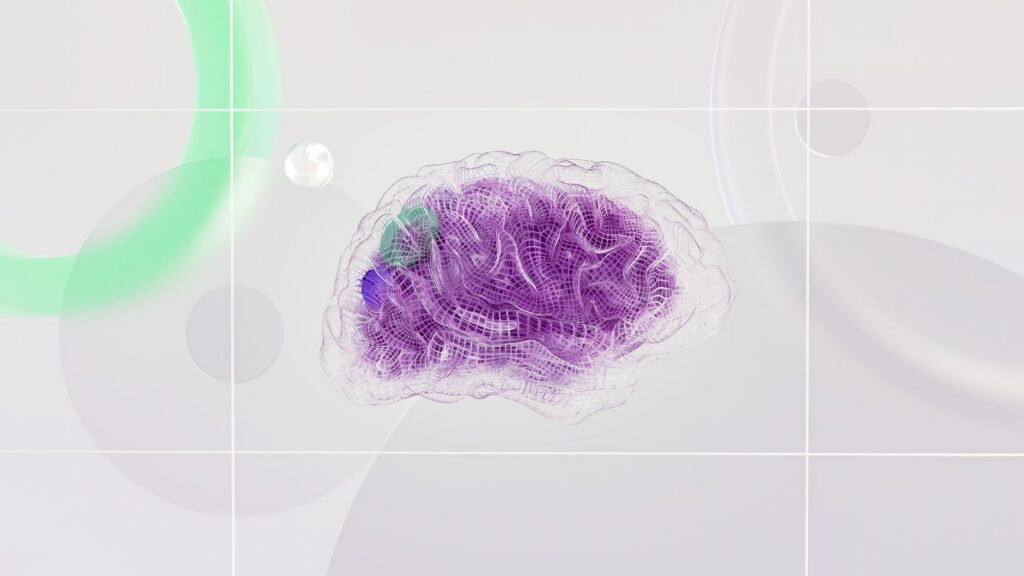
Modern machine learning models function remarkably like the classical notion of a muse: an ambient, vast repository of human cultural memory that can be queried at will to spark unexpected ideas. For writers facing a blank page, designers seeking visual concepts, or musicians sketching melodic ideas, generative tools offer immediate drafts, alternative angles, and iterative suggestions.
Yet, this digital shift invites significant philosophical questions:
- Agency versus Automation: Can an algorithm truly inspire, or does it merely calculate statistical probabilities based on pre-existing human expression?
- The Loss of Friction: Is the traditional struggle of creation—the cognitive labor that gives birth to profound depth—bypassed when digital tools provide instant outputs?
- Authorship and Ethics: If a machine serves as the creative instigator, how do we honor the vast tapestry of human artists whose collective data trained the model?
Most contemporary practitioners agree that artificial intelligence serves not as a replacement for human feeling, but as a cognitive mirror. Much like the ancient Greek poets who engaged in dialogue with their spiritual patrons, modern creators use technology as a sounding board to expand their imaginative horizons beyond customary limitations.
Conclusion: The Everlasting Spark of Creation
From the mountaintops of Mount Helicon where the ancient Greeks paid tribute to the daughters of memory, to the grand stages where distorted basslines and orchestral chords shake stadium floors, and finally into the lines of code animating our digital creative tools, the muse remains an indispensable metaphor for human ingenuity.
Ultimately, whether envisioned as a goddess, a passionate companion, an awe-inspiring band, or an intricate neural network, the muse represents the universal human desire to reach beyond mundane reality. To seek a muse is to acknowledge that our creative capacity is perpetually unfinished, always waiting for the next spark to ignite the darkness of the uncreated.