Despite centuries of rigorous scientific observation and technological advancement, our planet harbors environments and events that defy comprehensive empirical explanation. From the fleeting luminosity of upper-atmospheric discharges to the silent mechanics governing the benthic abyssal floor, the natural world continuously challenges our theoretical frameworks. Investigating these anomalies is not merely an exercise in curiosity; it serves as a crucial diagnostic tool for testing the limits of contemporary physics, meteorology, and evolutionary biology.
Understanding natural mysteries requires moving past folklore and sensationalism toward rigorous scientific scrutiny. When systematic empirical analysis meets phenomena that resist straightforward modeling, the resulting tension often drives paradigm shifts. By investigating anomalous observations through modern multi-sensor platforms, computational physics, and genomic sequencing, researchers gradually convert unexplained occurrences into foundational scientific insights.
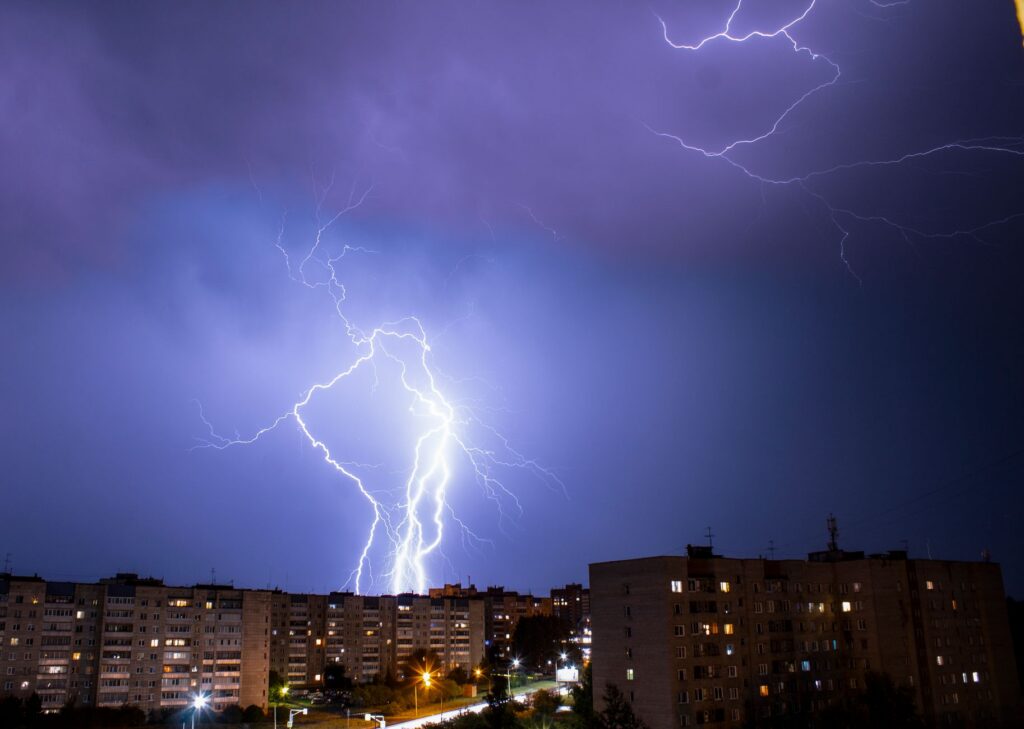
Electrodynamic Oddities: Ball Lightning and Transient Luminescence
Few atmospheric phenomena have proved as historically elusive as ball lightning. Accounts of free-floating, incandescent spheres navigating closed rooms, drifting down chimneys, and terminating with explosive force have persisted for centuries. While once dismissed as observational artifacts or subjective illusions, transient ball-shaped luminophores have been verified through high-speed spectroscopy and laboratory simulations. Yet, no unified consensus exists regarding their underlying mechanism.
Predominant hypotheses propose vaporized silicon nanoparticles oxidized in ambient air, while alternative models suggest localized microwave radiation or electromagnetic plasma solitons. The primary hurdle remains observational unpredictability: ball lightning cannot be summoned on demand, and natural events last merely seconds, leaving behind scarce physical residue. Similarly, transient luminous events (TLEs) such as red sprites, blue jets, and elves occurring in the mesosphere above severe convective thunderstorms were only authenticated late in the twentieth century. These high-altitude optical bursts reveal that the Earth-ionosphere waveguide acts as a dynamic circuit whose complex electrical pathways are still incompletely modeled.
“Nature’s most resistant puzzles typically persist not because the laws of physics break down, but because multiple nonlinear variables intersect at temporal and spatial scales that evade standard instruments.”

The Abyssal Frontier: Hydrothermal Enigmas and Pelagic Acoustics
Covering more than seventy percent of the planet, the global ocean remains predominantly unmapped at high resolution. Below the epipelagic zone, the bathypelagic and hadal realms introduce extreme hydrostatic pressures, freezing temperatures, and total absence of sunlight. In these depths, both geochemical and acoustic mysteries frequently challenge marine geophysics.
The discovery of hydrothermal vents reshaped our understanding of terrestrial life by proving that chemosynthesis can support dense, complex ecosystems completely decoupled from solar photosynthesis. However, oceanographers still encounter persistent physical anomalies across deep-sea trenches:
- Unidentified Low-Frequency Hydroacoustic Signals: Hydrophone arrays deployed across oceanic basins regularly record ultra-low-frequency sound waves. While events like the famous oceanic “Bloop” have been attributed to glacial calving or icequakes, other recurring acoustic signatures maintain ambiguous origins, oscillating between cryptic seismic adjustments and uncataloged biological chorus effects.
- Subsurface Megaplumes: Catastrophic releases of thermal fluid, known as megaplumes, span tens of kilometers across the oceanic crust. The thermodynamic trigger mechanisms that produce such sudden, massive expulsions of hydrothermal energy remain difficult to forecast and map in real time.
- The Deep Biosphere Limit: Microorganisms retrieved from kilometers beneath the seabed survive at metabolic rates so infinitesimally slow that defining the biological boundary between living tissue and geologically preserved organic matter requires rethinking thermodynamic senescence.

Biological Conundrums: Navigation, Synchrony, and Morphogenesis
Life itself constitutes nature’s most sophisticated and confounding architecture. While modern genetics has decoded the nucleotide sequences of millions of organisms, the translation of genetic code into synchronized collective behavior and intricate physical morphology continues to produce deep scientific questions.
Consider long-distance animal navigation. Species such as bar-tailed godwits, sea turtles, and monarch butterflies complete intercontinental journeys across visually featureless terrain with pinpoint navigational precision. Biologists understand that species rely on redundant sensory systems, including celestial cues, olfactory mapping, and magnetoreception. However, the precise biophysical mechanism of geomagnetic navigation remains a contested frontier. Current evidence points toward quantum entanglement within cryptochrome proteins located in avian retinas, where radical pair mechanisms allow animals to visually perceive Earth’s magnetic dip angle. The fact that delicate quantum coherence can survive in the warm, noisy interior of a biological cell defies classic assumptions of quantum mechanics.
Equally enigmatic is the spontaneous emergence of macroscopic synchrony in vast biological populations. Whether observing the synchronized bioluminescent flashing of Southeast Asian fireflies spanning entire riverbanks or the coordinated fluid dynamics of vast fish schools and bird murmurations, living organisms frequently act as unified superorganisms. These self-organizing systems process localized physical stimuli without central guidance, suggesting that mathematical principles governing complex systems remain waiting to be fully codified.
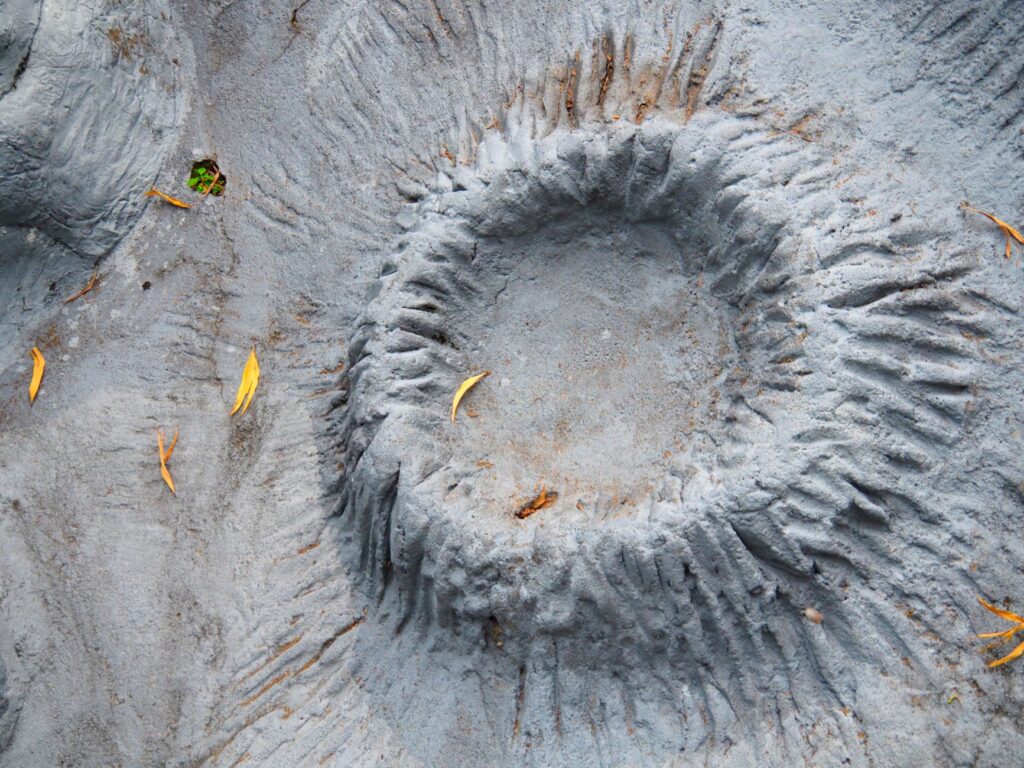
Geological Oddities and Micro-Topographic Anomalies
Solid earth geology, often perceived as static, hosts dynamic processes that defy easy categorization. Across arid desert floors and permafrost tundras, structural patterns emerge spontaneously from the landscape without direct human or biological intervention.
Classic examples include patterned ground formations in polar regions, where cryogenic frost heave sorts loose stones into precise stone polygons and circles over decadal timescales. Similarly, the long-standing conundrum of the “sailing stones” in Racetrack Playa, Death Valley—where heavy boulders leave elongated trails across dry mud beds—was resolved only when high-precision GPS sensors caught rare micro-climatic convergences of thin ice sheets, shallow water pooling, and specific wind vectors. These resolutions do not diminish the wonder of the natural landscape; instead, they highlight how subtle, multi-tiered interactions yield macroscopic behaviors that seem inexplicable at first glance.
The Frontier of Empirical Wonder
The persistent mysteries of nature underscore the modesty required in the enterprise of empirical science. Far from being depleted, the frontier of terrestrial discovery expands as our diagnostic sensors improve. Every unexplained seismic resonance, atmospheric flash, and unexpected evolutionary adaptation acts as an invitation to refine our investigative paradigms.
Nature does not hide its secrets out of malice or deliberate deceit. The persistent anomalies on our planet simply reflect the vast, interconnected tapestry of non-linear physical laws operating on scales that human observation is only beginning to integrate. As long as researchers continue to observe with humility and analytical rigor, Earth’s remaining mysteries will remain the greatest catalysts for scientific progress.