Few questions have captured the human imagination quite like the prospect of alien contact. For millennia, humanity looked up at the night sky and populated the heavens with deities, spirits, and mythological beings. In the modern era, that metaphysical curiosity has transformed into a rigorous scientific endeavor. As astrobiology, astrophysics, and computational power advance, the search for extraterrestrial intelligence (SETI) has evolved from speculative science fiction into a methodical investigation into our cosmic solitude.
The Fermi Paradox: Reconciling the Great Silence
The baseline dilemma of alien contact was articulated concisely by physicist Enrico Fermi in the mid-twentieth century: if intelligent life is a natural outcome of planetary evolution, and given the billions of stars older than our Sun in the Milky Way, where is everybody? This apparent contradiction between high probabilistic estimates for the existence of extraterrestrial civilizations and the absence of verifiable evidence is known as the Fermi Paradox.
Scientists have proposed diverse hypotheses to explain this eerie cosmic silence:
- The Rare Earth Hypothesis: Suggests that while microbial life might be common, the specific evolutionary pathways required for complex, technological intelligence require an improbable convergence of geological, planetary, and biological conditions.
- The Great Filter: Postulates an evolutionary barrier so formidable that almost no species can survive it—whether emerging from natural bottlenecks or self-inflicted annihilation via technological maturity.
- The Zoo Hypothesis: Argues that advanced civilizations may intentionally avoid interference, observing humanity from afar until our society reaches a specific technological or ethical threshold.
From Radio Waves to Biosignatures: The Modern Search
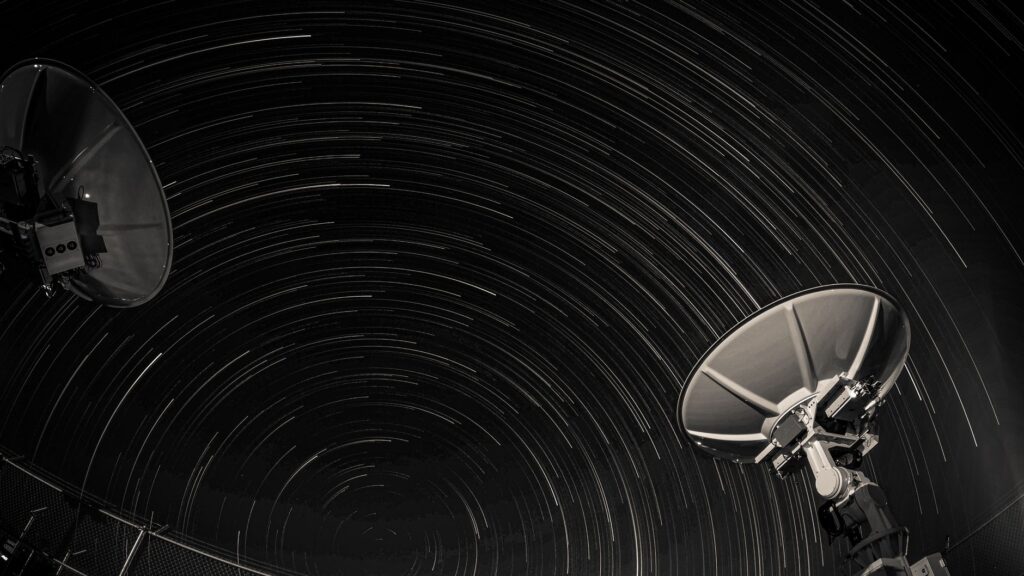
For decades, the search for alien contact focused primarily on radio astronomy. Pioneer projects initiated during the latter half of the twentieth century surveyed narrow frequency bands, operating on the premise that radio frequencies within the “water hole”—the quiet spectral region between hydrogen and hydroxyl emissions—would serve as a universal interstellar calling card.
Today, the technological scope has broadened dramatically. Modern researchers look beyond deliberate radio transmissions to identify a spectrum of possible indicators:
1. Technosignatures
Technosignatures encompass any measurable indicator of advanced technology operating beyond Earth. This includes industrial atmospheric pollutants (such as chlorofluorocarbons) on distant exoplanets, synthetic laser bursts designed for interstellar navigation, and anomalous mega-engineering structures like Dyson spheres, which could cause irregular dips in stellar luminosity.
2. Biosignatures and Atmospheric Spectroscopy
With space observatories possessing advanced spectroscopic instruments, astrobiologists analyze the atmospheric compositions of exoplanets within their stars’ habitable zones. Detecting disequilibrium combinations—such as methane coexisting with oxygen in significant quantities—provides indirect yet compelling evidence of active biological processes, even without direct communication.

The Cultural Mirror: Cold War Fears and Pop Culture Archetypes
Humanity’s conception of alien contact has always mirrored its contemporary terrestrial anxieties. In the mid-twentieth century, the rapid emergence of UFO folklore corresponded directly with Cold War tensions, atomic experimentation, and the birth of rocketry. Alien visitors were routinely portrayed in media either as ruthless conquerors echoing geopolitical paranoia or as benevolent planetary custodians warning humans against self-destruction.
“The nature of first contact in popular imagination reveals far more about the psychology and existential fears of humanity than it does about the actual biology of extraterrestrial life.”
Scientifically grounded narratives, such as Carl Sagan’s seminal novel Contact, presented a more nuanced vision: first contact as an intellectual awakening, grounded in prime numbers and universal mathematical constants. These works highlighted the convergence of science, philosophy, and faith, demonstrating that the discovery of an alien signal would profoundly redefine human self-conception.
Protocols of Contact: Preparing for the Day After
Should humanity detect an authentic technosignature, what happens next? The International Academy of Astronautics (IAA) and organizations within the SETI community have established post-detection protocols to govern the global response. These non-binding guidelines emphasize transparency, international verification, and cautious scientific scrutiny:
- Confirmation and Verification: The discovering team must rule out terrestrial interference, instrumental artifacts, and natural astronomical phenomena before publicizing findings.
- International Notification: The United Nations, national governments, and global scientific unions must be officially briefed prior to a coordinated global release.
- The METI Debate: An ongoing controversy surrounds Messaging Extraterrestrial Intelligence (METI). Many prominent scientists caution against actively broadcasting signals into deep space, arguing that alerting technologically superior civilizations poses an asymmetrical risk to Earth.
Artificial Intelligence and the Future of Discovery
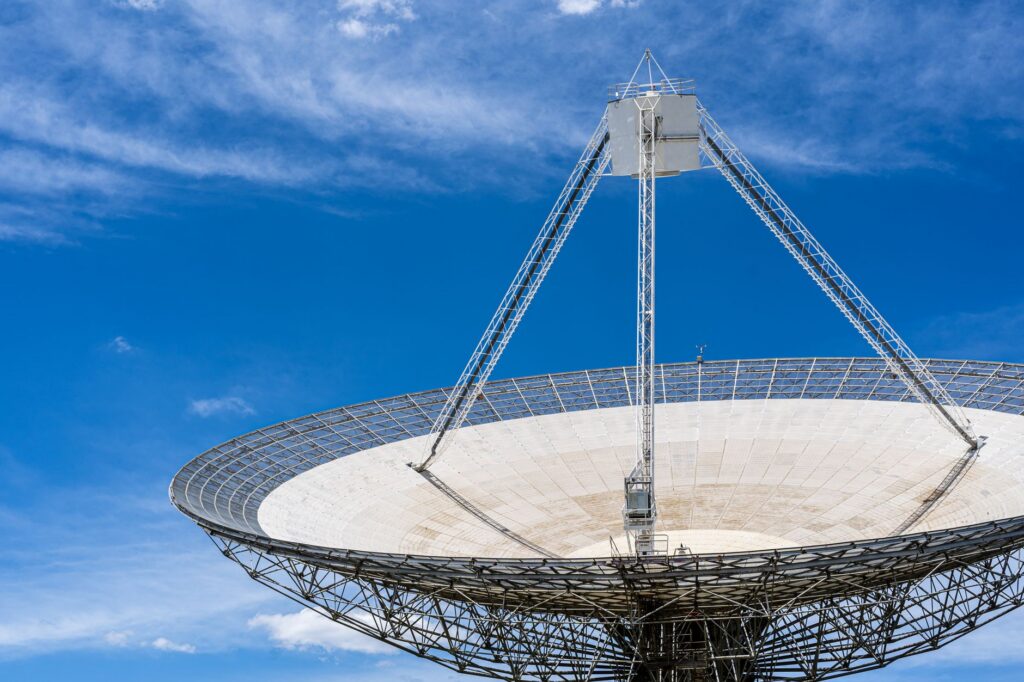
The sheer volume of observational data collected by modern sky surveys surpasses human analytical capacity. Terabytes of radio and optical data flood computing centers daily from distributed arrays across the globe. Machine learning algorithms and neural networks are increasingly deployed to filter terrestrial noise, flag anomalous signals, and recognize patterns that human observers might overlook.
As artificial intelligence transforms data processing, it also influences how theorists envision alien intelligence. Many astrobiologists argue that any civilization capable of crossing interstellar distances may have long transitioned beyond biological bodies into synthetic or post-biological forms. Contact might not occur with flesh-and-blood entities, but with autonomous, long-lived computational probes or automated beacons drifting across the stellar medium.
Conclusion: The Value of the Journey
Whether alien contact arrives tomorrow through a decoded mathematical transmission, centuries from now through biological signs on an exoplanet, or never at all, the pursuit remains profoundly transformative. Searching for intelligence elsewhere compels humanity to view Earth not as a fractured map of competing borders, but as a singular, fragile oasis in an indifferent universe. In striving to understand the silence of the cosmos, we ultimately deepen our understanding of ourselves.