When OpenAI launched ChatGPT in November 2022, few anticipated how quickly a conversational web interface would redefine modern technology. Within months, ChatGPT became one of the fastest-growing consumer applications in history, sparking an unprecedented surge in generative artificial intelligence research, venture capital investment, and enterprise adoption. What began as an experimental prototype has evolved into an essential digital utility, fundamentally altering how humans write, program, analyze data, and interact with software systems.
Understanding ChatGPT requires examining not only its cultural resonance but also the sophisticated architectural foundations that power it. By combining advanced deep learning techniques with iterative alignment strategies, modern conversational models have shifted the paradigm of computing from deterministic instructions to flexible, contextual dialogue.

The Architectural Foundations: Transformers and Alignment
At the core of ChatGPT lies the Generative Pre-trained Transformer (GPT) architecture, a neural network design introduced by Google researchers in 2017 that relies on self-attention mechanisms. Unlike prior sequential models such as Recurrent Neural Networks (RNNs), transformers process entire sequences of text in parallel. This parallelism allows models to capture intricate semantic relationships and long-range dependencies across massive corpora of written text.
However, raw pre-training on web-scale text only produces an autoregressive language model—a system trained simply to predict the next token in a sequence. Such a base model can generate coherent prose, but it often produces unhelpful, biased, or toxic outputs. Transforming this raw statistical engine into an intuitive assistant required significant innovations in alignment methodology:
- Supervised Fine-Tuning (SFT): Human annotators create high-quality demonstration datasets containing prompt-and-response pairs, teaching the model standard conversational formats and helpful answer structures.
- Reinforcement Learning from Human Feedback (RLHF): Human evaluators rank multiple model completions based on helpfulness, accuracy, and harmlessness. These rankings train a separate reward model.
- Proximal Policy Optimization (PPO): The generative model is fine-tuned against the reward model using reinforcement learning algorithms, aligning model behaviors directly with human preferences and safety guidelines.
Through this multi-stage pipeline, ChatGPT learned not just what words are likely to follow one another, but how to follow complex user instructions, clarify ambiguities, admit limitations, and reject harmful requests.

The Leap to Multimodality and Advanced Reasoning
While early iterations were strictly limited to processing and generating plain text, recent advancements have expanded ChatGPT into a multimodal cognitive platform. Users can now supply images, voice queries, spreadsheets, and document attachments, receiving nuanced visual analysis, audio interaction, and data-driven insights in return.
This shift from pure text to multimodality mirrors human cognition, where linguistic comprehension is continuously reinforced by visual and auditory cues. In practical terms, multimodal models can interpret complex diagrams, extract information from scanned financial statements, assist visually impaired users with real-world scene descriptions, and debug software interfaces directly from UI mockups.
“The transition from text-only models to multimodal architectures represents a pivotal shift: AI is no longer merely processing human language, but developing a unified contextual understanding of visual, auditory, and structural information.”
Parallel to multimodal capabilities is the ongoing development of chain-of-thought reasoning models. By internally generating intermediate reasoning steps before delivering a final answer, newer model families can tackle complex mathematical proofs, competitive coding challenges, and intricate logical puzzles with significantly lower error rates than traditional autoregressive generators.
Cross-Industry Disruption and Workflow Transformation
The practical utility of ChatGPT spans across nearly every knowledge-intensive discipline. Far from being a novelty chatbot, it serves as a force multiplier across diverse professional workflows:
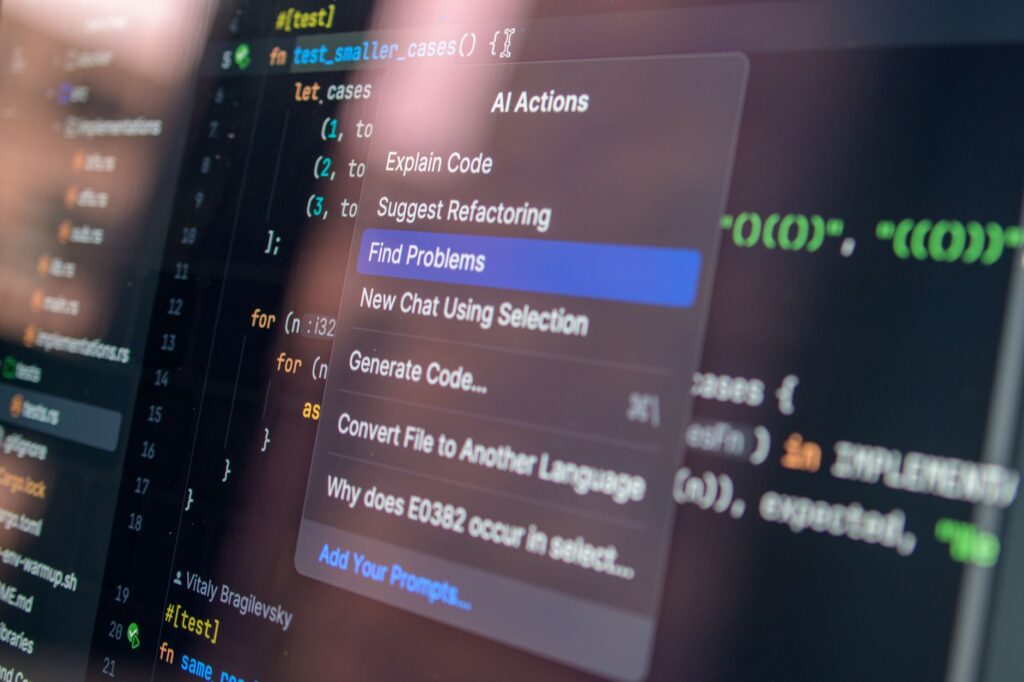
- Software Engineering: Developers leverage the platform to generate boilerplate code, explain legacy architectures, translate routines between languages, and identify security vulnerabilities. The result is accelerated development cycles and reduced cognitive overhead.
- Enterprise Knowledge Management: Organizations integrate conversational agents with proprietary internal databases using Retrieval-Augmented Generation (RAG). Employees can query complex policy documentation, technical wikis, and historical reports using natural language.
- Education and Academic Research: Educators and students use the system as a personalized tutor capable of breaking down complex scientific concepts into accessible analogies, drafting practice problems, and providing instant grammatical feedback.
- Customer Experience: Modern customer support operations deploy fine-tuned conversational agents to handle complex customer queries autonomously, escalating only edge cases to human representatives.

Technical Vulnerabilities and Societal Dilemmas
Despite its remarkable utility, ChatGPT presents profound technical and ethical challenges that researchers and policymakers are actively navigating. The most prominent technical challenge remains hallucination—the generation of factually incorrect or entirely fabricated statements delivered with absolute confidence. Because language models optimize for plausible statistical continuations rather than factual truth, rigorous verification remains essential in high-stakes fields like medicine and law.
Beyond factual accuracy, several systemic concerns demand ongoing attention:
- Intellectual Property and Fair Use: Training foundational models requires scraping billions of web pages, sparking intense legal debates over whether unauthorized use of copyrighted literature, art, and journalism constitutes legitimate fair use.
- Data Privacy and Enterprise Security: Unrestricted transmission of proprietary source code or confidential medical records to third-party model providers introduces significant data leakage risks, prompting strict corporate governance frameworks.
- Workforce Transition: As generative models automate routine writing, summarization, and basic programming, the job market faces structural shifts, necessitating continuous upskilling and modern educational curricula.
- Adversarial Attacks and Jailbreaking: Malicious actors continuously devise prompt injection techniques designed to bypass built-in safety guardrails to generate disinformation, malicious code, or phishing material.

The Emerging Era of Autonomous Agents
The next frontier in conversational AI lies in autonomous agency. While traditional chatbots operate reactively—waiting for user input and responding with static text—agentic architectures are designed to plan multi-step workflows, interact with external software tools, browse the live web, and execute tasks with minimal human intervention.
By integrating tools such as web browsers, code execution environments, and API connectors, ChatGPT can plan a vacation, book tickets, analyze real-time market data, or draft and send emails across integrated software suites. While this shift unlocks immense productivity gains, it also raises the stakes for safety, as autonomous actions taken across the open internet demand robust verification, sandboxed execution, and strict permission models.
Conclusion
ChatGPT has transcended its initial role as a conversational experiment to become a foundational pillar of modern digital infrastructure. By bridging complex computational models with natural human language, it has democratized access to advanced computing. As the technology continues to mature toward multimodal perception, rigorous logical reasoning, and autonomous execution, the primary responsibility rests on developers, regulators, and users to foster an ecosystem where generative intelligence operates securely, transparently, and beneficially alongside human potential.