Introduction: The Dual Nature of the Alien
Few concepts have captivated the human imagination quite like the prospect of alien life. Derived etymologically from the Latin alienus—denoting that which belongs elsewhere or is unfamiliar—the term carries both legal and cosmic resonance. In contemporary discourse, however, the word almost universally evokes the search for extraterrestrial intelligence. Beyond the sensationalism of flying saucers and science fiction, our enduring fascination with the alien represents a profound intersection of existential philosophy, geopolitical history, and cutting-edge empirical science.
Are we alone in the universe, or is life a natural consequence of cosmic chemistry? While early civilizations projected their hopes and terrors into gods and supernatural beings, modern humanity looks outward to the stars. The journey to comprehend extraterrestrial life requires navigating through historical secrecy, cultural mythmaking, and the rigorous methodologies of astrobiology and observational astronomy.
The Cultural Genesis: Cold War Secrecy and Modern Mythology
The contemporary phenomenon of the extraterrestrial visitor took distinct shape in the mid-twentieth century. Following World War II, the dawn of the atomic age and the rapid expansion of aviation technology coincided with a surge in unidentified aerial phenomena (UAP) reports across the globe.
A foundational turning point occurred in July 1947 near Roswell, New Mexico. The initial military press release announcing the recovery of a ‘flying disc’—promptly retracted and reclassified as a weather balloon—ignited decades of suspicion and conspiracy theories. Historical records later revealed that the debris belonged to Project Mogul, a top-secret Cold War initiative designed to detect Soviet atomic bomb detonations using high-altitude acoustic sensors. However, the culture of official secrecy inadvertently created a vacuum, quickly filled by folklore, tabloid narratives, and enduring mythologies of recovered spacecraft and clandestine government laboratories.
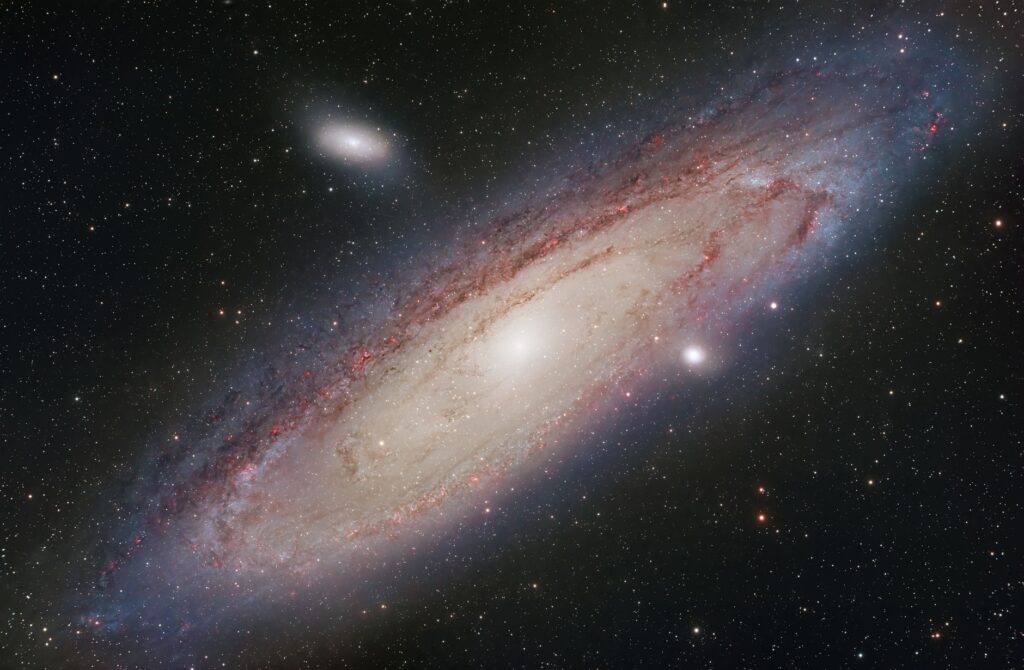
The Roswell incident demonstrated how political paranoia and technological transitions could coalesce into a modern mythology. Throughout the subsequent decades, the concept of the alien functioned as a cultural mirror. During periods of international tension, alien invasion narratives reflected anxieties over foreign subversion, totalitarianism, and nuclear annihilation. Conversely, in eras characterized by environmental crises or ideological disillusionment, depictions often shifted toward benevolent, enlightened cosmic messengers offering salvation to an endangered species.
Astrobiology and the Scientific Search for Life
While popular culture remains fixated on dramatic visitations, professional science approaches the question of alien life with systematic skepticism and rigorous instrumentation. Astrobiology—the multidisciplinary study of the origin, evolution, and distribution of life across the cosmos—has fundamentally altered our parameters of habitability over the last several decades.
Key areas of contemporary scientific exploration include:
- Extremophiles on Earth: The discovery of organisms thriving in boiling hydrothermal vents, hyper-saline basins, and subglacial Antarctic lakes proves that biological processes can endure conditions once deemed hostile to all organic matter.
- Subsurface Oceans in the Solar System: Celestial bodies such as Jupiter’s moon Europa and Saturn’s moon Enceladus harbor vast liquid water oceans beneath icy crusts, heated by tidal friction and chemical activity that could potentially support microbial ecosystems.
- Exoplanet Characterization: Utilizing space observatories such as the James Webb Space Telescope (JWST), astronomers now analyze the atmospheric compositions of planets orbiting distant stars, actively scanning for potential biosignatures—such as anomalous balances of methane, oxygen, and carbon dioxide.
Underpinning this empirical inquiry is the famous Drake Equation, formulated by astronomer Frank Drake in 1961 to estimate the number of active, communicative civilizations within the Milky Way galaxy. Yet, despite decades of listening via radio telescopes under the auspices of SETI (Search for Extraterrestrial Intelligence), humanity has encountered only cosmic silence—a paradox famously articulated by physicist Enrico Fermi: ‘Where is everybody?’
The Technological Shift: Artificial Intelligence in Anomaly Detection
The transition from manual observations to automated data collection has transformed contemporary astronomical and aerospace investigations. Today, ground-based sensors, orbital platforms, and astronomical surveys generate petabytes of telemetry daily. Sifting through this staggering volume of information presents a formidable challenge that human researchers cannot address alone.
Machine learning models and advanced computational algorithms have emerged as critical tools in modern astronomical surveillance and UAP evaluation:
- Signal Deconvolution: In SETI initiatives, neural networks are deployed to isolate narrow-band radio signals from pervasive human-generated electromagnetic interference, drastically minimizing false positives.
- Atmospheric Anomaly Identification: Modern aerospace surveillance systems leverage computer vision to track, characterize, and contextualize high-speed aerial objects, distinguishing mundane phenomena—such as weather balloons, drones, and optical artifacts—from truly anomalous sensor data.
- Automated Spectral Analysis: Algorithms process complex light absorption curves from transiting exoplanets, flagging chemical fingerprints that warrant detailed follow-up investigation by international teams.
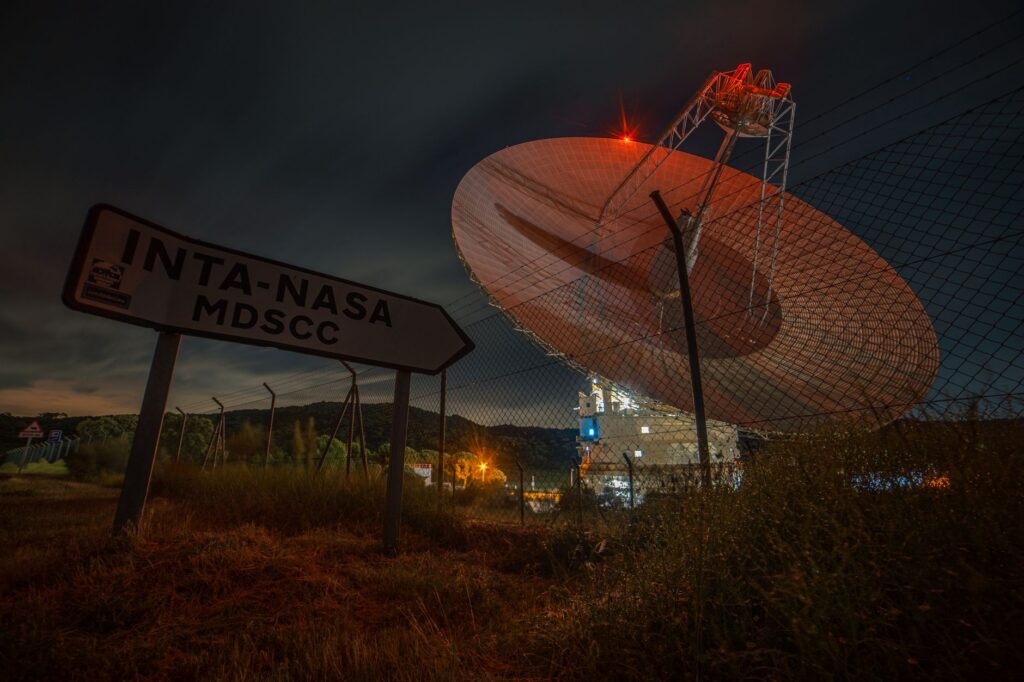
Rather than relying on blurry photographs or eyewitness testimony prone to cognitive bias, the modern search demands verifiable, multi-sensor calibration. By bridging traditional radio astronomy and artificial intelligence, researchers are establishing standard protocols to separate real anomalies from technical noise.
The Philosophical Mirror: Why the Question Persists
Ultimately, the quest to encounter or understand alien life is not merely an exercise in biology or physics; it is a profound philosophical inquiry into our own identity. Carl Sagan famously remarked that our search for extraterrestrial intelligence is, in truth, an effort to understand ourselves within the vast cosmic tapestry.
‘The universe is a pretty big place. If it’s just us, seems like an awful waste of space.’ — Carl Sagan
Discovering even a single microbe on Mars or in the plumes of Enceladus would represent a second genesis, proving that biology is not a terrestrial anomaly but a cosmic imperative. Conversely, definitive evidence that intelligent life is extraordinarily rare would impose upon humanity an immense ethical obligation to preserve consciousness, protect our biosphere, and cultivate collective wisdom.
Conclusion
The alien represents both the empirical frontier of modern science and the metaphorical horizon of human curiosity. Whether through the deconstruction of historical Cold War secrecy, the deployment of sophisticated artificial intelligence in deep-space monitoring, or the spectroscopic examination of distant worlds, our inquiry into extraterrestrial life pushes the boundaries of knowledge. Until tangible contact or definitive evidence is achieved, the concept of the alien will continue to compel humanity forward, challenging our provincial perspectives and reminding us of the enduring mystery awaiting beyond our skies.