A settlement left behind
In the summer of 1587, more than a hundred English colonists established a settlement on Roanoke Island, off the coast of what is now North Carolina. The expedition was led by John White, who had previously explored the region. The group included men, women, and children; White’s granddaughter, Virginia Dare, was born there in August. She is often described as the first English child born in the Americas, though the claim refers specifically to an English settlement.
The colony depended on supplies from England. White sailed back across the Atlantic that year to seek assistance, leaving the settlers behind. His return was delayed by war between England and Spain, which diverted ships and resources. He did not reach Roanoke again until 1590.
On arriving, White found the settlement deserted. The buildings had been dismantled rather than simply abandoned in a state of obvious destruction. A fence or defensive barrier had been built around the site. There were no bodies, and no clear sign of a battle. The colonists themselves were nowhere to be found.
Two marks, and no explanation
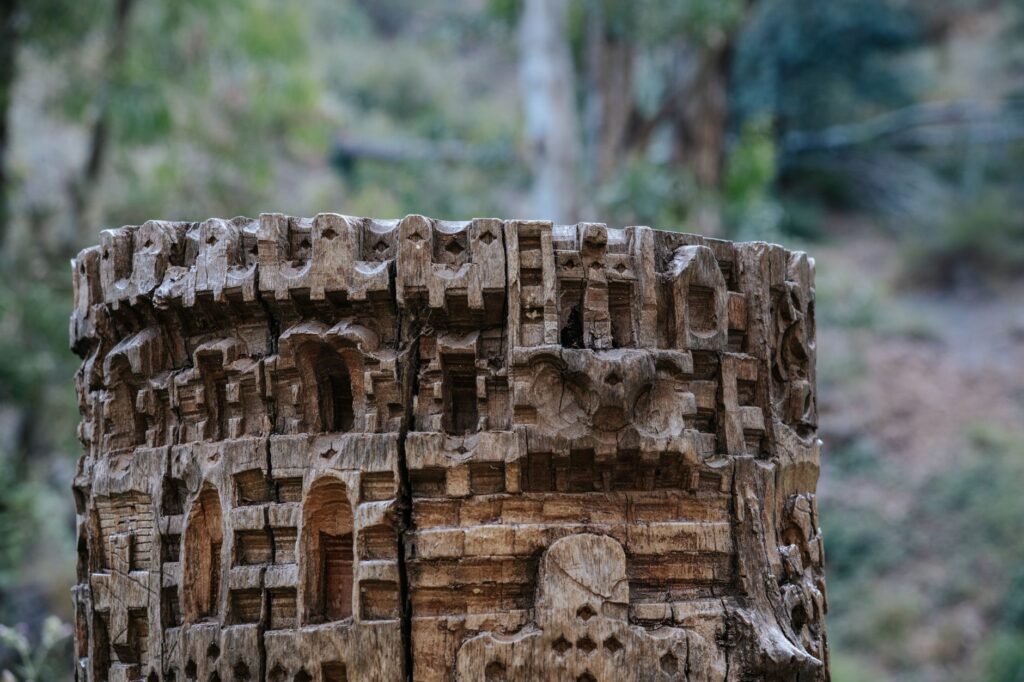
White found the word “CROATOAN” carved into a post. The letters “CRO” had also been cut into a nearby tree. Before he left for England, White had agreed with the colonists that, if they moved, they would carve the name of their destination into a visible place. If danger forced them to leave, they were to add a cross.
White saw no cross. He took this as a sign that the settlers had left by choice and headed toward Croatoan, an island associated with the Indigenous Croatan people. The island is generally identified with present-day Hatteras Island. But a violent storm and damage to the ships prevented White from making the planned journey there. He was forced to return to England without confirming what had happened.
The carved word is the strongest direct clue to the colonists’ intended destination, but it does not prove that they reached it. Nor does it establish whether everyone moved together, whether some people went elsewhere, or what became of them after leaving Roanoke.
What the evidence can support
A move to Croatoan is one of the most plausible explanations because it fits White’s instructions and the word he found. Some researchers have considered whether colonists joined Indigenous communities, perhaps after traveling to Hatteras or another nearby location. This possibility is consistent with the region’s geography and with the possibility of contact between English settlers and Indigenous people. It remains difficult to establish a particular destination or identify individual colonists in later accounts.
Other proposals suggest that the settlers dispersed inland or along the coast in search of food and security. It is also possible that they split into smaller groups. These explanations are not necessarily incompatible: a portion of the colony could have traveled toward Croatoan while others went elsewhere. The surviving evidence does not provide a complete route or a reliable account of their later lives.
Archaeology has added detail to the history of English activity in the region, but it has not produced a universally accepted discovery that identifies the missing colonists. Objects found at a site can be difficult to interpret: an English artifact may indicate trade, later visitation, or settlement, and not necessarily the presence of White’s group. Dating, context, and a clear connection to the 1587 colony matter as much as the object itself.
Why the question remains open
The record is unusually thin because the people who might have explained events left no known written account. White’s brief observations describe what he saw when he returned, not what happened during his absence. The gap between departure and discovery also gave time for buildings to disappear, objects to be moved, and any surviving community to change or relocate.
Later retellings sometimes turn the disappearance into a single dramatic event. The evidence does not justify that certainty. There is no confirmed massacre, no verified account of a mass voyage, and no proof that all the colonists died together. The absence of bodies does not tell us whether they survived, dispersed, or perished in circumstances that left little trace.
Roanoke’s mystery is therefore not simply a question of where a colony went. It is a problem of historical inference: a few contemporary clues must be weighed against a landscape and a record that cannot preserve every detail. “CROATOAN” gives investigators a direction to consider, not a final answer. Until evidence securely links the settlers to a later community or site, the fate of the colony remains unresolved.