A sound heard across the ocean
In the summer of 1997, a network of underwater listening devices operated by the U.S. National Oceanic and Atmospheric Administration recorded an unusually powerful, low-frequency sound in the South Pacific. Researchers later nicknamed it “the Bloop.” Its strength and unusual acoustic character attracted attention because it was detected by sensors thousands of kilometers apart, suggesting a source powerful enough to carry through a vast stretch of ocean.
The recording was not a microphone capturing a nearby animal or vessel. It came from hydrophones, instruments designed to detect sound underwater, including sensors associated with a system originally built to monitor nuclear tests. Those instruments could register distant signals that would be difficult to hear with ordinary equipment. The Bloop became one of the most memorable examples of how much of the ocean remains acoustically unexplored.
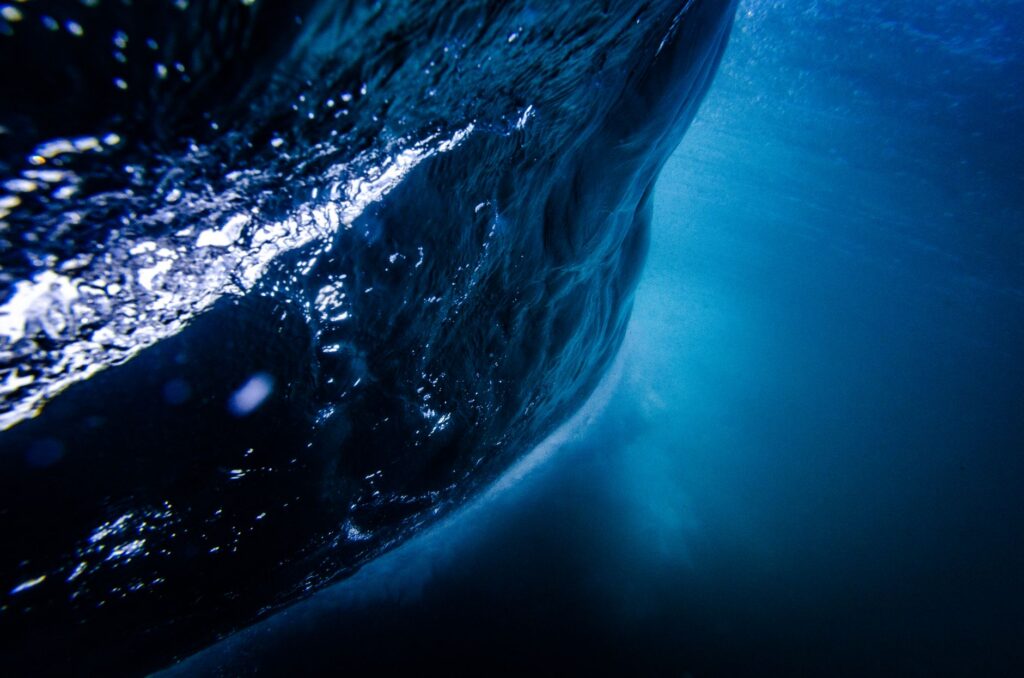
What the recording can—and cannot—tell us
Sound travels differently through seawater than through air. Temperature, pressure, and salinity affect its path, and some conditions allow sound to travel over very long distances. That means a hydrophone may record an event far from its source. The apparent reach of the Bloop is therefore evidence of a strong signal and a favorable route through the water, not a precise map of where it began.
Researchers can study a recording’s frequency pattern, duration, and relative arrival times at different sensors. These clues help distinguish possible sources, but they do not automatically identify one. Without a nearby instrument, visual observation, or a repeatable event, the original source may remain uncertain even when a broad class of explanations seems likely.

The leading explanation: moving ice
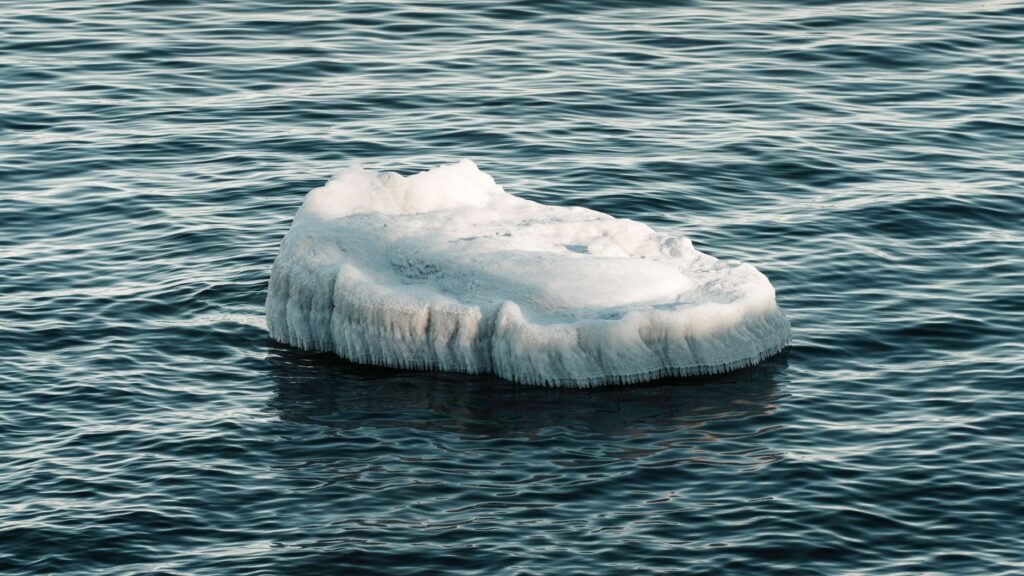
NOAA has linked the Bloop’s acoustic pattern to sounds produced by large ice events, such as cracking or breaking ice. Icequakes and the fracture of icebergs can generate powerful, low-frequency signals that travel across ocean basins. Some recorded ice sounds have characteristics comparable to those of the 1997 signal, making an ice-related event a plausible explanation.
This interpretation is more grounded than the early speculation that the sound might have come from a gigantic unknown animal. The ocean contains large animals capable of producing loud calls, but the Bloop’s scale and acoustic profile prompted comparisons with geological and ice-related events. A striking sound alone is not evidence of an undiscovered creature; it must be evaluated against known sources and the limits of the recording.
Why the answer is not exact
Calling the Bloop an ice-related sound is not the same as identifying the particular crack, iceberg, or location responsible. The recording was made remotely, and the available sensors were not positioned to observe the event directly. Acoustic signals can also change as they travel, which complicates efforts to infer the source from the sound alone.
In other words, the broad explanation may be convincing while the event itself remains unresolved. Scientists have not publicly established a precise point of origin and a specific piece of ice as the source of the original recording. The distinction matters: a mystery can narrow substantially without disappearing altogether.
What the Bloop still reveals
The episode illustrates both the reach and the limits of ocean listening. A small number of sensitive instruments can register distant events, revealing activity that would otherwise go unnoticed. Yet a recording stripped of visual context can support several interpretations, especially when no sensor is close enough to capture the source in detail.
Today, the Bloop is best treated not as proof of a sea monster but as a memorable acoustic observation with a likely natural explanation and an uncertain precise origin. Its scientific value lies in that distinction. It shows how researchers move from an unexplained signal toward testable possibilities—and why even a strong explanation may leave some details beyond recovery.