The Evolution of Gemini: Unifying Frontier Research
The landscape of modern artificial intelligence has experienced a fundamental shift from specialized single-task algorithms toward flexible, foundational systems. At the center of this transition stands Gemini, a flagship model family developed by Google DeepMind. The name itself reflects a conceptual synthesis: drawing inspiration from the celestial twins and historical space exploration, Gemini represents the collaborative fusion of pioneering engineering teams from Google Brain and DeepMind. Rather than treating vision, audio, and language as disparate engineering domains, Gemini was designed from the ground up to unify these perception layers under a single cohesive framework.
Historically, constructing systems capable of processing multiple modalities relied on a composite methodology. Developers often chained isolated specialist models together—such as feeding the text output of an optical character recognition (OCR) engine or an automated speech recognition system into a large language model. While functional, this pipeline approach routinely introduced latency, accumulated cascading errors, and failed to capture nuanced contextual interplay between disparate signals. Gemini addresses this historical bottleneck by establishing native multimodal processing as its core design philosophy.

Native Multimodality: An Architectural Leap
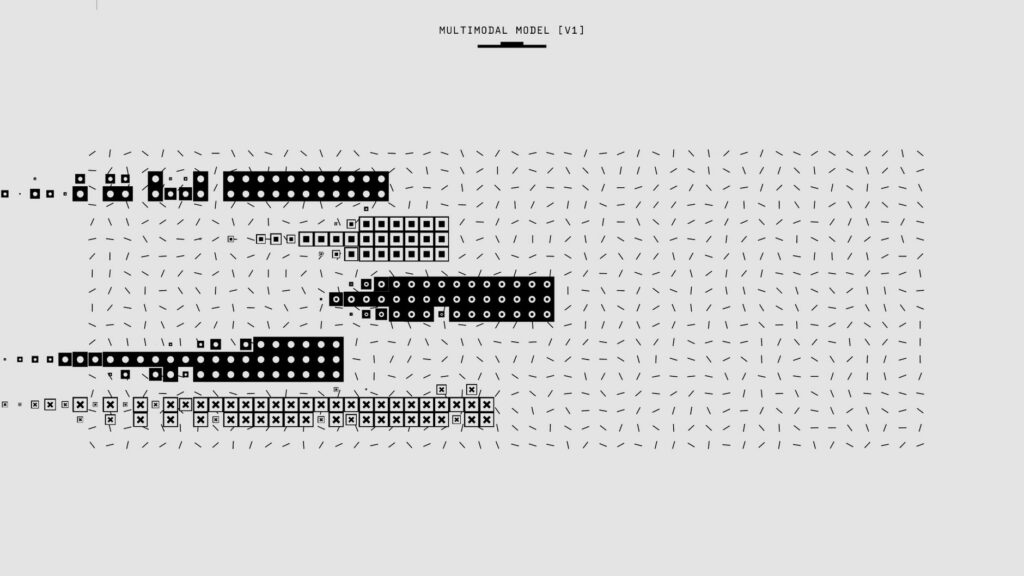
The defining architectural distinction of Gemini lies in its native multimodality. Pre-trained from the outset across diverse data modalities—encompassing text, high-resolution imagery, complex audio waveforms, video sequences, and source code—the architecture does not rely on post-hoc bridging layers. Instead, continuous representations from various inputs map directly into a shared internal embedding space.
This unified approach unlocks several profound computational advantages:
- Cross-Modal Reasoning: The model can analyze a diagram, interpret accompanying spoken commentary, and write production-ready code to simulate the depicted mechanics without intermediate format conversions.
- Temporal Coherence: In video processing, Gemini tracks objects, dialogue, and temporal transitions simultaneously, preserving context over extended sequential windows.
- Information Density: Non-textual modalities preserve semantic subtleties—such as vocal inflection, spatial layouts, or visual iconography—that would otherwise be stripped away during textual transcription.
By treating varied data streams as first-class citizens throughout the training cycle, the system demonstrates an innate ability to translate concepts seamlessly across media boundaries, establishing a baseline for general-purpose digital reasoning.
A Tiered Model Family for Diverse Compute Environments
Deploying state-of-the-art neural networks across real-world environments requires navigating strict compute, memory, and latency constraints. Recognizing that a single monolithic parameter scale cannot efficiently address every operational context, the Gemini family introduces distinct tiers tailored for specialized deployment vectors.
Gemini Ultra: Frontier Complexity and In-Depth Analysis
Engineered for complex reasoning benchmarks, Gemini Ultra handles massive datasets, nuanced scientific literature, advanced mathematical proofs, and high-complexity software engineering. Primarily hosted in hyperscale data center clusters, it serves tasks where output fidelity and deep problem solving outweigh strict millisecond latency constraints.
Gemini Pro: The Workhorse of Enterprise Software
Gemini Pro balances computational throughput with high cognitive performance. Serving as the primary engine for high-traffic enterprise applications, developer APIs, and consumer web interfaces, Pro is optimized to scale across thousands of concurrent interactions while maintaining robust cross-modal reasoning capabilities.
Gemini Flash: High-Velocity and Real-Time Interaction
Designed for applications demanding near-instantaneous responses, Gemini Flash emphasizes high throughput and minimal latency. By leveraging efficient parameter architectures and optimized attention mechanisms, Flash enables interactive workflows, real-time agentic orchestration, and high-volume data transformation at minimal inference cost.
Gemini Nano: Localized On-Device Intelligence
At the edge of the computing spectrum, Gemini Nano brings foundation model capabilities directly to mobile devices and local hardware. By operating entirely on consumer hardware chips, Nano guarantees low latency and strict data privacy, powering real-time transcription, message summarization, and device-level contextual assistance without an active network connection.

Transforming Software Applications and Developer Workflows
The practical implications of Gemini extend far beyond research benchmarks; they are actively reshaping contemporary software development and enterprise automation. In traditional software stacks, integrating multimodal capabilities required orchestrating multiple vendor APIs, complex ETL pipelines, and specialized feature extractors. With Gemini, developers can consolidate complex cognitive pipelines into unified programmatic prompts.
“The transition toward native multimodality fundamentally simplifies software design: rich visual and auditory inputs no longer require specialized microservices; they are interpreted directly within the primary cognitive layer of the application.”
Practical enterprise applications continue to multiply across domains:
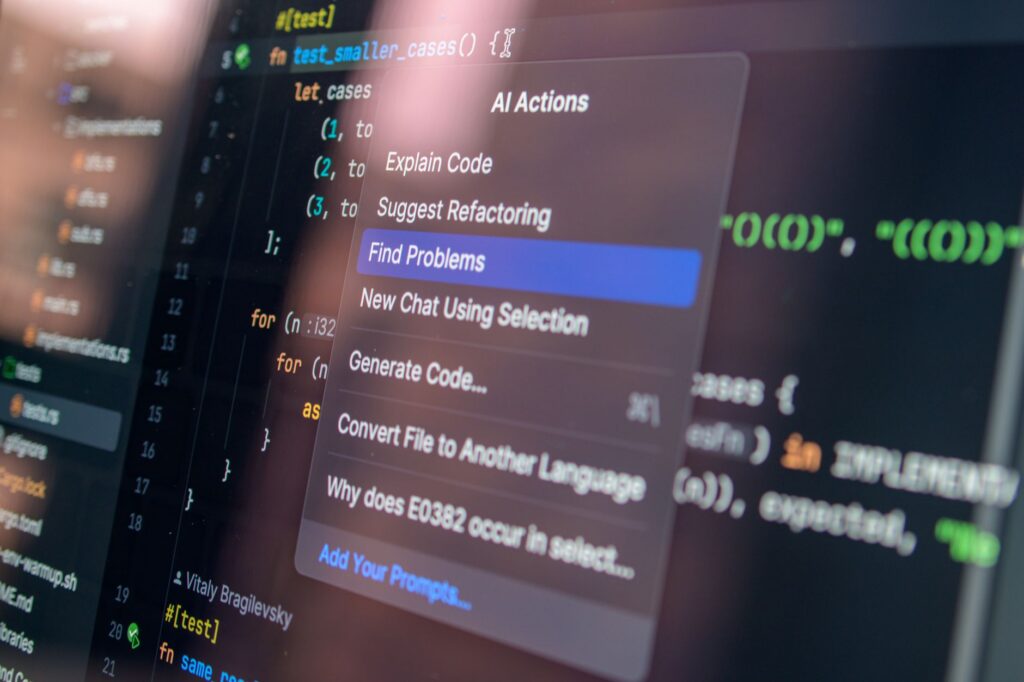
- Multimodal Code Generation: Developers can submit architectural wireframes, design mockups, and natural language specifications together, allowing the model to generate reactive front-end code and corresponding unit tests that reflect both visual and functional requirements.
- Automated Document Processing: Complex financial ledgers, dense scientific papers, and handwritten historical records containing tables, charts, and annotations can be parsed holistically without manual data structuring.
- Agentic Workflows: Operating as an ambient orchestrator, Gemini models can perceive screen states, navigate complex interfaces, execute multi-step analytical plans, and interact with external database systems dynamically.
Responsible Deployment and the Trajectory of Multimodal AI
As multimodal systems become increasingly integral to modern computing infrastructure, rigorous safety evaluation and ethical guardrails remain critical engineering priorities. Multimodal models introduce novel safety vectors, such as subtle visual adversarial perturbations or mixed-modality prompt injections. Mitigating these risks requires continuous reinforcement learning from human feedback (RLHF), comprehensive benchmark evaluations, and rigorous red-teaming across text, visual, and auditory vectors simultaneously.
Looking ahead, the development trajectory points toward expanded context windows capable of digesting entire code repositories or hours of continuous video, lower latency edge inference, and deeper autonomous tooling integration. Gemini exemplifies how unifying disparate perception channels into an integrated, scalable software ecosystem moves artificial intelligence closer to interacting naturally with the human world.