Few concepts have seized the human imagination quite like the prospect of alien life. While the term historically designates anything foreign or unfamiliar, its modern resonance almost universally evokes extraterrestrial biology—ranging from microscopic single-celled organisms thriving beneath icy alien crusts to hypothetical advanced technological civilizations. Far from being confined to science fiction, the investigation into extraterrestrial life has evolved into an interdisciplinary science combining astrophysics, planetary geology, organic chemistry, and evolutionary biology.
Today, researchers approach the alien question not through speculative fantasy, but through rigorous observational methodologies. As humanity charts thousands of worlds beyond our solar system, the central question has shifted from whether life could emerge elsewhere to where and how we might conclusively detect its presence.
The Astrobiological Foundation: Redefining the Parameters of Habitability
For decades, conventional wisdom assumed that life required conditions mirroring Earth’s temperate surface. However, astrobiology has profoundly broadened this horizon through the discovery of extremophiles on our own planet. Organisms flourishing in superheated hydrothermal vents, acidic hot springs, and hyper-saline subglacial lakes demonstrate that metabolic processes can persist in environments previously deemed completely sterile.
This realization has transformed our exploration of the solar system. Rather than restricting attention to surface zones warmed by the Sun, scientists now view subsurface oceans as prime candidates for harboring microbial ecosystems. Planetary bodies of primary interest include:
- Europa: A moon of Jupiter harboring a vast saltwater ocean beneath a dynamic icy crust, heated internally by tidal gravitational forces.
- Enceladus: A small moon of Saturn that actively vents organic-rich water vapor plumes into space from its south polar fractures.
- Titan: Saturn’s largest satellite, featuring a dense nitrogen atmosphere and liquid methane-ethane lakes, presenting a testing ground for potential alternative biochemistry.
- Mars: Where geological evidence confirms ancient river valleys and lakebeds, prompting ongoing robotic rover missions to drill for fossilized biosignatures.

The Fermi Paradox and the Great Silence
When considering intelligent alien life, astrophysicists confront a perplexing contradiction first popularized by physicist Enrico Fermi: the Fermi Paradox. Given the immense age of the Milky Way galaxy—roughly 13.6 billion years—and the presence of hundreds of billions of stars, simple statistical models suggest that intelligent life should have evolved multiple times and spread across interstellar distances. Yet, systematic astronomical observations have yielded no verified artificial signals, mega-engineering structures, or physical artifacts.
The discrepancy between high probabilistic estimates of extraterrestrial civilizations and humanity’s complete lack of contact constitutes one of the most profound unresolved questions in modern science.
Scholars have proposed numerous hypotheses to explain this “Great Silence.” One prominent framework is the Great Filter concept, which posits that an evolutionary barrier exists somewhere along the timeline from non-living matter to an interstellar civilization. If the filter lies behind us (such as the spontaneous origin of life or the transition to multicellularity), Earth is exceptionally rare. If the filter lies ahead (such as self-destruction through technological hubris or resource exhaustion), our future may be precarious.
Technosignatures and Biosignatures: The Modern Scientific Search
Rather than awaiting passive contact, observational astronomers actively search for subtle chemical and technological anomalies across the cosmos. This scientific effort is organized around two primary investigative domains: biosignatures and technosignatures.
Biosignatures represent detectable evidence of biological activity within an exoplanet’s atmosphere or surface. Modern orbital observatories, such as the James Webb Space Telescope (JWST), employ transmission spectroscopy to dissect starlight filtering through the thin atmospheres of transiting exoplanets. Researchers look for persistent chemical disequilibrium—such as the simultaneous presence of methane and oxygen—which would rapidly dissipate without continuous replenishment by living systems.
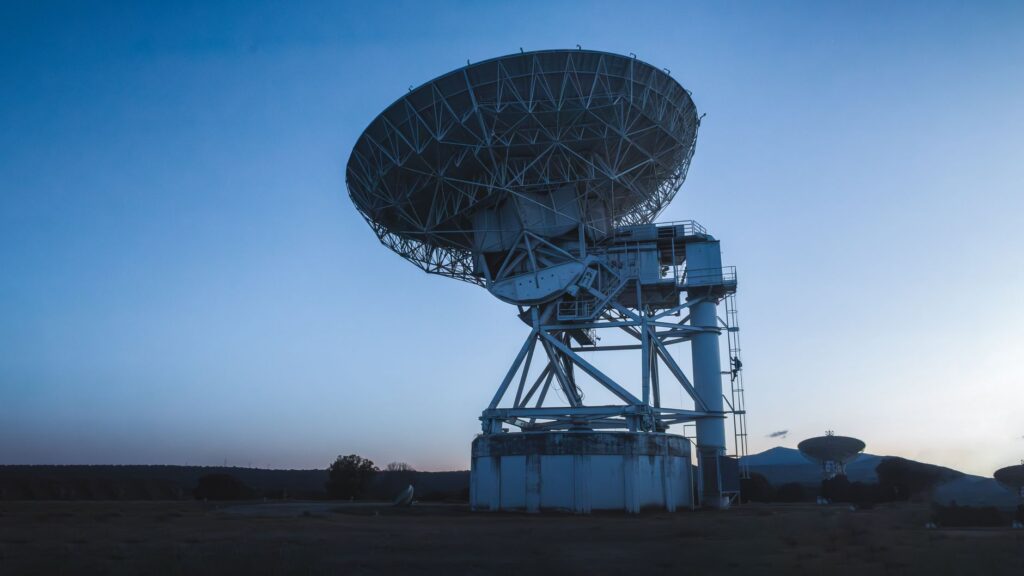
Technosignatures, on the other hand, represent indications of advanced engineered activity. Projects affiliated with the Search for Extraterrestrial Intelligence (SETI) monitor narrow-band radio frequencies, transient optical laser pulses, and infrared emissions that might betray the operation of energy-intensive technology or orbital megastructures.
Cultural Projections and the Implications of Discovery
Human representations of alien life have consistently mirrored our own societal anxieties, technological hopes, and philosophical paradigms. In early twentieth-century literature, aliens were often framed as imperialist invaders, reflecting terrestrial geopolitical conflicts. In later decades, depictions diversified into benevolent custodians or inscrutable cosmic forces, highlighting humanity’s growing awareness of its relative youth in an ancient cosmos.
Beyond culture, international scientific bodies maintain established frameworks regarding candidate signal verification. The protocol for confirmed detection demands rigorous independent confirmation across multiple observatories to eliminate instrumental error, terrestrial radio frequency interference, or natural astrophysical phenomena. A definitive discovery of alien biology—even microbial—would profoundly recalibrate humanity’s philosophical self-conception, permanently dispelling terrestrial biocentrism.
Conclusion: Looking Outward to Understand Inward
The quest to discover alien life remains one of the grandest scientific endeavors ever attempted. Whether the cosmos proves to be teeming with complex ecosystems or hauntingly barren, resolving the alien question will profoundly alter our understanding of the laws governing matter, evolution, and consciousness. In searching the deep silence of the cosmos, humanity simultaneously conducts an intimate examination of Earth’s own fragile and remarkable place in the universe.