The Spark of Modern UFO Mythology
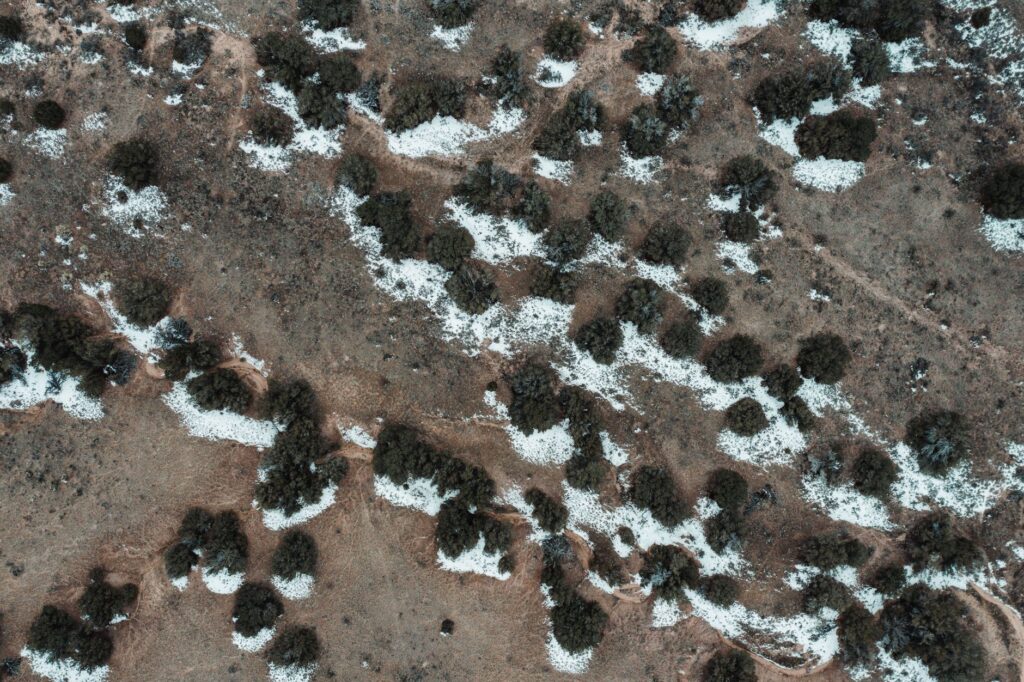
In early July 1947, amidst the arid rangelands of Chaves County, New Mexico, an event occurred that would fundamentally reshape American folklore and ignite decades of speculative intrigue. While checking sheep following a severe nighttime thunderstorm, ranch foreman William ‘Mac’ Brazel encountered an expansive field strewn with unusual wreckage approximately thirty miles north of the town of Roswell. The debris consisted of metallic foil, lightweight wooden beams, dense rubber strips, and tough parchment-like fabric. Lacking an immediate explanation, Brazel informed local authorities, setting in motion a sequence of military communications that birthed the world’s most enduring UFO controversy.
The historical backdrop of 1947 is essential to understanding the explosive public reaction. Only two weeks earlier, private pilot Kenneth Arnold had reported seeing nine gleaming, high-speed objects skipping through the skies near Mount Rainier, Washington. The press quickly coined the term flying saucers, creating a nationwide atmosphere of sky-watching fervor. America was stepping into the dawn of the Cold War, accompanied by rapid aerospace development, anxiety over nuclear weapons, and heightened suspicion of airborne foreign surveillance.
The Press Release That Shook the World
When Brazel reported his findings to Sheriff George Wilcox, the information was promptly passed to the Roswell Army Air Field (RAAF), home to the 509th Bombardment Group—at the time, the world’s only operational nuclear bombing unit. Major Jesse Marcel, the base intelligence officer, was dispatched alongside counterintelligence agents to inspect and collect the debris from the Foster ranch.
What followed remains one of the most astonishing communication episodes in military history. On July 8, 1947, public information officer Lieutenant Walter Haut issued an official press release approved by base commander Colonel William Blanchard. The release plainly declared that military personnel had recovered a ‘flying disc’:
‘The many rumors regarding the flying disc became a reality yesterday when the intelligence office of the 509th Bomb group of the Eighth Air Force, Roswell Army Air Field, was fortunate enough to gain possession of a disc through the cooperation of one of the local ranchers and the sheriff’s office of Chaves County.’
The sensational announcement flashed across international telegraph wires within hours, capturing front-page headlines across the globe. For roughly twenty-four hours, the United States government appeared to have validated the existence of interplanetary or mysterious aerial craft.

The Immediate Retraction and Three Decades of Silence
The flying disc narrative was extraordinarily short-lived. Later that same day, commanding officers at the Eighth Air Force headquarters in Fort Worth, Texas, intervened. Brigadier General Roger Ramey convened an impromptu press conference with local reporters and photographers. Major Marcel was photographed kneeling alongside fragments of metallic foil, thin balsa struts, and shredded neoprene.
Ramey announced that the field personnel had made a hasty and mistaken evaluation. According to the revised official narrative, the recovered materials were simply the remnants of a standard, expendable weather balloon carrying a six-sided, foil-covered rawinsonde radar target—a common hexagonal assembly designed to track high-altitude wind currents. Accepting the explanation, national newspapers printed the clarification, and public interest evaporated. For more than thirty years, the Roswell recovery remained an obscure footnote in regional New Mexico history.
The 1970s Resurgence: From Debris to Extraterrestrial Craft
The transition of Roswell from a forgotten Cold War misidentification to an international cultural phenomenon began in the late 1970s. Nuclear physicist and ufologist Stanton Friedman interviewed Jesse Marcel, who was then retired. Marcel asserted that the weather balloon explanation presented in Fort Worth was a staged cover-up. He claimed that the authentic debris he had handled in New Mexico possessed anomalous physical properties—extreme resilience, near-zero weight, and an inability to be scratched, dented, or ignited.
This testimony catalyzed a wave of investigative books, notably Charles Berlitz and William L. Moore’s 1980 volume, The Roswell Incident. Over the subsequent two decades, investigative writers tracked down dozens of first- and second-hand witnesses, including local morticians, civilian contractors, and relatives of former military staff. As the accounts multiplied, the narrative expanded far beyond structural debris: rumors surfaced concerning intact disc-shaped vessels, recovered alien corpses, clandestine autopsies conducted at military hospitals, and top-secret retrieval groups operating in deep secrecy.
Historical parallels were frequently drawn to earlier and later aerial anomalies, such as the 1897 Aurora, Texas incident and the 1980 Rendlesham Forest encounter in Suffolk, England. Yet Roswell retained a distinct status due to the unambiguous paper trail of the initial 1947 military press release.

The Cold War Reality: Declassifying Project Mogul
By the mid-1990s, intense public lobbying and an official inquiry initiated by New Mexico Congressman Steven Schiff prompted the General Accounting Office (GAO) and the United States Air Force to conduct an exhaustive historical review. The Air Force unsealed extensive Cold War archives to determine what had actually crashed near Corona and Roswell in July 1947.
The declassified records yielded a definitive, terrestrial explanation: Project Mogul. Conducted under extreme classification between 1947 and 1949, Project Mogul was a top-secret sensory surveillance program developed by New York University and atmospheric researchers for the Army Air Forces. Its objective was to deploy massive, multi-balloon trains equipped with low-frequency acoustic microphones into the upper atmosphere to detect pressure waves generated by anticipated Soviet atomic weapon detonations.
- Structural Composition: A single Mogul flight consisted of dozens of interconnected neoprene balloons stretching over six hundred feet, laden with ballast boxes, radar corner reflectors, and specialized sonobuoys.
- Material Correspondence: The radar targets were manufactured by commercial novelty and toy companies, utilizing balsa wood beams reinforced with purple-and-pink floral adhesive tape. These geometric patterns matched the descriptions of strange ‘hieroglyphics’ recounted decades later by civilian and military witnesses.
- The Missing Flight: Researchers matched the date, trajectory, and physical description of the Roswell debris directly to Project Mogul Flight No. 4, launched from Alamogordo Army Air Field in early June 1947 and never officially recovered.
Because Project Mogul was classified at a security level higher than the Manhattan Project, personnel at Roswell Army Air Field had no knowledge of its existence. When confronted with exotic wreckage that bore little resemblance to standard single weather balloons, base officers mistakenly assumed they had secured an unidentified craft. The military quickly used the weather balloon story to preserve the operational secrecy of their nuclear detection platform without alerting Soviet intelligence.
The Legacy of Roswell: Skepticism, Memory, and Pop Culture
In a subsequent 1997 report titled The Roswell Report: Case Closed, the Air Force sought to account for the persistent claims of recovered biological specimens. The report attributed these narratives to a psychological phenomenon known as ‘timeline compression.’ During the 1950s, the Air Force conducted high-altitude bio-mechanics experiments—such as Operation High Dive—which dropped anthropomorphic crash-test dummies with synthetic skin and jointed limbs over New Mexico. Decades later, aging witnesses appeared to have consolidated memories of these distinct, classified postwar tests with the original 1947 wreckage incident.
Today, the Roswell UFO incident occupies a dual legacy. For historians and defense analysts, it stands as an instructive case study in early Cold War compartmentalization, military public relations missteps, and the operational secrecy necessitated by nuclear competition. For popular culture, Roswell remains the defining epicenter of extraterrestrial folklore.
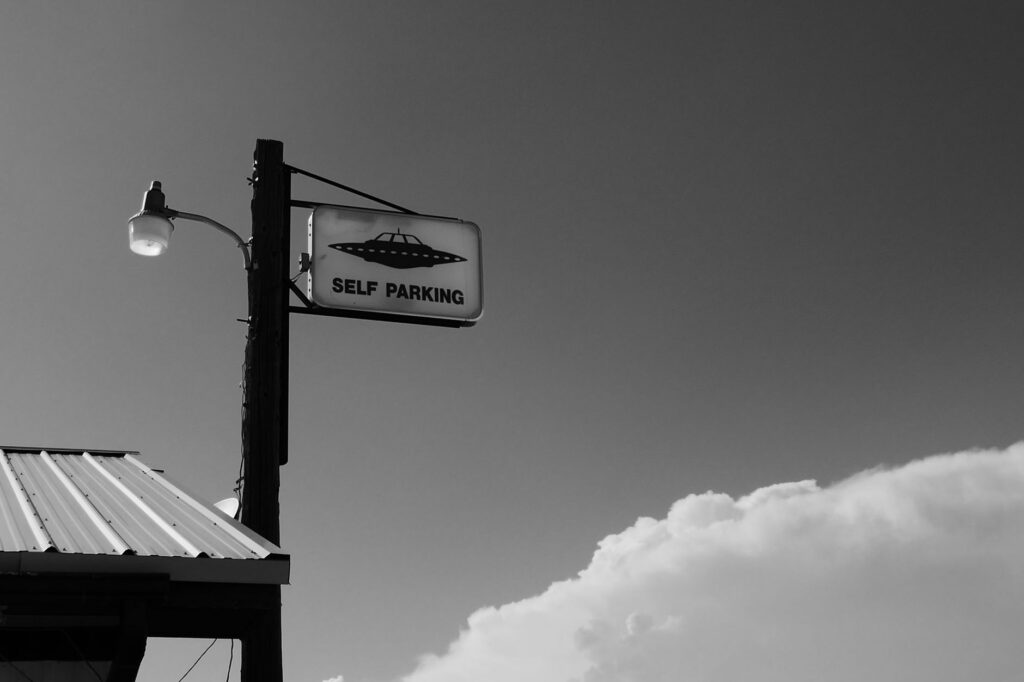
The city of Roswell has embraced this identity, housing the International UFO Museum and Research Center and drawing hundreds of thousands of international tourists each year. Regardless of whether one views the incident through the lens of Cold War military espionage or modern mythological architecture, the events of July 1947 continue to symbolize humanity’s enduring fascination with the skies and the enduring friction between state secrecy and public curiosity.