The Quiet Gentleman on Flight 305
On the rainy afternoon of November 24, 1971, a man identifying himself as Dan Cooper approached the Northwest Orient Airlines counter at Portland International Airport. Dressed impeccably in a dark business suit, a white collared shirt, and a black clip-on tie, he purchased a one-way ticket to Seattle. Boarding Flight 305 aboard a Boeing 727, he took his seat in 18C, ordered a bourbon and soda, and waited for takeoff. There was nothing outwardly remarkable about him, yet within hours, his actions would launch the only unsolved skyjacking in commercial aviation history.
Shortly after takeoff, Cooper handed a folded note to flight attendant Florence Schaffner. Accustomed to frequent business travelers handing over flirtatious notes, Schaffner initially slipped the paper into her purse unread. Cooper leaned closer and murmured quietly: “Miss, you’d better look at that note. I have a bomb.” Opening the slip, Schaffner read handwritten demands specifying $200,000 in negotiable twenty-dollar bills and four civilian parachutes, along with instructions to keep the cabin calm upon arrival in Seattle.
The Standoff and the Exchange
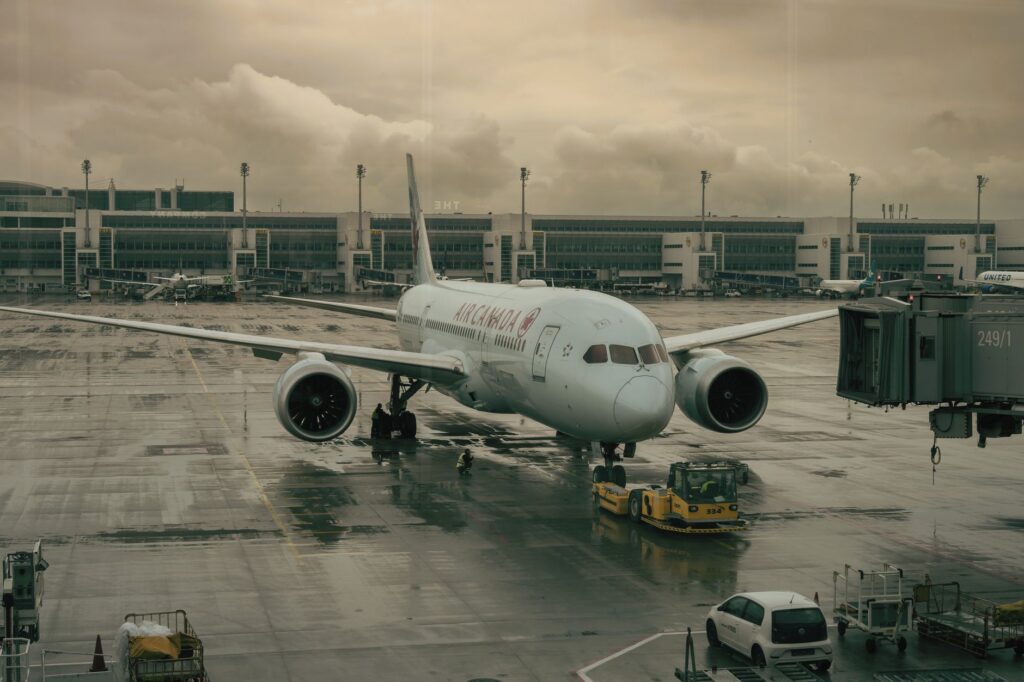
When the aircraft landed at Seattle-Tacoma International Airport, Cooper instructed the pilot to park in an isolated, brightly lit section of the apron. He demanded that cabin lights be dimmed to deter law enforcement sharpshooters. In exchange for the requested cash and parachutes—delivered promptly by airline officials—Cooper permitted all 36 civilian passengers and two flight attendants to disembark unharmed.
The aircraft was refueled while Cooper reviewed his precise flight requirements with the remaining crew: pilot William Scott, copilot William Rataczak, flight engineer H.E. Anderson, and attendant Tina Mucklow. Cooper directed the crew to fly southeast toward Reno, Nevada, at the lowest possible altitude—roughly 10,000 feet—and at the slowest airspeed the Boeing 727 could safely maintain without stalling, keeping the landing gear down and flaps lowered to 15 degrees.
The Mid-Flight Vanishing Act
The Boeing 727 was uniquely engineered with an aft airstair—a deployable staircase located directly beneath the tail of the fuselage. Around 7:40 p.m., after the plane took off from Seattle toward Reno, Cooper directed Mucklow into the cockpit and closed the curtain. Alone in the passenger cabin, he lowered the aft staircase into the sub-zero slipstream.
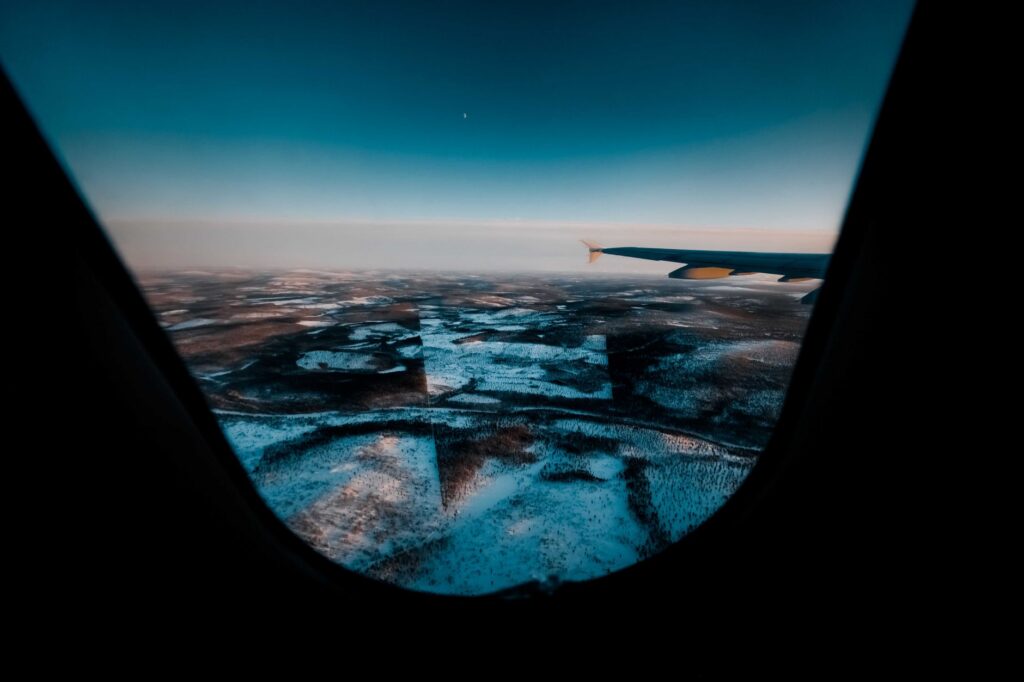
At approximately 8:13 p.m., the cockpit crew registered a sudden upward oscillation of the tail section, requiring rapid trim correction. Investigators believe this pressure wave signaled the exact moment the hijacker jumped. Strapped with two parachutes and two heavy bags of currency, Cooper stepped into a blinding storm with driving rain, zero visibility, and an ambient temperature hovering near minus-seven degrees Celsius over southwestern Washington state.
Operation NORJAK and the Endless Search
When the airliner landed safely in Reno with its aft stair dragging on the runway, federal agents and local authorities surrounded the craft, only to confirm that Cooper was gone. The Federal Bureau of Investigation immediately launched Operation NORJAK (Northwest Hijacking), mobilizing hundreds of military troops, tracking dogs, and aerial patrols to scour the dense, mountainous forests surrounding Mount St. Helens and the Lewis River basin.
- Ground operations: Teams searched vast tracts of rugged Pacific Northwest wilderness on foot and horseback.
- Subsurface searches: Submersibles scanned Lake Merwin for sunken debris or parachute canopy fabric.
- Air surveillance: High-altitude reconnaissance aircraft retraced the calculated flight envelope without spotting a trace.
Despite decades of intense scrutiny, searchers failed to uncover Cooper’s body, his flight gear, or any piece of the skyjacking equipment, cementing the perpetrator’s status as a near-mythical figure.
The Lone Clue at Tena Bar
For nine years, investigators found zero physical evidence confirming Cooper’s survival or demise. That changed unexpectedly in February 1980, when an eight-year-old boy named Brian Ingram vacationed along the Columbia River at Tena Bar, northwest of Vancouver, Washington. Digging in the sand to build a campfire, Ingram unearthed three decomposing bundles containing $5,800 of the original twenty-dollar bills, their serial numbers matching the recorded ransom sequence.
Hydrologists, geologists, and federal forensic experts analyzed the silt-covered cash, debating whether the currency had washed downriver naturally or was buried deliberately years after the jump. No clear conclusion emerged. In July 2016, citing the need to reallocate resources to higher-priority threats, the FBI officially suspended its active field investigation of NORJAK, having reviewed thousands of suspects and dead ends over forty-five years.

An Enduring Cultural Phenomenon
More than half a century later, the D.B. Cooper saga remains the gold standard of unsolved true-crime lore. The absence of confirmed remains or traced ransom currency continues to fuel debate among aviation historians, forensic scientists, and amateur sleuths worldwide. Whether he perished upon impact in the unforgiving timberlands or slipped away into ordinary American obscurity, Cooper’s disappearance endures as one of history’s most fascinating real-world enigmas.