At its core, a computer program is an artifact of translation. It stands as an intermediary between human conceptual problem-solving and the binary operations of physical microprocessors. While everyday parlance often equates programs with standalone applications or downloadable utilities, computer science defines a program more rigorously: an ordered sequence of deterministic instructions encoded to manipulate states, evaluate inputs, and produce predictable outputs within an execution environment.
Understanding what makes a program function requires peering past the surface of high-level syntax. Whether directing a spacecraft flight controller or rendering a webpage, every program relies on a universal chain of transformation—converting abstract algorithms into physical state changes inside silicon transistors.

The Spectrum of Abstraction: From Syntax to Opcode
Human developers rarely write instructions directly for hardware. Instead, modern engineering operates on layers of syntactic abstraction. High-level languages allow logic to be expressed through mathematical expressions, data structures, and object models. However, the underlying hardware understands only architecture-specific machine instructions—numerical opcodes encoded in binary.
Bridging this gap requires specialized translation software, primarily bifurcated into two models:
- Ahead-of-Time (AOT) Compilers: Tools that parse source code, perform lexical analysis, generate an intermediate representation, optimize register usage, and emit an executable binary tailored to a specific target architecture.
- Interpreters and Just-In-Time (JIT) Engines: Systems that evaluate intermediate bytecode or source scripts dynamically during runtime, compiling critical execution loops directly into memory as needed.
Regardless of the compilation pipeline, the resulting output provides the operating system with a precise blueprint for memory layout and instruction scheduling.

The Memory Blueprint: Structuring the Runtime Space
A program resting on persistent storage is merely static data. It transforms into an active process only when loaded into system memory by an operating system kernel. Once initialized, the program occupies a structured virtual memory address space divided into distinct segments designed for specific operational duties.
A static binary represents potential; an active process represents memory in motion.
The standard execution blueprint organizes resources through predictable boundaries:
- Text Segment: A read-only memory region storing the machine code instructions themselves, preventing accidental self-modification.
- Data and BSS Segments: Dedicated spaces for initialized and uninitialized global or static variables.
- The Call Stack: A fast, contiguous LIFO (Last-In, First-Out) structure that manages local execution contexts, function call frames, return pointers, and local variables.
- The Heap: A dynamic memory pool allocated at runtime, managed manually through pointers or automatically via garbage collection routines.
The Instruction Cycle: Silicon in Motion
Once memory is mapped, control yields to the central processing unit (CPU). The physical execution of any program is governed by the continuous, rhythmic iteration of the instruction cycle: fetch, decode, and execute.
The CPU uses a specialized internal register, the program counter (or instruction pointer), to track the address of the next operation. During each cycle, the processor fetches the instruction from memory or the L1 cache, decodes the bitfield into arithmetic or logic signals, and executes the operation across internal execution units or registers. Conditional jumps, branch instructions, and interrupts allow the program counter to divert from linear progression, enabling complex algorithmic branching and reactive event loops.

Evolution Toward Distributed and Ephemeral Execution
Historically, a program was conceived as a self-contained executable running on isolated local hardware. Modern computing has fundamentally disrupted this boundary. Contemporary software architectures frequently decompose monolithic programs into distributed microservices, containerized workloads, and event-driven serverless functions.
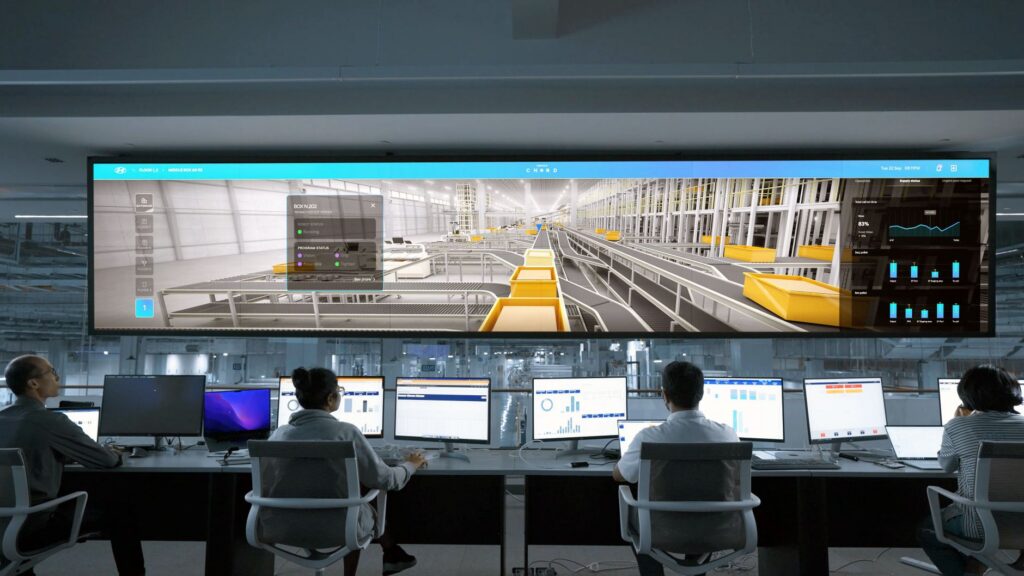
In these distributed environments, a single program rarely operates in isolation. Instead, multiple lightweight processes interact across network protocols, coordinating operations through remote procedure calls, asynchronous message queues, and shared distributed caches. The primary challenge has shifted from micro-optimizing processor cycles to managing state consistency, network latency, and concurrency across physical data centers.
The Enduring Essence of Program Design
Despite the rapid evolution of development frameworks, cloud runtimes, and algorithmic tooling, the foundational principles of program architecture remain constant. A program remains an exercise in formal logic—a disciplined structure that translates intentional thought into predictable, automated action. Mastery of software engineering stems not from chasing transient frameworks, but from grasping the underlying mechanics of how instructions flow from written text, through memory structures, and into execution on physical silicon.