When science considers the concept of an alien organism, the discussion frequently defaults to anthropomorphic imagery or popularized narratives of interstellar civilizations. In astrobiology and theoretical biochemistry, however, the term carries a far more foundational meaning. An alien organism is fundamentally defined as an entity exhibiting self-sustaining, evolvable metabolic processes that originated entirely independent of the Last Universal Common Ancestor (LUCA) that unites all known terrestrial biology.
Every living thing discovered on Earth—from hydrothermal vent extremophiles to redwood trees and humans—shares the same operational toolkit: double-stranded DNA, RNA transcription, a universal genetic code mapped to twenty core amino acids, and liquid water as an obligate solvent. Consequently, our empirical baseline for life represents an evolutionary sample size of exactly one. Disentangling universal biological requirements from terrestrial evolutionary quirks is the central challenge in defining what alien life might actually look like.
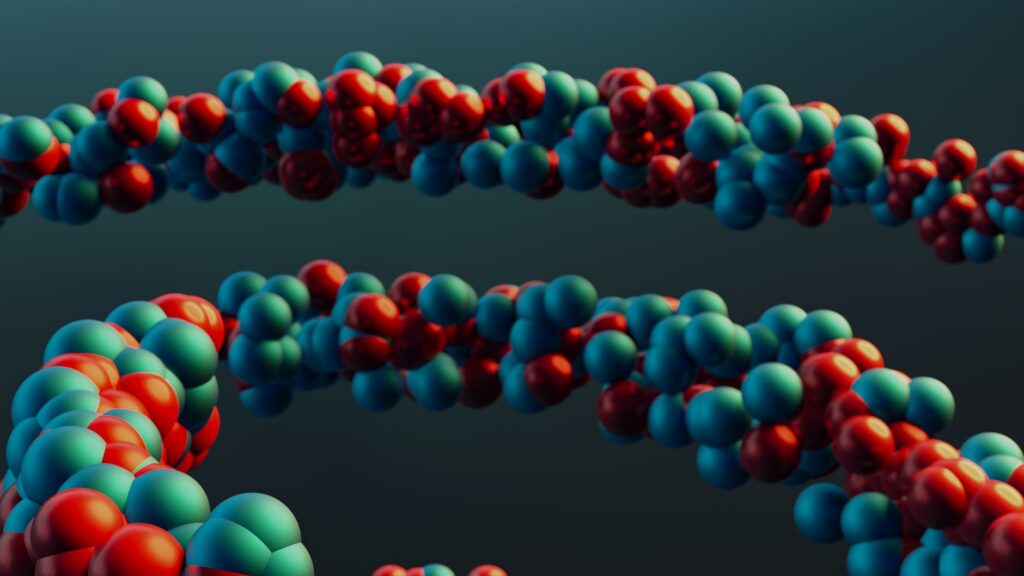
Beyond Carbon: The Thermodynamics of Elemental Scaffolding
Terrestrial life relies on carbon due to its tetravalent bonding capability, enabling it to forge stable, chemically diverse chains with hydrogen, oxygen, nitrogen, phosphorus, and sulfur. This versatility allows complex biochemical macromolecules, such as proteins and nucleic acids, to maintain structural stability while permitting dynamic metabolic reactions. When evaluating alternative foundations for alien biology, researchers often examine silicon as the primary theoretical counterpart.
Silicon occupies the same periodic column as carbon and similarly forms four covalent bonds. Nevertheless, its thermodynamic behavior presents substantial hurdles under Earth-like conditions. Silicon-silicon bonds are significantly weaker than carbon-carbon bonds, while silicon-oxygen bonds are exceptionally stable, meaning silicon tends to oxidize irreversibly into rigid silicates rather than forming dynamic chains. However, under non-terrestrial conditions—such as cryogenic, anhydrous, or ultra-reducing environments—silicon-based or organosilicon chemistry could hypothetically sustain molecular architectures sufficient to support biological complexity.
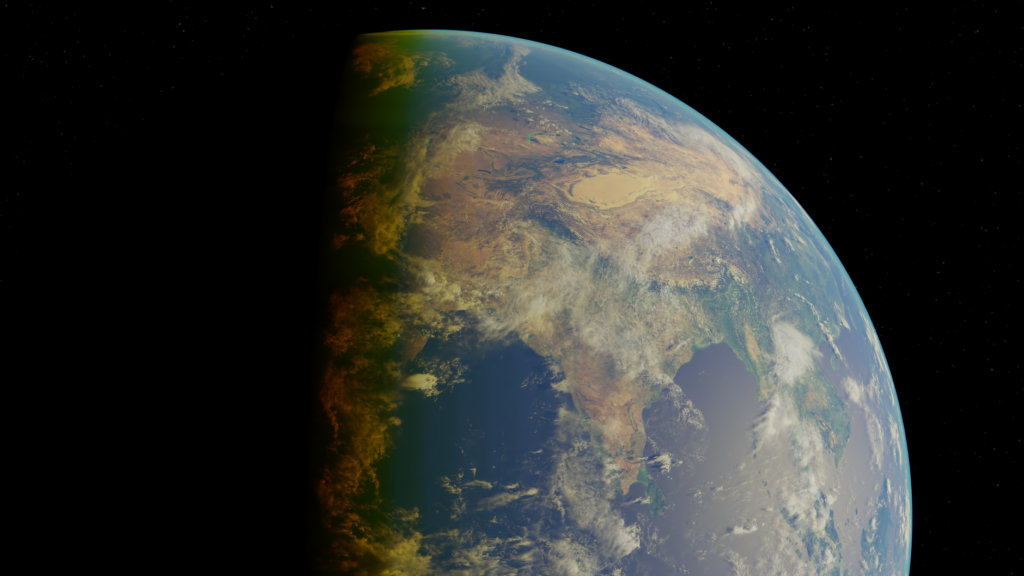
Alternative Solvents and Cryogenic Habitability
Liquid water is widely regarded as the ultimate matrix for life due to its high dielectric constant, extensive liquid range, and capacity to facilitate hydrogen bonding. Yet, planetary science has revealed environments where liquid water cannot exist at the surface, but other liquids pool in abundance. Saturn’s moon Titan, with its dense nitrogen atmosphere and surface lakes of liquid methane and ethane at roughly 94 Kelvin (-179°C), represents the foremost testing ground for alternative solvent paradigms.
In non-polar hydrocarbon solvents, conventional lipid bilayers—the membranes encapsulating all terrestrial cells—cannot assemble. In response, theoretical chemists have modeled alternative structures, such as azotosomes: nitrogen-bearing molecular vesicles capable of maintaining stability and flexibility in liquid methane. Metabolism in such environments would operate at drastically reduced rates, challenging standard assumptions regarding the pace of biological evolution and energy exchange.
- Ammonia (NH₃): Retains a broad liquid range under high pressures; dissolves many organic compounds, though constrained by lower dielectric efficiency compared to water.
- Supercritical Carbon Dioxide (scCO₂): Possesses unique solubilizing properties under high-pressure planetary atmospheres, such as those found on Venusian or super-Earth worlds.
- Hydrocarbons (CH₄ / C₂H₆): Enable cryogenic non-polar chemistry, isolating thermodynamic systems from destructive oxidation.
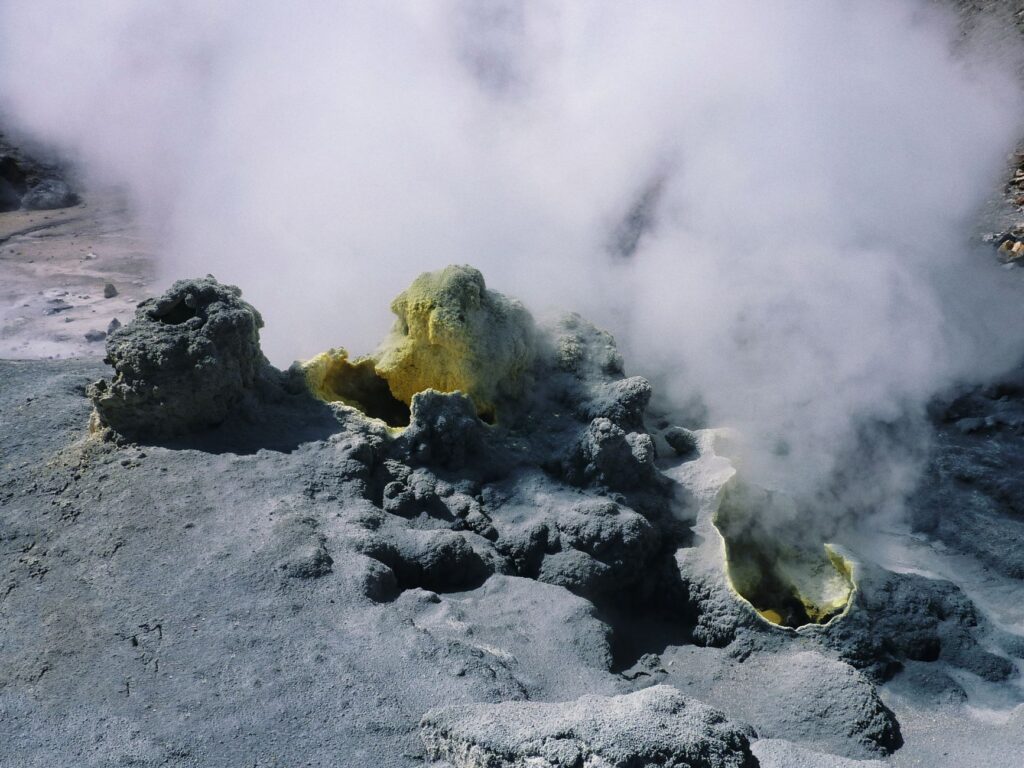
The Terrestrial Shadow Biosphere Hypothesis
A compelling implication of alternative biochemistry is that alien life might not require an extraterrestrial provenance. If abiogenesis occurred more than once on early Earth, a distinct lineage of organisms possessing radically different biochemistry could theoretically persist alongside our own. This hypothetical domain is referred to as a “shadow biosphere.”
Standard laboratory assays—such as polymerase chain reaction (PCR) amplification, fluorescence microscopy, and genomic sequencing—are calibrated exclusively to detect standard nucleic acids and terrestrial biochemical markers. Organisms utilizing an alternative genetic backbone, inverted chirality (chirally inverted D-amino acids and L-sugars), or alternative elements would remain invisible to standard diagnostic assays, passing undetected beneath the radar of modern microbiology.
Modern metagenomics relies on specific primers designed for known ribosomal RNA. An alien microbe operating on different molecular principles would register in conventional sequencing equipment merely as background noise or sterile medium.
Agnostic Biosignatures and Information Theory
To overcome carbon-centric and Earth-biased detection parameters, the astrobiological community has shifted focus toward agnostic biosignatures—indicators of processes that signal life irrespective of its underlying chemical implementation. Rather than searching for specific compounds like chlorophyll or DNA, researchers evaluate fundamental thermodynamic anomalies and informational complexity.
Living systems actively drive their internal environments away from thermodynamic equilibrium through localized entropy reduction. Agnostic detection strategies therefore measure phenomena such as:
- Chemical Disequilibrium: The simultaneous presence of reactive, incompatible atmospheric gases (such as methane and oxygen) in quantities that abiotic processes cannot sustain.
- Molecular Assembly Complexity: The structural complexity of molecules present in a sample, quantifying whether an observed molecule requires an evolutionary, goal-directed assembly pathway to exist in detectable concentrations.
- Enantiomeric Excess: The pronounced preference for single-handedness in chiral molecules, a hallmark of biological selection across theoretical evolutionary chemistries.
Rethinking the Cosmic Horizon
Formulating a rigorous concept of the alien demands shedding historical assumptions rooted in Earth’s specific evolutionary history. True alien life may not conform to our definitions of cellular morphology, nor need it replicate the familiar pathways of terran bioenergetics. By systematically defining life through physics, information theory, and alternative molecular thermodynamics, science broadens the search from mere replicas of Earth toward the full, unmapped spectrum of cosmic matter organization.