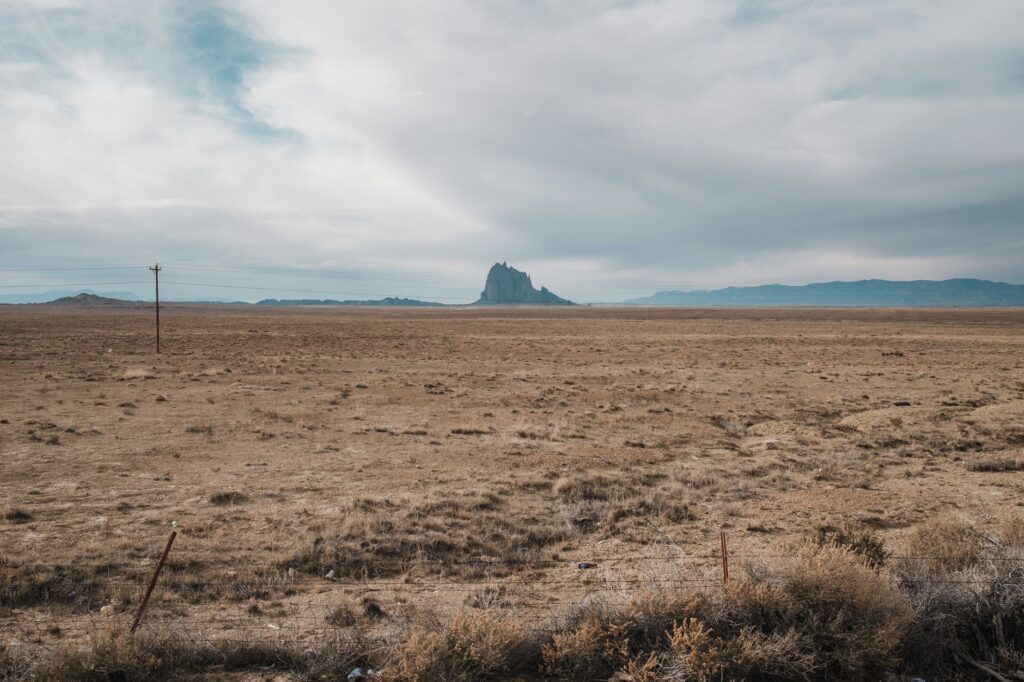
In early July 1947, a sudden storm over the high desert near Corona, New Mexico, set the stage for what would become the most famous mystery of modern ufology: the Roswell UFO incident. When rancher W.W. “Mac” Brazel discovered unusual debris scattered across pastures northwest of Roswell, he could not have anticipated that his find would ignite decades of intense speculation, government investigations, and an enduring global myth.
The Initial Announcement and Sudden Retraction
The incident began in earnest when Brazel notified local authorities about pieces of strange wreckage consisting of lightweight foil, balsa-like structural beams, and tough, parchment-like material. Chaves County Sheriff George Wilcox contacted the nearby Roswell Army Air Field (RAAF), home to the 509th Bomb Group—the elite military unit that dropped atomic bombs on Hiroshima and Nagasaki.
Intelligence officer Major Jesse Marcel was dispatched to inspect the site and retrieve the debris. On July 8, 1947, public information officer Walter Haut released an extraordinary press release on the orders of base commander Colonel William Blanchard. The release declared that the military had recovered a “flying disc” from a ranch in the area. Local and national newspapers immediately picked up the story, splashing sensational headlines across front pages worldwide.
However, the narrative shifted abruptly within hours. Brigadier General Roger Ramey, commander of the Eighth Air Force in Fort Worth, Texas, summoned Marcel and the debris to his headquarters. During an impromptu press conference, Ramey announced that the recovered material was nothing more than the remnants of an ordinary weather balloon fitted with a radar reflector. Photographs were published showing officers kneeling next to shredded tinfoil and wooden sticks, effectively dampening public curiosity for the next thirty years.
The 1970s Revival and the Birth of a Modern Myth
For three decades, the Roswell event faded from mainstream memory, treated as an amusing misidentification during the post-war “flying saucer” craze. That changed dramatically in the late 1970s when nuclear physicist and ufologist Stanton Friedman interviewed Jesse Marcel. Marcel, by then retired, asserted that the military had staged a cover-up in Fort Worth, replacing the authentic, indestructible extraterrestrial debris with common balloon wreckage.
Marcel’s claims sparked a renewed wave of investigation and media coverage. Over the subsequent decade, numerous books, documentaries, and witness testimonies surfaced. The narrative expanded far beyond metal foil in a pasture to include elaborate tales of a downed extraterrestrial craft, non-human bodies recovered by military personnel, and clandestine autopsies conducted under the strictest secrecy.
“The Roswell story shifted from a simple debris retrieval into a full-scale narrative of deep-state conspiracy, forever altering how the public perceived government transparency regarding unidentified aerial phenomena.”
Researchers collected dozens of second-hand accounts, affidavits, and deathbed confessions from former residents and military personnel. While many ufologists viewed these accounts as proof of a historic alien encounter, mainstream historians pointed out glaring inconsistencies, conflicting timelines, and the natural degradation of human memory over half a century.
Project Mogul: The Declassified Cold War Reality
Facing increasing congressional inquiries and public pressure, the United States Air Force launched a comprehensive archival investigation in the 1990s to uncover the true nature of the 1947 debris. In 1994, the Air Force released a detailed report titled The Roswell Report: Fact vs. Fiction in the New Mexico Desert.
The investigation revealed that the wreckage recovered near Roswell was neither an alien spacecraft nor an ordinary weather balloon. Instead, it was part of Project Mogul, a top-secret Cold War surveillance program developed by New York University researchers for the Army Air Forces. Mogul involved massive trains of high-altitude balloons equipped with sensitive acoustic sensors designed to detect low-frequency sound waves from Soviet nuclear tests in the upper atmosphere.
- Material Composition: The unusual foil, parchment, and tape with purplish floral markings described by early witnesses closely matched the specialized radar targets manufactured by toy companies for Project Mogul flight arrays.
- Absolute Secrecy: Because Project Mogul carried a top-secret classification during the tense opening years of the Cold War, military officials could not reveal the balloon’s real mission to the public or even to junior officers like Marcel.
- Anthropomorphic Dummies: A subsequent 1997 report addressed claims of alien bodies, explaining that high-altitude parachute drop tests involving anthropomorphic crash-test dummies in the 1950s had likely merged in popular memory with the 1947 debris incident.
The Cultural Legacy of Roswell
Despite official explanations and declassified documentation, the legend of Roswell shows no signs of disappearing. The incident has transcended military history to become a defining pillar of modern folklore, inspiring countless science fiction films, television series, and literature.
The town of Roswell itself has embraced this identity, transforming into a global tourism hub anchored by the International UFO Museum and Research Center and an annual UFO festival that attracts thousands of visitors. The enduring fascination highlights a deep-seated human desire to explore the unknown, coupled with a persistent skepticism toward official narratives.
Why the Mystery Persists
The Roswell incident sits at the precise intersection of Cold War paranoia, genuine military secrecy, and the universal question of whether humanity is alone in the universe. While declassified records provide a rational explanation grounded in national security operations, the romantic allure of extraterrestrial visitation ensures that Roswell remains the most debated and celebrated mystery of the twentieth century.