Human civilization has cataloged distant galaxies, mapped the human genome, and harnessed atomic energy. Yet, despite centuries of rigorous scientific observation, planet Earth remains an arena of profound secrets. Nature frequently presents anomalies that resist simple categorization, reminding researchers that our empirical models are works in progress rather than definitive conclusions.
These mysteries do not diminish science; rather, they stimulate it. From high-altitude electrical discharges to the silent depths of oceanic trenches, examining natural puzzles challenges assumptions and drives technological innovation across physics, biology, and earth sciences.
Atmospheric Anomalies and Transient Luminosity
The atmosphere is one of our most accessible environments, yet it continues to yield optical and electromagnetic surprises. While basic meteorology clarifies common weather patterns, rare atmospheric events remain notoriously difficult to study due to their transient nature.
Among the most elusive is ball lightning. Described for centuries as glowing, spherical plasmoids that appear during thunderstorms, float horizontally, and occasionally pass through closed window panes before dissipating silently or with an explosive pop, the phenomenon has challenged laboratory replication. While hypotheses point to vaporized silicon soil particles, microwave radiation trapped in plasma bubbles, or oxidation phenomena, a unified and proven physical model remains elusive.
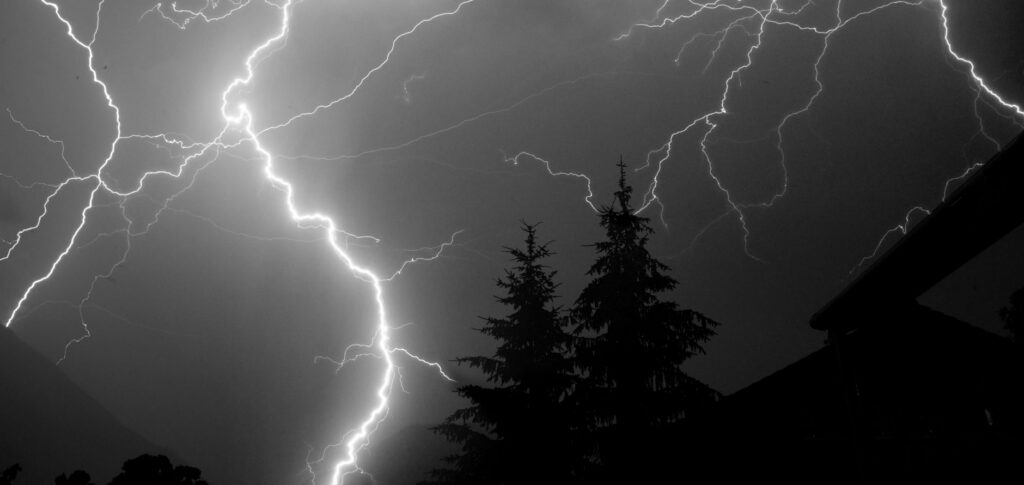
Equally captivating are upper-atmospheric electrical discharges known collectively as transient luminous events (TLEs). Discovered during late-twentieth-century observations, phenomena such as red sprites, blue jets, and elves occur tens of kilometers above thunderclouds, discharging upward into the ionosphere. Because they last mere milliseconds and occur at high altitudes, their exact chemical effects on atmospheric balance and the global electrical circuit continue to be actively investigated.
The Abyssal Frontier: Secrets of the Deep Biosphere
Covering more than seventy percent of Earth’s surface, the global ocean represents its largest yet least understood biome. The deeper zones—stretching through the bathypelagic, abyssopelagic, and hadal zones—harbor conditions once thought incompatible with life: crushing pressure, near-freezing temperatures, and total absence of sunlight.
The discovery of hydrothermal vent ecosystems fundamentally altered biological paradigms by showing that life could thrive independently of solar energy through chemosynthesis. Nevertheless, deep-sea research repeatedly encounters unexplained phenomena:
- Unidentified Biological Signatures: Acoustic sensors regularly record low-frequency sounds that cannot be clearly attributed to known marine fauna or geological movements.
- Gigantism and Longevity: Abyssal organisms frequently exhibit extreme adaptations, such as metabolic rates so low that individuals live for centuries, defying typical cellular aging models.
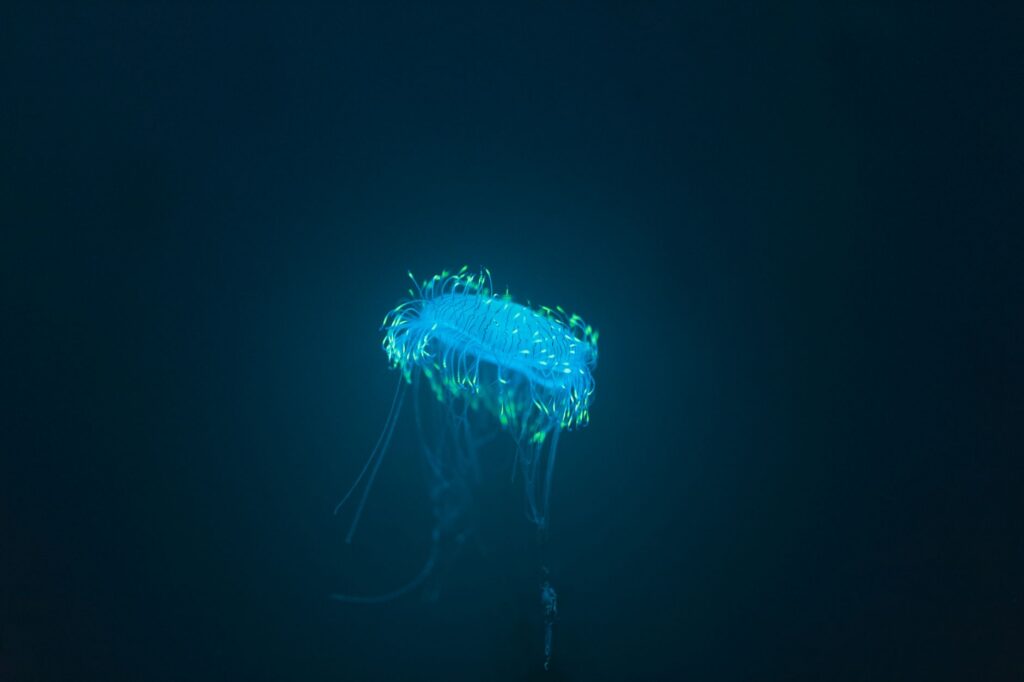
- Benthic Bioluminescence: Complex communication networks utilizing cold biochemical light operate at depths where the functions of specific light wavelengths remain obscure.
Subterranean Ecosystems and Isolated Worlds
Beneath the planetary crust lie completely enclosed ecosystems that have evolved in total isolation from the surface for millions of years. Caves sealed off by geological movements offer natural laboratories for understanding evolutionary biology under extreme constraints.
A premier example is Romania’s Movile Cave, accidentally discovered during geological surveys. Sealed for over five million years, this subterranean habitat possesses an atmosphere high in hydrogen sulfide and methane, yet low in oxygen. Dozens of endemic invertebrate species thrive here, completely reliant on sulfur-oxidizing bacteria. Such systems prompt fundamental questions: how resilient is life to drastic planetary upheaval, and could similar mechanisms support life on other celestial bodies?
“Every sealed subterranean cavern and deep oceanic rift provides a natural laboratory, revealing the sheer resilience and unpredictability of terrestrial life.”
In addition to biological enclaves, non-biological geological dynamics continue to present questions. Transient seismic luminescence—glowing lights reported along fault lines before or during tectonic shifts—suggests rapid stress-induced electrical generation in certain rock types, though real-time observation remains exceptionally difficult.
Cryptic Biological Synchrony and Navigation
Beyond physical geology and atmospheric science, living organisms demonstrate behavioral patterns that remain difficult to explain entirely through genetic or neurological models. The natural world features widespread biological synchrony that operates with astonishing precision across vast distances.

Consider the phenomenon of animal navigation. Migratory birds, sea turtles, and monarch butterflies navigate across thousands of kilometers with pinpoint accuracy, returning to specific micro-habitats. While magnetoreception—the ability to detect Earth’s magnetic field—is recognized in many species, the physiological pathways remain contentious. Scientists actively investigate whether this relies on magnetite mineral clusters in sensory tissue or cryptochrome pigments that mediate quantum coherence in the retina.
Similarly, certain species of fireflies exhibit mass synchronization, where tens of thousands of individuals flash simultaneously over vast riverbanks without a central leader or visible delay. Unraveling the mathematics and physiological thresholds behind such collective behavior offers vital insights into complex adaptive systems.
The Value of the Unknown
The enduring mysteries of nature remind us that our planet is not an inert stage, but a dynamic, evolving system. Approaching these puzzles requires a balance of rigorous skepticism and genuine curiosity. Every unanswered question marks the frontier where future discoveries will emerge, ensuring that exploration remains central to the human experience.