The Enduring Fascination of the Unresolved Past
History is rarely a seamless narrative written in stone. Instead, it is an intricate mosaic assembled from fragmented chronicles, weathered monuments, and scattered artifacts. Where the archaeological record falters or ancient texts fall silent, historical mysteries arise. These enigmas are not mere folklore or romantic legends; they represent genuine gaps in collective human memory, challenging historians and scientists to re-examine what we know about the origins, evolution, and collapses of ancient societies.
For centuries, the human imagination has been captivated by events and objects that defy straightforward explanation. Why did thriving urban centers suddenly empty? What messages lie locked behind forgotten writing systems? The quest to answer these questions is more than an academic exercise; it is an exploration of vulnerability, human ingenuity, and the impermanence of civilization.
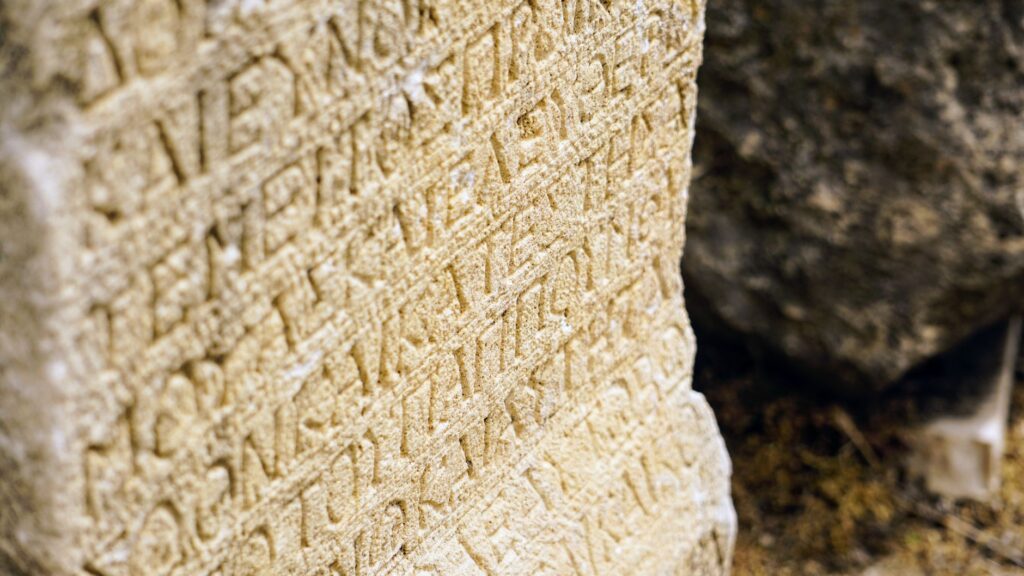
Silenced Voices: The Enigma of Undeciphered Scripts
Among the most tantalizing historical puzzles are linguistic relics that scholars cannot read. Written language is the most direct conduit into the thoughts and administrative life of an ancient civilization. When a script remains locked, an entire society remains muted.
- The Indus Valley Script: Thriving in modern-day Pakistan and northwest India during the Bronze Age, the Harappan civilization built sophisticated planned cities with advanced drainage systems. Yet, their script—preserved primarily on miniature soapstone seals, pottery, and copper tablets—remains undeciphered. Without a multilingual inscription akin to the Rosetta Stone, scholars cannot determine the language family or the precise social organization of this massive civilization.
- Linear A: Discovered on the island of Crete, Linear A served as the primary administrative script of the Minoan civilization before being supplanted by Linear B (an early form of Greek). While the phonetic values of some signs have been inferred through comparison, the underlying Minoan language remains fundamentally unknown.
- The Rongorongo Inscriptions: Carved onto wooden tablets on Easter Island (Rapa Nui), these glyphs represent one of the few independently invented writing systems in human history. With the decimation of the island’s native population and scholarly caste during the nineteenth century, the key to interpreting this script was almost entirely lost.
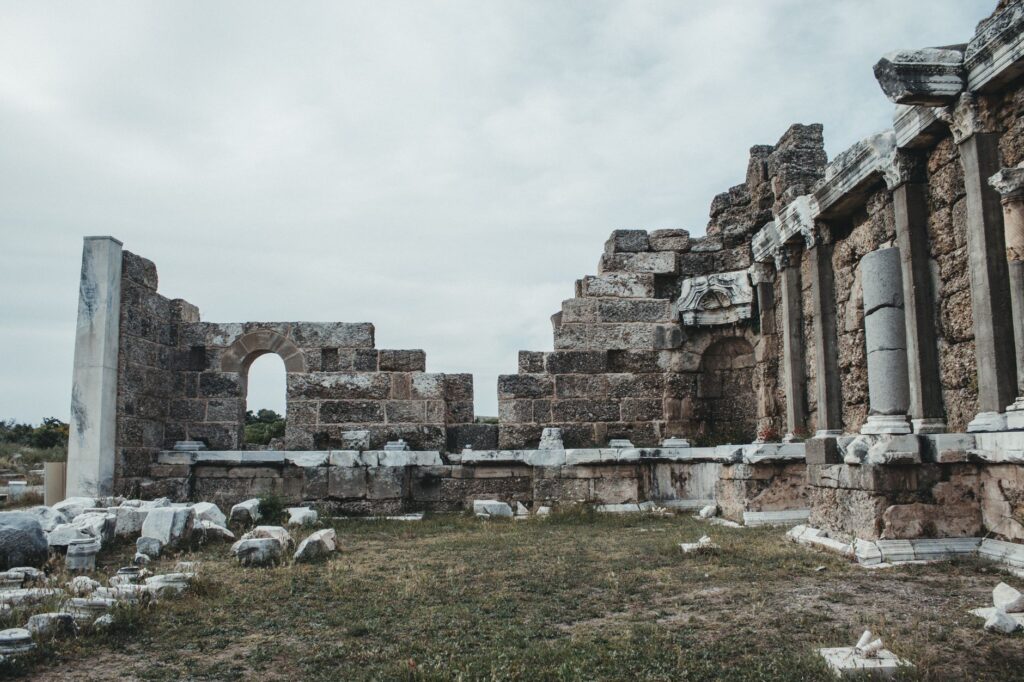
Abrupt Departures and Vanished Communities
Few mysteries provoke as much debate as the sudden collapse or disappearance of flourishing communities. When archeologists uncover architectural grandeur left abandoned in haste, the silence speaks louder than any chronicle.
One foundational paradigm is the Late Bronze Age Collapse around 1200 BCE. Within a few decades, complex trade networks across the Eastern Mediterranean unraveled, and powerful empires—including the Mycenaeans, Hittites, and New Kingdom Egypt—suffered destruction or severe contraction. Ancient records speak cryptically of nomadic raiders termed the “Sea Peoples,” yet modern consensus suggests a compounding catastrophe involving megadroughts, seismic activity, internal insurrections, and disrupted copper and tin supply routes.
“Civilization does not always collapse from a single fatal blow; more often, it succumbs to a cascade of vulnerabilities that overwhelm institutional resilience.”
A similar enigma appears in early colonial North America with the Lost Colony of Roanoke. Established in 1587 on the coast of present-day North Carolina, the settlement vanished by 1590, leaving behind only the cryptic carving “CROATOAN” on a wooden palisade. While contemporary historians lean toward cultural integration with local Native American tribes or dispersion caused by starvation, the complete lack of unambiguous archaeological proof sustains the debate.

Cryptic Artifacts and Misunderstood Technologies
Physical objects also generate intense debate when their context, manufacturing techniques, or intended functions clash with accepted chronologies. Artifacts can reveal that our ancestors possessed theoretical and empirical capabilities far more nuanced than previously realized.
The Antikythera Mechanism, recovered from a shipwreck off the coast of Greece in 1901, revolutionized the study of ancient engineering. Dating to the second or first century BCE, this bronze device contained an intricate train of dozens of precision-cut gears designed to calculate astronomical cycles, eclipse timings, and planetary positions. Until this discovery, technology of such mechanical sophistication was believed to have originated in medieval Europe or the Islamic Golden Age.
Conversely, some items continue to resist categorization entirely. The Voynich Manuscript, a carbon-dated fifteenth-century codex filled with unidentifiable botanical illustrations, astronomical diagrams, and an unknown calligraphic cipher, continues to baffle cryptographers and linguists alike. Theories range from an elaborate Renaissance hoax to an esoteric medical herbal written in an unrecorded cipher, yet every modern computational attempt to decrypt it yields contested results.
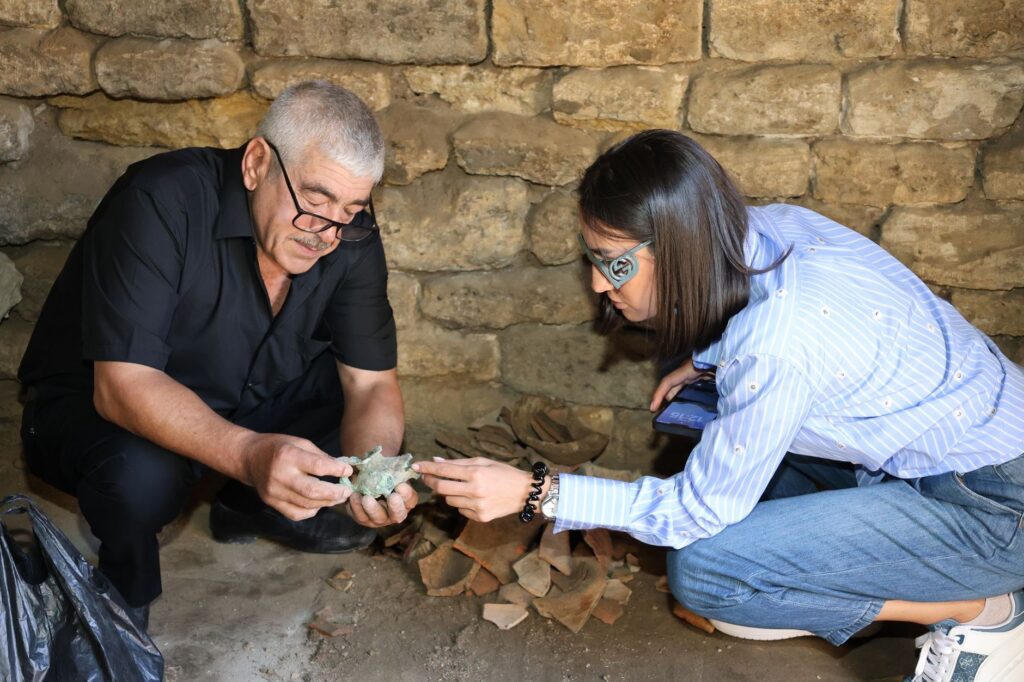
The Scientific Vanguard: Illuminating Historical Shadows
Today, the investigation of historical mysteries has shifted from antiquarian conjecture to multi-disciplinary science. Advanced non-invasive tools and laboratory analyses are systematically cracking cases that resisted traditional historical approaches for centuries.
Light Detection and Ranging (LiDAR) technology has penetrated dense jungle canopies in Central America, the Amazon Basin, and Southeast Asia, revealing expansive, interconnected urban complexes hidden beneath the soil. Archaeogenetics extracts and sequences ancient DNA (aDNA) to track population migrations, demographic collapses, and pathogen epidemics with granular precision. Stable isotope analysis of tooth enamel reveals the geographic movement and diets of long-dead individuals, reconstructing life histories from skeletal fragments.
Through the integration of material evidence, climatology, and computational linguistics, researchers are slowly illuminating the blind spots of antiquity. Historical mysteries demonstrate that the past is not a static repository of known facts, but a dynamic frontier where science continuously restores the forgotten narratives of human resilience and tragedy.