Few questions have captured the human imagination as profoundly as whether we are alone in the universe. While popular culture often depicts extraterrestrial beings as either benevolent cosmic teachers or existential threats, modern science approaches the concept of the alien through empirical discipline. Astrobiology, radio astronomy, and planetary science have transformed what was once pure speculation into a structured, evidence-based inquiry into the potential for life beyond Earth.
Defining Life Beyond Terrestrial Boundaries
Before scientists can search for alien organisms, they must address a fundamental question: what constitutes life? Terrestrial biology is universally carbon-based, relying on liquid water as a solvent and nucleic acids for genetic heredity. While theoretical astrobiology considers alternative biochemical configurations—such as silicon-based molecular structures or ammonia-based liquid mediums—practical observational science focuses primarily on detecting carbon-and-water systems resembling our own.
The discovery of terrestrial extremophiles has radically expanded the parameters of planetary habitability. Microorganisms thriving in superheated hydrothermal vents, subglacial Antarctic lakes, and highly acidic volcanic springs demonstrate that life can persist under environmental conditions previously deemed lethal. Consequently, the environments of our own Solar System—such as the subterranean oceans of Europa and Enceladus, or the subsurface brines of Mars—have emerged as primary targets for detecting microbial biosignatures.
Biosignatures and Exoplanetary Atmospheres
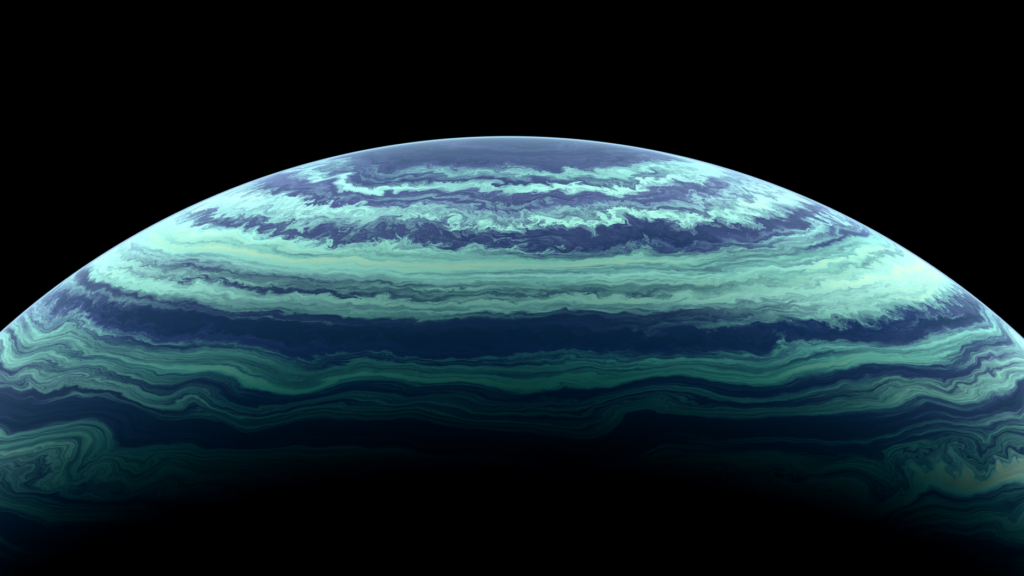
Beyond our Solar System, the search for alien life centers on the study of exoplanets situated within their host stars’ circumstellar habitable zones. Utilizing transit spectroscopy, space telescopes analyze starlight filtering through the thin atmospheres of distant worlds. By breaking this light into distinct spectral absorption lines, researchers can identify the chemical composition of alien skies.
Key indicators, known as biosignatures, include atmospheric chemical disequilibria that cannot be easily explained by non-biological geologic processes:
- Oxygen and Ozone: Highly reactive elements that require continuous replenishment, often through processes analogous to photosynthesis.
- Methane and Carbon Dioxide: Simultaneous detection of methane alongside oxidized gases indicates a potential biological source maintaining non-equilibrium chemistry.
- Water Vapor: The essential solvent for cellular transport and biochemical reactions.
Nevertheless, astrobiologists remain cautious. Non-biological mechanisms, such as photochemical reactions driven by stellar ultraviolet radiation, can occasionally mimic biosignatures, requiring rigorous validation before any claim of biological detection can be confirmed.
The Fermi Paradox: Where Is Everybody?
The statistical likelihood of extraterrestrial life creates an unresolved scientific mystery known as the Fermi Paradox. Our galaxy contains hundreds of billions of stars, many billions of years older than our Sun. Even with sub-light propulsion systems, an intelligent technological civilization could theoretically colonize or probe an entire galaxy within a few tens of millions of years. This discrepancy between high probabilistic expectation and complete absence of empirical evidence prompts the question: Where is everybody?
Several hypotheses have been proposed to resolve this cosmic silence:
- The Great Filter: Formulated by Robin Hanson, this concept suggests that an evolutionary, technological, or existential barrier exists along the path from prebiotic chemistry to an interstellar species. If the filter lies ahead of us, technological civilizations may inevitably self-destruct via ecological collapse, nuclear war, or artificial intelligence runaway.
- The Rare Earth Hypothesis: Proponents argue that while simple microbial life might be widespread, the complex convergence of astrophysical, geological, and climatic conditions required for multicellular intelligence is extraordinarily rare.
- The Zoo Hypothesis: Highly developed civilizations may intentionally avoid contacting or interfering with emerging species to allow natural cultural and biological evolution.
Technosignatures and the Search for Extraterrestrial Intelligence
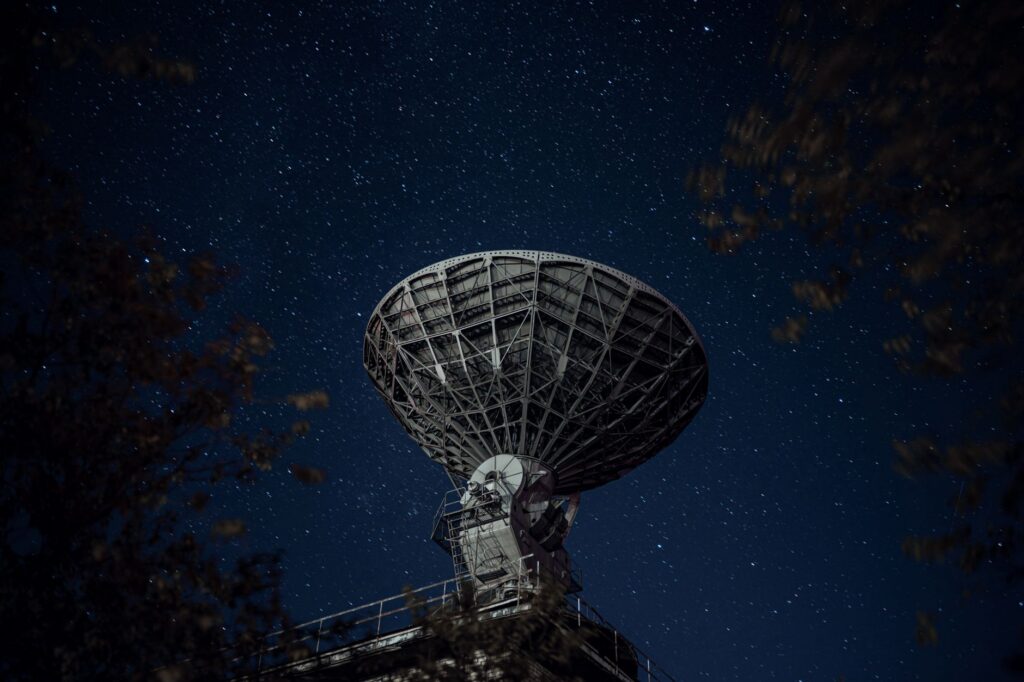
While astrobiology targets microbial and simple organic phenomena, the Search for Extraterrestrial Intelligence (SETI) focuses on detecting technosignatures—observable evidence of advanced technology. Historically, this effort centered almost entirely on scanning the electromagnetic spectrum for narrow-band radio transmissions or pulsed optical lasers that do not occur in nature.
Contemporary SETI has broadened its scope. Researchers now look for indirect markers of mega-scale engineering, such as infrared waste heat from Dyson spheres designed to capture stellar energy, artificial illumination on planetary night sides, and synthetic pollutants like chlorofluorocarbons (CFCs) in exoplanetary atmospheres. These passive detection strategies require no active broadcasting from the target civilization, only that their technological footprint is measurable across interstellar distances.
Protocols and the Impact of First Contact
The confirmation of alien intelligence would mark an unprecedented paradigm shift in human history. To mitigate chaos and premature disclosure, scientific bodies and international organizations have drafted post-detection protocols. These guidelines emphasize independent peer verification across multiple observatories, transparent data sharing through global scientific unions, and multi-lateral coordination prior to transmitting any directed reply.
The question of whether we are alone is not merely a biological or astronomical curiosity; it is a profound philosophical mirror that contextualizes our position within the cosmic hierarchy.
Whether the search reveals that the universe is teeming with life or that consciousness is an extraordinarily fragile anomaly unique to Earth, the scientific exploration of the alien reframes our understanding of existence. Until concrete evidence emerges, humanity remains poised on the threshold of discovery, listening intently to the quiet expanse of the cosmos.