In early July 1947, against the backdrop of scorching desert heat and post-World War II anxieties, an event occurred near Roswell, New Mexico, that would permanently alter modern folklore. What began as a scattered collection of foil, rubber, and wooden struts on an isolated sheep ranch evolved over decades into the world’s most famous extraterrestrial mystery. The Roswell UFO incident represents a unique intersection of military secrecy, Cold War paranoia, investigative journalism, and cultural myth-making. To understand Roswell is not merely to dissect claims of alien visitations, but to explore how institutional silence can inadvertently give rise to lasting alternate histories.
The Initial Discovery: Summer of 1947
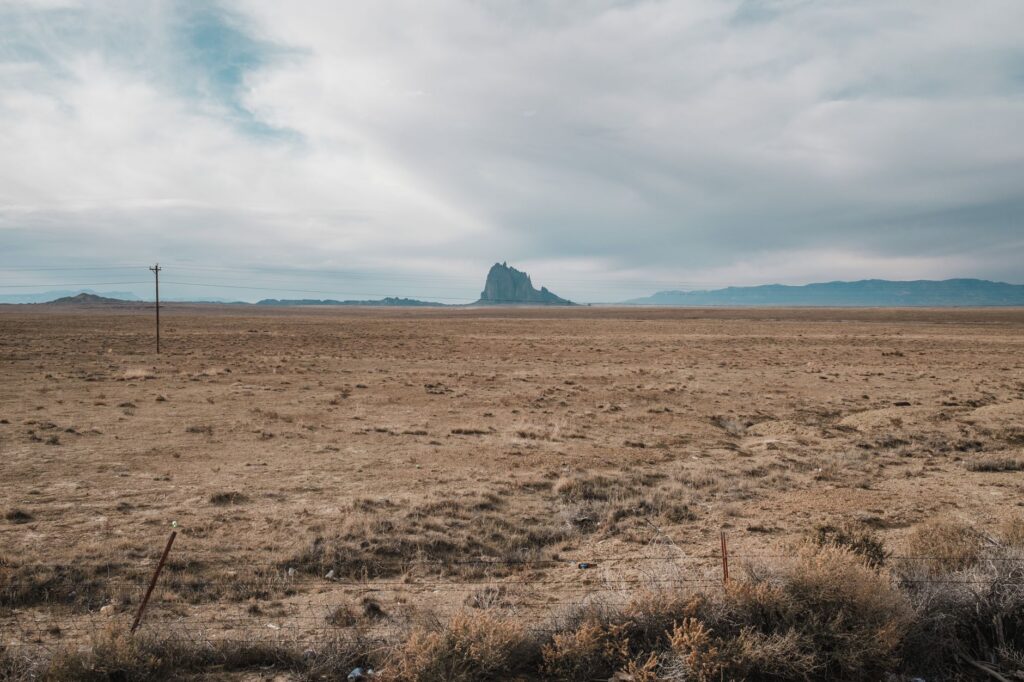
The sequence of events began approximately 75 miles northwest of Roswell on the Foster Ranch, managed by foreman William ‘Mac’ Brazel. Following a severe thunderstorm, Brazel discovered an extensive swath of unusual debris spread across the pasture. Unlike ordinary ranch litter, the material included lightweight structural sticks, metallic-looking foil, tough paper, and remnants of heavy rubber.
Puzzled by the wreckage and spurred by recent national news stories concerning ‘flying saucers’—a term popularized only weeks earlier after pilot Kenneth Arnold reported crescent-shaped objects over Mount Rainier—Brazel notified Chaves County Sheriff George Wilcox. Wilcox, in turn, contacted the nearby Roswell Army Air Field (RAAF), home to the 509th Bombardment Group, the elite unit that had executed the atomic bombings of Japan two years prior.
Intelligence officer Major Jesse Marcel and Counter-Intelligence Corps agent Sheridan Cavitt were dispatched to inspect and recover the debris. What happened next would set off an unprecedented media firestorm.
The Press Release That Shook the World
On July 8, 1947, Walter Haut, the public information officer at RAAF, issued an official press release under the direction of base commander Colonel William Blanchard. The release stated plainly that personnel from the 509th Bomb Group had recovered a ‘flying disc’ from a local ranch.
“The many rumors regarding the flying disc became a reality yesterday when the intelligence office of the 509th Bomb Group of the Eighth Air Force, Roswell Army Air Field, was fortunate enough to gain possession of a disc through the cooperation of one of the local ranchers and the sheriff’s office.”
The announcement made front-page headlines worldwide within hours. However, the military’s narrative collapsed almost as quickly as it emerged. Brigadier General Roger Ramey, commander of the Eighth Air Force at Fort Worth Army Air Field in Texas, intervened. By late afternoon, Ramey displayed portions of the recovered debris to reporters, identifying the material as the mundane remnants of a standard weather balloon attached to a hexagonal radar reflector made of foil-covered balsa wood.
Newspapers promptly printed retractions, the public lost interest, and the incident faded into obscure military archives for over three decades.
Resurrection: The 1970s and the Growth of the Myth
Roswell did not re-emerge into public consciousness until 1978, when nuclear physicist and ufologist Stanton Friedman interviewed a retired Jesse Marcel. Marcel claimed that the weather balloon explanation was an intentional military cover-up. He asserted that the debris he handled possessed extraordinary properties: metal that could not be dented by a sledgehammer, foil that returned to its original shape after being crumpled, and structural beams bearing strange, hieroglyphic-like symbols.
Marcel’s testimony opened the floodgates. Authors Charles Berlitz and William L. Moore published The Roswell Incident in 1980, introducing secondary and tertiary accounts that dramatically expanded the narrative scope. Subsequent books and documentaries added increasingly sensational claims, including:
- Multiple crash sites across the New Mexico desert;
- The recovery of an intact alien spacecraft;
- Extraterrestrial bodies retrieved and autopsied by military physicians;
- Intimidation of local civilian witnesses by armed federal agents.
Over time, Roswell transformed from an unexplained debris recovery into an intricate conspiracy narrative alleging a global cover-up orchestrated by deep-state entities such as the mythical ‘Majestic 12’ committee.
The Declassified Reality: Project Mogul
Faced with mounting public inquiries and congressional pressure initiated by New Mexico Congressman Steven Schiff, the United States General Accounting Office (GAO) launched an audit in the mid-1990s. Simultaneously, the Department of the Air Force conducted an exhaustive search of classified historical records to determine the true nature of the 1947 wreckage.
The findings, published in two comprehensive volumes—The Roswell Report: Fact vs. Fiction in the New Mexico Desert (1994) and The Roswell Report: Case Closed (1997)—revealed that the Roswell wreckage was indeed connected to a top-secret program, though not of extraterrestrial origin. It was the physical remains of Project Mogul.
What Was Project Mogul?
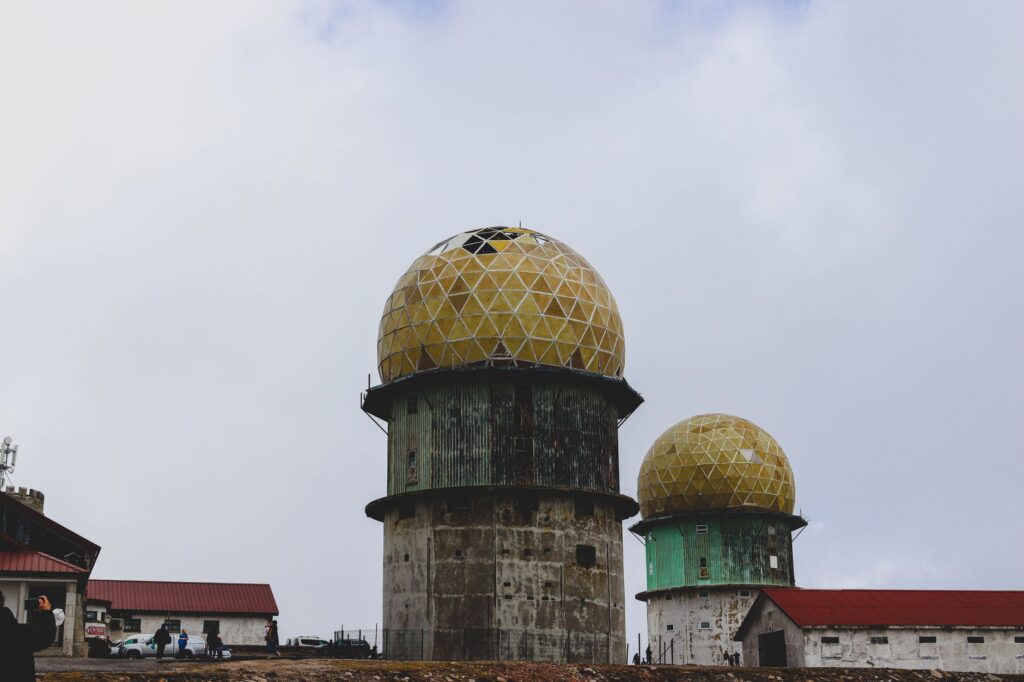
Project Mogul was a classified research initiative conducted by New York University and Columbia University researchers under military contract. Its objective was to deploy long trains of high-altitude balloons equipped with low-frequency acoustic sensors into the upper atmosphere. The primary mission was to detect sound waves generated by Soviet atomic bomb tests at long distances, bypassing conventional ground surveillance.
To maintain neutral buoyancy in the tropopause, these experimental flights utilized complex assemblies stretching hundreds of feet, consisting of:
- Dozens of neoprene meteorological balloons;
- Corner radar reflectors constructed from aluminized parchment, foil, and balsa wood;
- Ballast mechanisms and radio transmitters;
- Specialized reinforcement tape manufactured by novelty companies, which featured geometric and floral symbols to improve durability—the likely source of the reported ‘alien hieroglyphics.’
Flight 4, launched from Alamogordo Army Air Field in June 1947, was unrecovered and tracked drifting northeast toward the Foster Ranch. The materials described in the original 1947 reports perfectly matched the components of a Project Mogul balloon train. Because the program was classified above top secret, military commanders at Roswell were not read into the project, leading directly to the initial confusion and the subsequent hurried cover story.
Addressing the ‘Alien Bodies’
The 1997 Air Force follow-up report addressed persistent witness claims regarding recovered bodies. The investigation demonstrated that these accounts represented an amalgamation of memories from separate military operations conducted during the 1950s. Anthropomorphic test dummies dropped from high altitudes during aeromedical studies (such as Project High Dive), combined with victims of fatal military aircraft crashes during that decade, had been retroactively grafted onto the 1947 timeline by aging witnesses influenced by popular culture.
The Cultural Legacy of Roswell
Despite definitive declassified documentation, the extraterrestrial interpretation of Roswell remains deeply embedded in global culture. The incident became a foundational archetype for modern science fiction, inspiring television franchises, motion pictures, and investigative literature.
Today, the town of Roswell thrives as a vibrant center for UFO tourism, welcoming hundreds of thousands of visitors each year to its International UFO Museum and Research Center. Sociologically, the persistence of the Roswell legend reflects an enduring skepticism toward official government disclosures, tempered by a romantic desire to believe humanity is not alone in the cosmos.
Ultimately, the Roswell UFO incident serves as a profound case study in the dynamics of secrecy. By withholding the reality of a Cold War surveillance system, the United States military created an informational vacuum. In that vacuum, human imagination, folklore, and skepticism coalesced to construct an enduring modern myth that continues to captivate the world.