The Philosophy and Evolution of Python
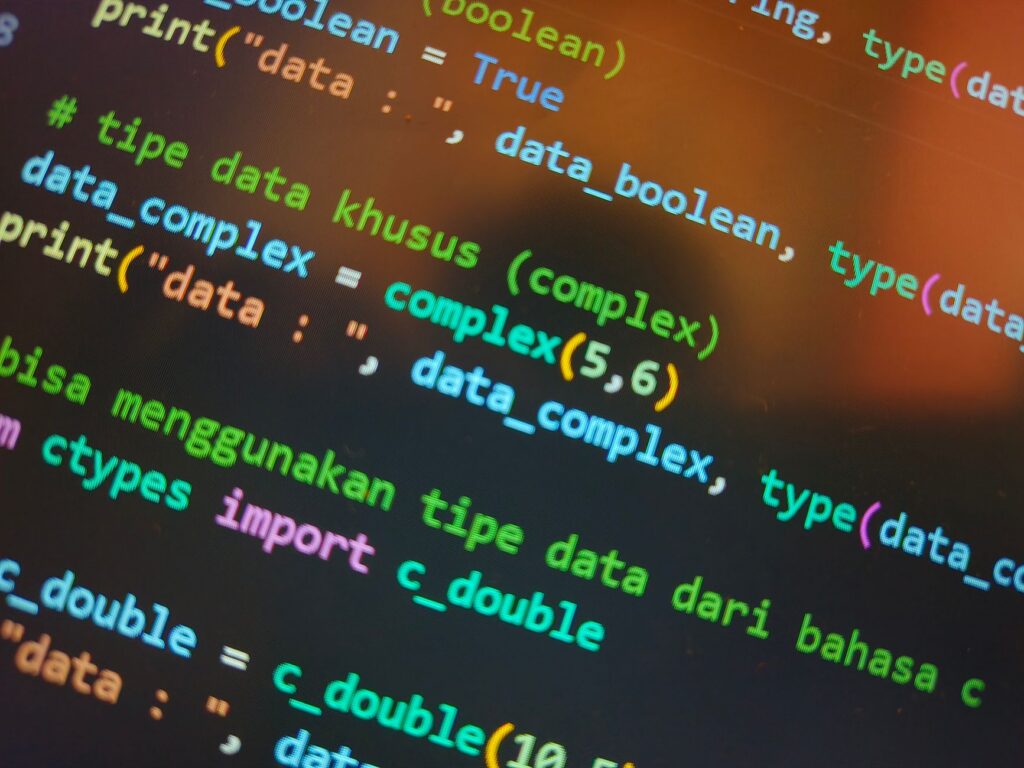
Python has established itself as one of the most widely adopted programming languages in modern software engineering. Conceived in the late 1980s by Guido van Rossum and named in homage to the British comedy troupe Monty Python, the language was created with a clear imperative: prioritize human readability and developer efficiency above syntactic complexity. Unlike languages that enforce rigid structural boilerplate, Python adopts an expressive syntax that closely mirrors natural language constructs, enforcing clean layout conventions through significant indentation.
The foundational philosophy of Python is famously encapsulated in “The Zen of Python,” a collection of guiding aphorisms emphasizing simplicity, explicitness, and clarity. Principles such as “Explicit is better than implicit” and “Simple is better than complex” continue to direct core language development. This design approach drastically lowers the cognitive overhead required to read, write, and maintain code bases, making Python equally attractive to beginners, seasoned software architects, and domain scientists.
Core Architecture and Execution Model
To understand Python’s flexibility, one must examine its underlying architectural framework. Python is traditionally implemented as an interpreted, dynamically typed language, with CPython serving as the reference implementation. When a script is executed, Python source code is first compiled into intermediate bytecode (.pyc files), which is subsequently executed by the Python Virtual Machine (PVM). This multi-stage process separates structural compilation from runtime execution, allowing cross-platform portability without manual recompilation.
Memory management within CPython relies primarily on reference counting complemented by a cyclic garbage collector. Every object tracks the number of references pointing to it; once that count drops to zero, the allocated memory is immediately reclaimed. For complex cyclic references where objects reference each other, a generational garbage collector periodically scans memory to resolve orphaned structures.
Python achieves its rapid prototyping capabilities by balancing high-level abstraction with flexible memory management, enabling engineers to focus on business logic rather than pointer arithmetic.
A notable architectural component of CPython is the Global Interpreter Lock (GIL). The GIL is a mutex designed to prevent multiple native threads from executing Python bytecodes simultaneously. While the GIL simplifies C extension integration and ensures thread safety for memory management, it historically posed challenges for CPU-bound multi-threading. Modern Python versions address this through process-based concurrency, asynchronous programming models, and ongoing efforts to make the GIL optional in specialized builds.
The Extensibility of the Package Ecosystem
While Python’s standard library is famously known as “batteries included,” offering robust built-in modules for everything from file I/O to network protocols, the language’s true modern power lies in its third-party package ecosystem. The Python Package Index (PyPI) hosts hundreds of thousands of open-source packages, maintained by an active global developer community.
- Package Distribution: Modern tooling such as
pip,poetry, andpipenvstandardizes dependency resolution and project packaging. - Environment Isolation: Virtual environments allow disparate projects to maintain isolated dependency trees on a single operating system, mitigating version conflicts.
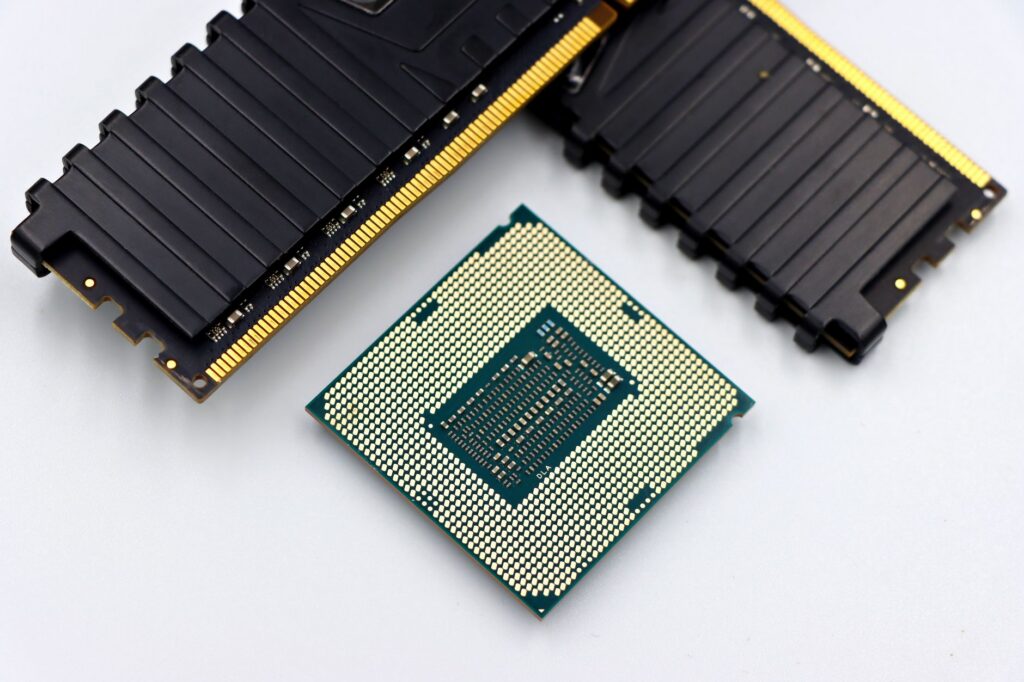
- C/C++ Interoperability: Python features robust foreign function interfaces (FFI), enabling performance-critical operations to be written in lower-level languages and wrapped in clean Python APIs.
This seamless interoperability allows computationally demanding tasks to execute at compiled machine speeds while retaining Python’s intuitive interface.
Transformative Applications Across Computing Disciplines
Python’s versatility has propelled it to the forefront of several key domains in modern technology, transitioning from a scripting utility into an enterprise-grade backbone.
Data Science and Artificial Intelligence
Python is the undisputed lingua franca for numerical computing, data analysis, and machine learning. Foundational libraries provide high-performance multidimensional array processing and tabular data manipulation. Higher-level frameworks have standardized neural network construction, deep learning experimentation, and large-scale model inference, allowing researchers to quickly move from academic concept to production deployment.
Web Engineering and Distributed Services
In web application development, Python powers high-throughput services and enterprise APIs. Frameworks ranging from full-featured, convention-based architectures like Django to modular micro-frameworks such as Flask and FastAPI enable rapid, secure development. FastAPI, in particular, leverages standard Python type hints to deliver high-concurrency performance alongside automated interactive documentation.

DevOps, Scripting, and System Automation
System administrators and site reliability engineers rely heavily on Python to orchestrate cloud infrastructure, manage containerized workflows, and automate repetitive operational workflows. Its cross-platform consistency ensures scripts behave identically across Linux distributions, macOS, and Windows environments, making it a staple tool in modern CI/CD pipelines.
Performance Optimization and Future Trajectory
As computational demands grow, Python continues to evolve to meet enterprise scalability requirements. Recent release cycles have placed heavy emphasis on raw interpreter performance, integrating specialized runtime optimizations, adaptive bytecode specialization, and enhanced tracing mechanisms that decrease execution latency without breaking backwards compatibility.
Furthermore, native asynchronous programming via asyncio allows services to handle tens of thousands of concurrent I/O-bound network connections efficiently. By utilizing single-threaded event loops to manage cooperative multitasking, developers can achieve remarkable scalability for microservices, websocket managers, and streaming endpoints without incurring the memory overhead associated with heavy system threading.
Conclusion
Python’s enduring relevance over more than three decades stems from a disciplined balance between simplicity and technical pragmatism. By prioritizing clean syntax, cultivating a vibrant modular ecosystem, and adapting its runtime architecture to contemporary multi-core and data-intensive paradigms, Python remains uniquely positioned to support the future of software development, automated systems, and enterprise intelligence.