The Enduring Fascination with Alien Contact
For millennia, humanity has cast its gaze toward the cosmos, wondering whether Earth is the sole bastion of life or merely one inhabited harbor in a vast cosmic sea. The concept of alien contact transcends mere curiosity; it strikes at the fundamental questions of human identity, philosophy, and our trajectory as a technological species. While the prospect of receiving a transmission across interstellar space was once confined to visionary literature and folklore, the past century has transformed the question into a multidisciplinary scientific endeavor.
Today, astronomers, astrobiologists, and cultural theorists approach extraterrestrial intelligence not through speculative belief, but through empirical methodologies. Bridging the gap between cultural folklore and rigorous radio astronomy, the pursuit of first contact reflects humanity’s growing capacity to probe the physical reality of the universe.
Between Science and Folklore: The Cultural Evolution of the Alien
The modern archetype of the extraterrestrial took distinct shape during the mid-20th century. Against the backdrop of the early Cold War, rapid advances in rocketry and aerospace technology intersected with heightened geopolitical anxiety. High-altitude reconnaissance balloons, secret military projects, and atmospheric testing frequently generated sightings of unidentified aerial phenomena that ordinary observers could not easily reconcile.
Incidents such as the 1947 crash near Roswell, New Mexico, became focal points for public fascination. While official military investigations later accounted for the debris through classified defense initiatives—specifically high-altitude atmospheric monitoring balloons designed to detect Soviet atomic tests—the ambiguity of early public statements ignited persistent mythologies. Over decades, these accounts fueled speculative subcultures, inspiring generations of storytellers, filmmakers, and the public to imagine extraterrestrial visitors observing Earth from hidden vantage points.
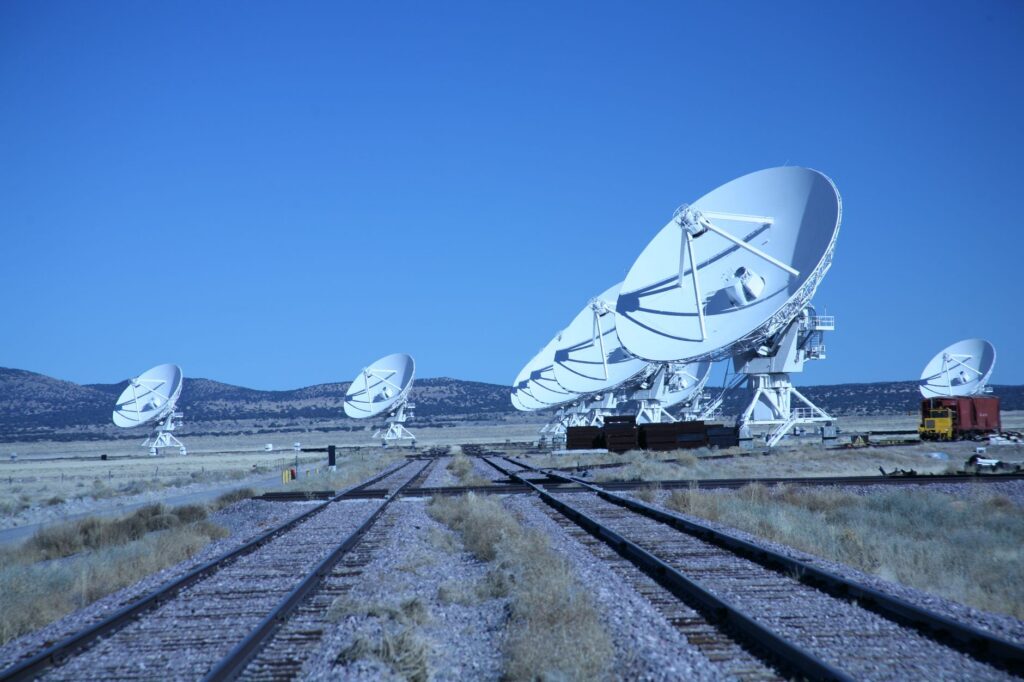
Concurrently, popular media shaped the philosophical contemplation of contact. Seminal works, such as Carl Sagan’s novel Contact, captured the delicate tension between scientific rigor and spiritual awe. Sagan envisioned contact not as an invasion of flying craft, but as a mathematical pulse detected across light-years by radio observatories like the Very Large Array and Arecibo. This narrative shift marked an intellectual transition from defensive paranoia to an enlightened curiosity about cosmic neighbors.
The Great Silence: Addressing the Fermi Paradox
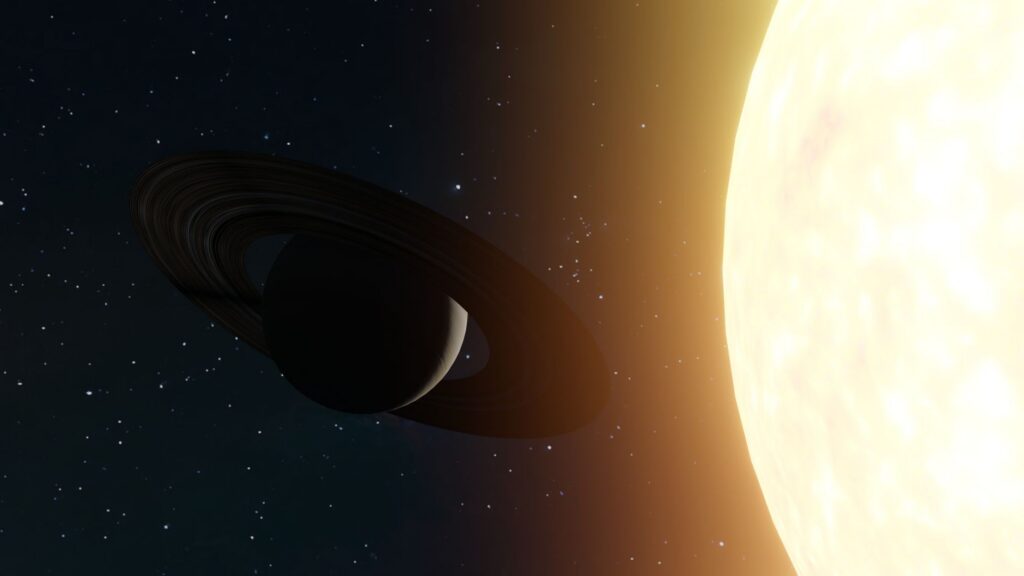
As astronomical instruments grew more sophisticated, the scientific community encountered a troubling contradiction famously articulated by physicist Enrico Fermi: if intelligent life is a natural outcome of cosmic evolution, why is the universe seemingly silent? The sheer scale of the observable universe—encompassing billions of galaxies, each hosting billions of stars and rocky exoplanets—suggests that life should be statistically abundant.
Several hypotheses have been formulated to explain this apparent absence of contact:
- The Rare Earth Hypothesis: The precise convergence of geological, atmospheric, and planetary conditions that enabled complex multicellular life on Earth may be exceedingly uncommon across the cosmos.
- The Great Filter: Evolutionary development may contain an evolutionary bottleneck so difficult to overcome that nearly all emerging species perish before achieving interstellar communication or travel.
- Technological and Temporal Mismatches: Civilizations may endure for only a narrow window of cosmic time. Two civilizations must overlap not only in technological capability but also within the same temporal epoch across billions of years.
- The Zoo Hypothesis: Highly advanced extraterrestrial civilizations may intentionally avoid detection or direct communication, observing our planetary development without intervention.
“The universe is a pretty big place. If it’s just us, seems like an awful waste of space.” — Carl Sagan
Modern Search Strategies: Technosignatures and Biosignatures
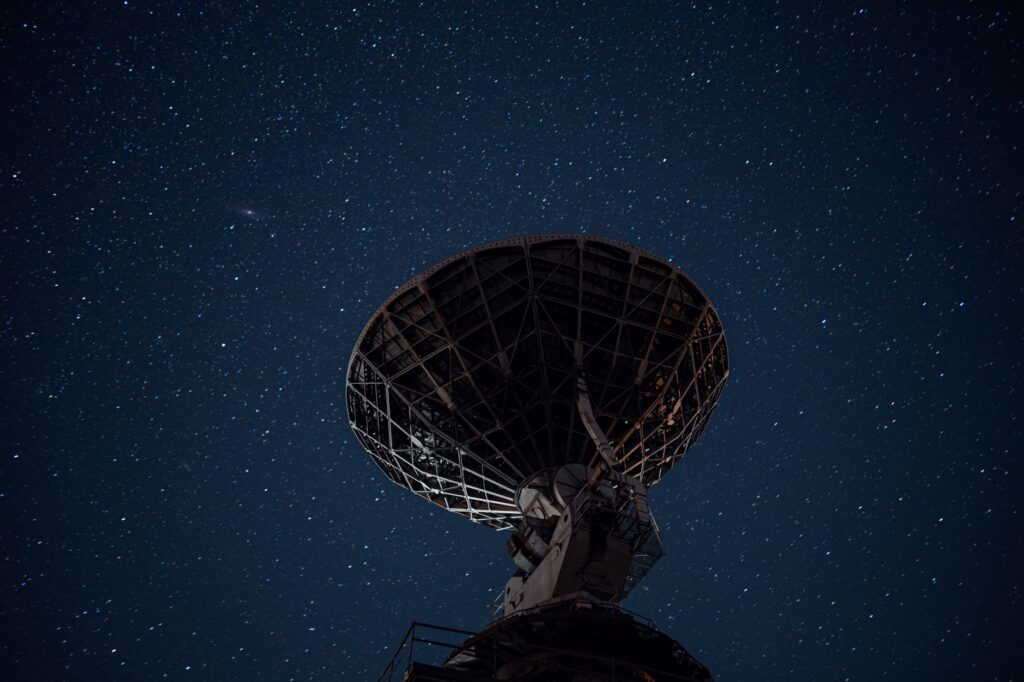
Contemporary efforts to establish alien contact have shifted from passive hope to active, highly structured scientific exploration. The Search for Extraterrestrial Intelligence (SETI) utilizes vast radio telescope networks to monitor candidate star systems for non-random, narrowband transmissions that cannot be explained by natural astrophysical mechanisms like pulsars or solar flares.
Beyond radio frequencies, modern astrobiology prioritizes the detection of atmospheric biosignatures and technosignatures:
- Atmospheric Spectroscopy: Next-generation space telescopes analyze the atmospheric composition of transiting exoplanets, searching for chemical disequilibrium—such as concurrent signatures of methane, oxygen, and ozone—that strongly indicates biological activity.
- Optical and Infrared Technosignatures: Observatories scan for ultra-short laser pulses, potentially used by advanced species for interstellar communication, or the waste heat emissions characteristic of megastructures surrounding distant stars.
- Autonomous Signal Processing: Machine learning algorithms are increasingly deployed to sift through millions of observational datasets, distinguishing genuine anomalies from anthropogenic radio frequency interference.
The Societal and Philosophical Impact of First Contact
Should humanity detect an authentic signal confirming extraterrestrial intelligence, the consequences would reverberate through every dimension of human civilization. International protocols formulated by scientific organizations emphasize transparent verification, peer review, and collective global response through diplomatic bodies such as the United Nations.
Philosophically, confirming the existence of non-human intelligence would dismantle long-standing anthropocentric models of the universe. It would challenge institutional worldviews, encourage international solidarity, and redefine humanity’s collective place in natural history. Whether the first evidence emerges as a faint radio transmission from a distant star or an atmospheric anomaly on an exoplanet hundreds of light-years away, alien contact remains humanity’s ultimate endeavor to discover that we are not adrift in solitude.