A rare sight in a familiar setting
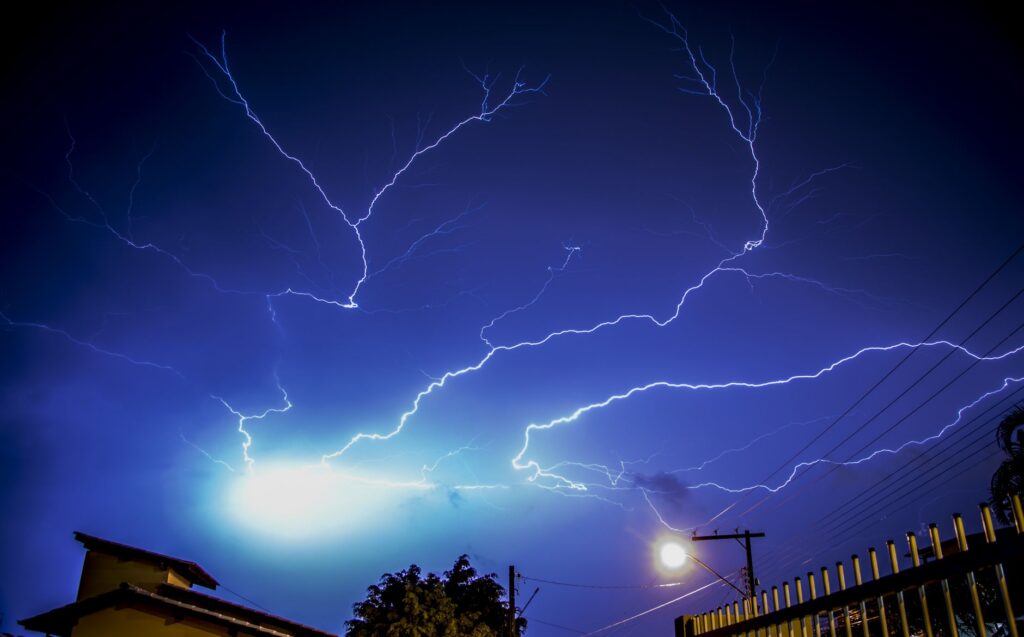
During ordinary thunderstorms, lightning usually appears as a brief, branching flash. Ball lightning is described differently: a luminous, roughly spherical object that persists for seconds, drifts or moves irregularly, and sometimes disappears abruptly. Witnesses have reported it outdoors and indoors, including near windows and electrical equipment. Accounts vary widely in size, color, brightness, and behavior, making it hard to identify a single consistent phenomenon behind them.
The reports are unusual, but not new. Accounts resembling ball lightning appear in historical records, and observations continue to be collected today. The challenge is that a witness may have only a few seconds to see an event during dangerous weather. Few reports include measurements, photographs, or other evidence that can be independently checked.
Why observation is so difficult
Researchers face a basic problem: ball lightning is reported infrequently and unpredictably. It cannot be summoned on demand like a laboratory discharge, and storms are hazardous places to conduct close observations. A brief, bright flash can also affect visual perception, while reflections, electrical arcs, and other atmospheric or human-made effects may be mistaken for a floating sphere.
These limitations do not mean that every report is mistaken. They do mean that reports alone cannot establish the physical process involved. Descriptions may be sincere yet differ because observers are recalling a startling event under poor conditions. To compare cases, investigators need details such as the weather, location, duration, apparent motion, and whether instruments recorded anything at the same time.
Possible explanations, not settled answers
Several broad ideas have been proposed. Some focus on electrical or plasma processes associated with thunderstorms. Others suggest that lightning striking soil or other material could produce glowing particles or chemical reactions that persist briefly. Still other explanations emphasize optical effects or interactions between electrical discharges and nearby objects.
Each idea addresses only some reported features. A mechanism that can create a glowing object in a laboratory does not automatically explain the full range of natural observations. Researchers must show that it can occur under storm conditions, last for a plausible period, and account for reported movement and appearance without requiring unsupported assumptions.
Laboratory experiments have produced luminous phenomena that resemble aspects of witness accounts. Such work can help test whether particular physical processes are possible. However, reproducing a visual similarity is not the same as proving that the experiment has recreated ball lightning as it occurs in nature. The connection remains uncertain unless observations and measurements can link the two.
What stronger evidence would look like
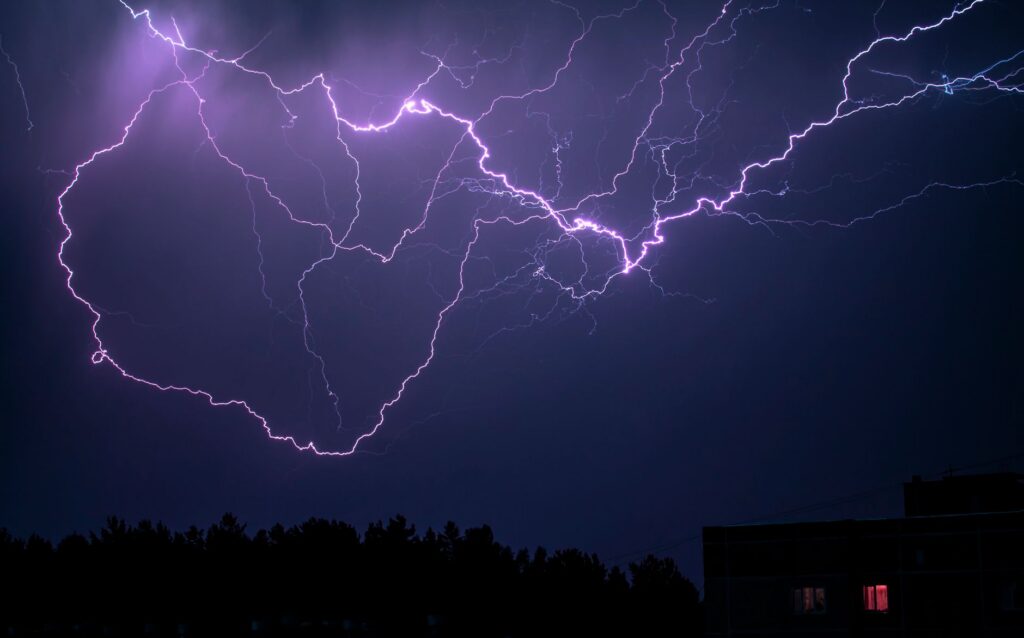
A useful record would combine multiple kinds of evidence. Video from more than one angle could help establish shape and motion; weather data could confirm the storm context; and optical, electrical, or other instruments might capture properties that human vision cannot measure reliably. Independent observations from several people would also help separate shared features from individual perception.
Even a clear recording would not necessarily reveal the cause. It could confirm that a luminous object existed and document its behavior, while leaving open what produced it. That distinction matters: identifying a phenomenon is a necessary step, but explaining its mechanism requires further tests that rule out competing interpretations.
An open question in atmospheric science
Ball lightning remains a genuine scientific puzzle not because it is beyond investigation, but because the evidence is difficult to collect and the observations do not yet point to one confirmed explanation. The most useful progress is likely to come from careful documentation rather than dramatic claims: precise records, calibrated instruments, and cautious comparisons between natural events and laboratory results.
For now, the phenomenon occupies a narrow space between familiar weather and incomplete knowledge. Thunderstorms produce well-understood forms of lightning, yet reports of persistent glowing spheres continue to raise questions about what can happen during an electrical storm—and what evidence will finally make the answer clear.