A flash that does not behave like lightning
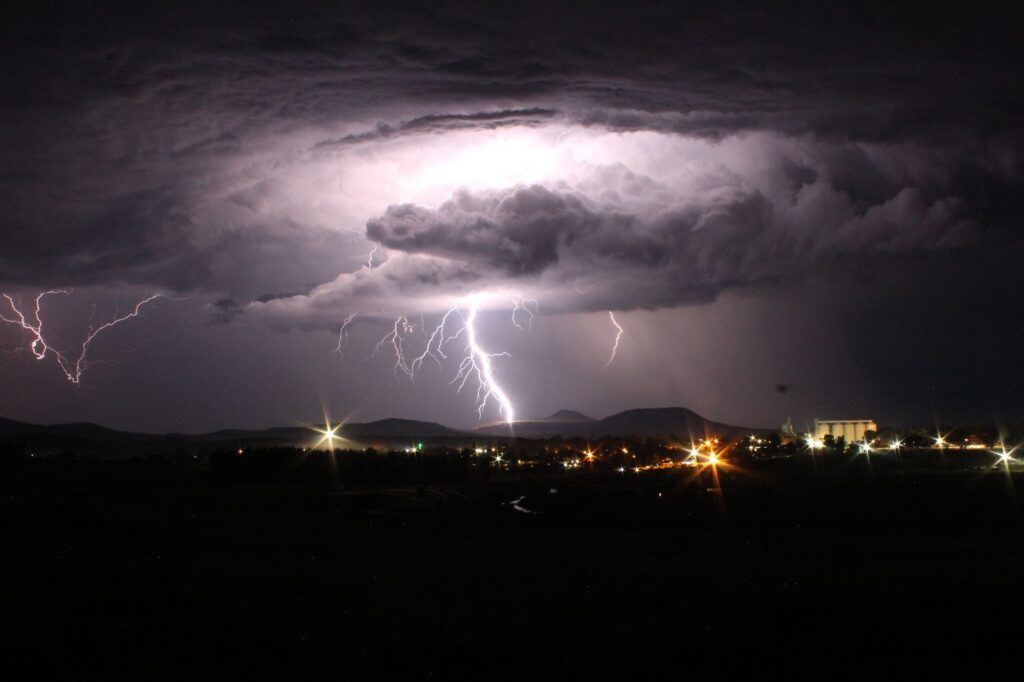
Most lightning is over in an instant. Ball lightning, by contrast, is described as a luminous sphere that appears during or shortly after a thunderstorm and persists long enough to be noticed moving through the air. Witness accounts often place it near the ground, buildings, or electrical equipment. Reported colors and sizes vary, and some observers say the light fades quietly while others describe a sudden disappearance.
These descriptions are striking, but they are not standardized measurements. A witness may see the event at night, through rain, or while startled by a nearby strike. Distance and duration are difficult to judge under those conditions. Some historical reports may also conflate ball lightning with ordinary electrical discharges, reflections, or other brief visual effects. The challenge is not simply to collect stories; it is to establish which observations refer to the same physical phenomenon.
Why the evidence is unusually hard to gather
Researchers cannot reliably summon ball lightning in a controlled setting, and a rare event may last only seconds. By the time instruments are deployed, the storm—and the opportunity—may be gone. As a result, much of the evidence comes from eyewitness accounts rather than repeatable experiments. Those accounts can suggest patterns, but they rarely provide the synchronized video, distance measurements, and environmental readings needed to test a physical explanation.
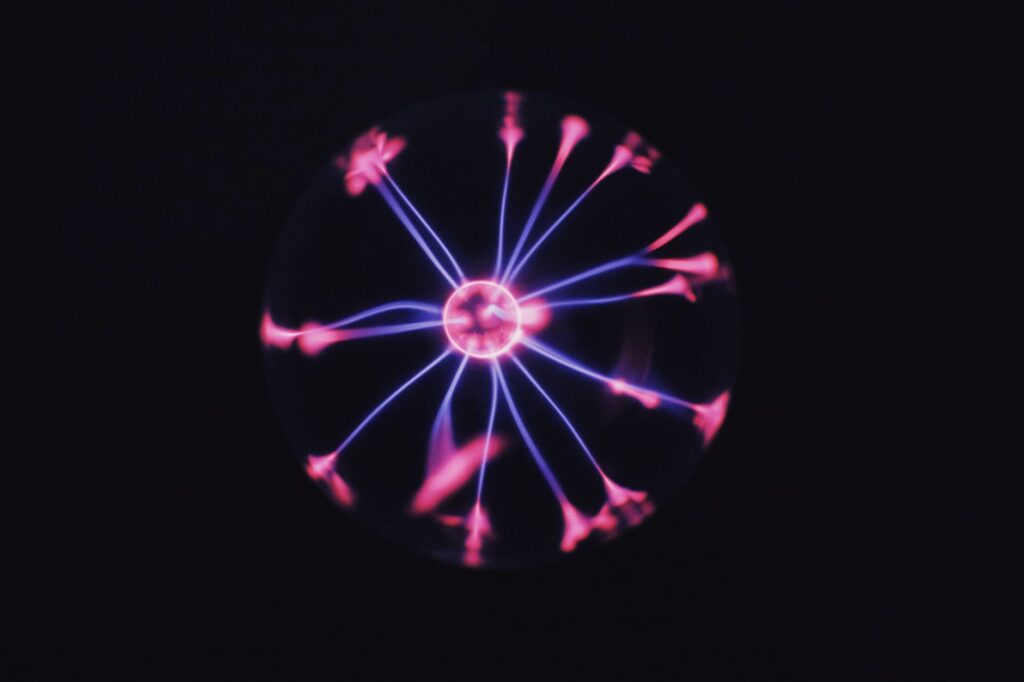
Laboratory experiments have produced glowing plasmas and other luminous effects that resemble some reported features. Such demonstrations are useful for exploring possible mechanisms, but resemblance alone does not prove that a laboratory effect is the same phenomenon witnesses see outdoors. A convincing explanation must account for the circumstances of appearance, the range of reported behavior, and the energy involved, while also making predictions that can be checked.
A rare recorded observation
In 2012, researchers studying a thunderstorm in China recorded an event they identified as ball lightning. The observation was notable because it included video and spectral measurements, rather than relying solely on a later account. The event followed a lightning strike, and the recorded light lasted for roughly a second and a half. Analysis of its spectrum showed emissions associated with elements found in soil, including silicon, iron, and calcium.
The measurements offered a valuable clue: in this instance, the light’s chemical signature was consistent with material from the ground being involved. One possible interpretation is that a lightning strike vaporized or energized soil components, which then contributed to a glowing cloud. But a single observation cannot establish that this process explains every report. Ball lightning accounts differ, and the recorded event may represent one mechanism—or one particular kind of event—rather than a universal answer.
What an explanation must account for
Any proposed account faces several constraints. It must explain how a luminous region can persist after the initial lightning discharge, how it moves or remains suspended, and why witnesses describe such different colors and shapes. It should also fit the limited instrumental observations without treating uncertain details from every report as firm data.
Researchers have considered a range of possibilities, including plasma processes and chemical reactions involving material disturbed by lightning. These ideas differ in the source and storage of energy, and none has been confirmed as a complete explanation. The variety of hypotheses reflects a basic difficulty: the phenomenon is rarely observed under conditions that allow decisive measurements.
How future observations could help
Progress may depend less on a dramatic new theory than on better documentation. Cameras and instruments placed in storm-prone areas could record visible light alongside electrical, acoustic, and weather data. Multiple viewing angles would help estimate an event’s distance and size, while spectral measurements could reveal what substances are emitting light. Consistent reporting by witnesses would also make accounts easier to compare.
For now, ball lightning occupies an unusual position between anecdote and established physical study. There is credible evidence that unusual luminous events occur, and at least one modern observation has provided measurable clues. Yet the available evidence remains too limited to settle how the phenomenon forms or whether all reports share the same cause. Its mystery is not proof of anything supernatural; it is a reminder that rare events can be difficult to capture before they vanish.