A discovery in Isdalen
On November 29, 1970, a man and his two young daughters hiking near Bergen, Norway, found a badly burned body in a rocky area of Isdalen, a steep valley whose name is often translated as “Death Valley.” The woman had no identification with her. Her clothing labels had been cut away, and several personal items were found nearby. From the beginning, the scene presented investigators with both physical evidence and an absence of ordinary identifying details.
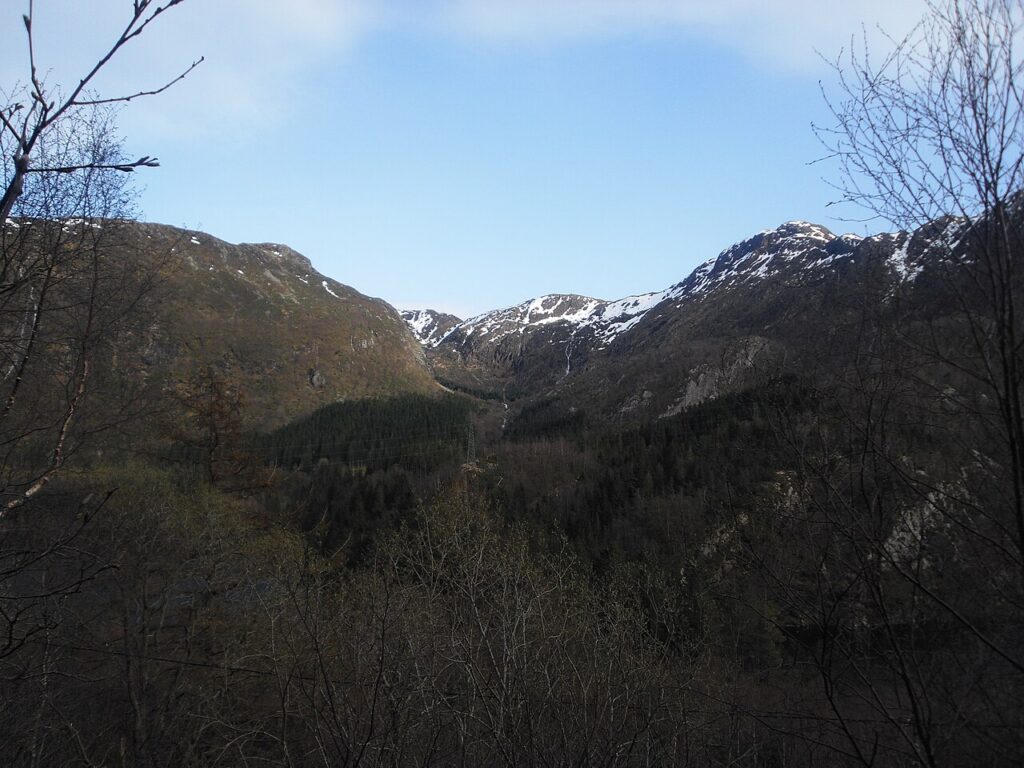
Police established that the deceased was a woman, but her identity was not immediately clear. The condition of the body made identification difficult, and the case drew attention across Norway. Investigators searched for missing people and followed the clues available in the surrounding area. Yet there was no passport, wallet, or other straightforward document tying her to a name.
Suitcases and a paper trail
A significant lead emerged at Bergen railway station, where police found two suitcases believed to belong to the woman. They contained clothing, wigs, cosmetics, and other travel items. As with the clothes found near the body, labels had been removed from garments. The luggage also contained personal effects and objects that helped investigators build a picture of her movements, but not a reliable account of her identity.

Among the material recovered were notes recording hotel stays and journeys in Norway and elsewhere in Europe. Some entries used numbers and abbreviations rather than plain descriptions. Investigators interpreted the notes as a form of code and were able to connect them with travel records and hotel registers. The documents showed that the woman had moved between places under different names, making it harder to determine whether any single record represented her actual identity.
Witnesses at hotels recalled a woman who sometimes changed her appearance, including by wearing wigs. Such accounts supported the idea that she had taken care to conceal aspects of her identity, but they could not explain why. A person using aliases may be protecting privacy, avoiding attention, or acting for reasons that are not evident to observers. The surviving evidence does not establish which explanation, if any, applied in this case.
What investigators could establish
Forensic examination found evidence consistent with a death involving fire and carbon monoxide. The investigation also considered the presence of sleeping medication. Authorities ultimately treated the death as a likely suicide, but the available findings did not answer every question about the circumstances. The precise sequence of events, the woman’s intentions, and the reason for the missing labels and aliases remain uncertain.

The investigators’ task was complicated by the limited forensic tools available at the time. The case predated modern DNA profiling, and the surviving records were incomplete. Even when police could trace a journey or identify a hotel stay, a false name offered little help in locating relatives or confirming a legal identity. The combination of deliberate concealment and weak identifying evidence left investigators with a detailed route but no secure destination: a confirmed name.
New methods, partial answers
Decades later, journalists and researchers revisited the case using archival records, improved forensic techniques, and chemical analysis of preserved material. Isotope studies of the woman’s teeth and other evidence have been used to investigate where she may have spent parts of her childhood. Some analyses have pointed toward a region of Central Europe, including the area around Nuremberg, but such findings are not equivalent to identifying her. They narrow possibilities; they do not provide a birth certificate or prove a particular biography.

The case also illustrates the limits of reconstructing a life from travel documents. A hotel register can place someone in a city on a particular date, while a coded note may suggest a route. Neither establishes what the person was doing there, whom she met, or what name she used outside the record. Interpretations of the woman as a spy or operative have circulated because of the aliases and concealment, but those details alone do not demonstrate such a role.
A mystery with boundaries
The Isdal Woman case is unresolved in a specific sense: the woman has not been conclusively identified, and the full circumstances of her death have not been established. At the same time, it is not a blank slate. Investigators documented the discovery, traced parts of her travel, examined physical evidence, and recorded witness accounts. Later research has added clues without settling the central questions.
That distinction matters. A mystery can invite confident stories, especially when evidence appears unusual. Here, the responsible account is narrower: a woman traveled through Europe under aliases, took steps that obscured her identity, and died in a Norwegian valley in 1970. The records preserve fragments of her final months, but no verified name connects those fragments into a complete life.