Before online sleuthing became a familiar part of popular culture, Unsolved Mysteries invited television viewers to take part in the search for answers. The American documentary series presented real cases and unexplained events, then left a question hanging: could someone watching recognize a clue, remember a detail, or help move an investigation forward?
A program built around open questions
Created by John Cosgrove and Terry Dunn Meurer, the program began as a set of seven specials. The first aired on NBC on January 20, 1987, with Raymond Burr, Karl Malden, and Robert Stack among the presenters. It became a regular series in October 1988, with Stack as host. The show later moved to CBS for its tenth season in 1997.
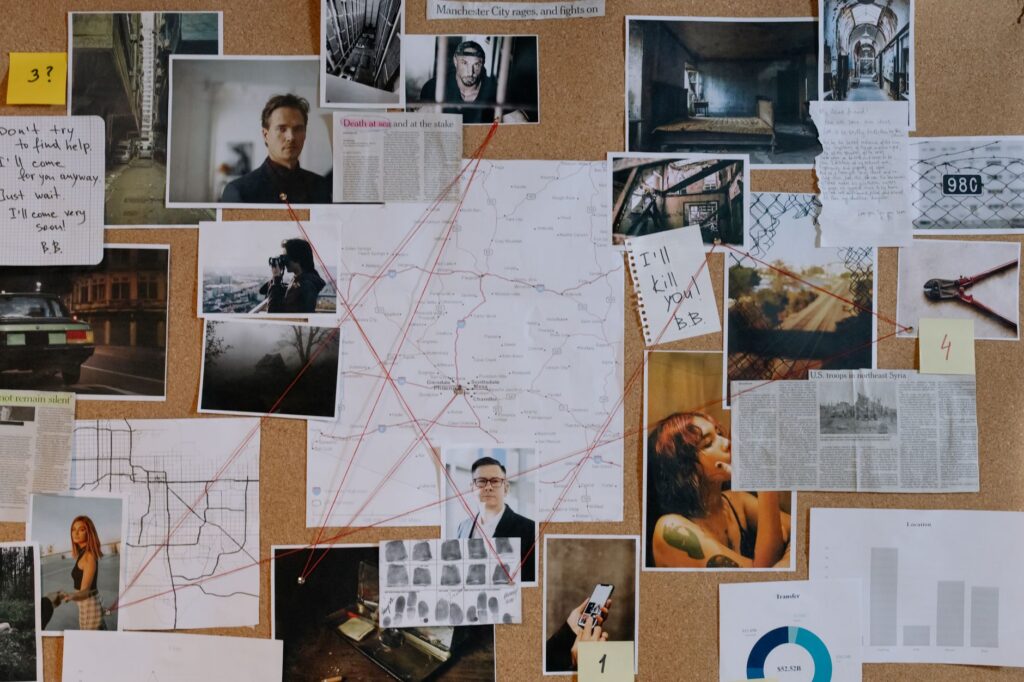
Those dates mark more than a broadcast history. They show how a format centered on unresolved stories could sustain itself across changing networks and presenters. The subject matter varied: cases involving missing people, unsolved crimes, fugitives, memory loss, and paranormal claims all appeared. The connecting thread was not a single kind of mystery, but the gap between what was known and what remained uncertain.
Reconstruction as a viewing tool
The series often used reenactments alongside documentary material. That choice made difficult or incomplete accounts easier to follow: viewers could see a sequence of events, notice what a witness described, and keep track of questions as they arose. A reenactment could also give a story a strong emotional shape, which is one reason it needs to be understood as a presentation rather than as independent evidence.
That distinction matters. A dramatized scene may be based on testimony or records, but its images are constructed for television. A camera angle, a pause, or a tense musical cue can suggest confidence or menace that the underlying evidence does not establish. Responsible viewing means separating what the program shows from what investigators, witnesses, or documents actually support.
The audience as a possible source
The invitation to viewers was central to the format. A person watching might recognize someone, connect a name to a place, or recall a detail that had seemed insignificant at the time. This approach treated the audience not simply as spectators but as a large, dispersed pool of potential witnesses and tipsters.
That invitation also created a particular kind of suspense. In a conventional mystery story, the writer controls the clues and eventually supplies a resolution. In a true-crime segment, the account may end without one. The audience is left with both a narrative and a practical uncertainty: perhaps a useful lead exists somewhere beyond the broadcast, but there is no guarantee that it will surface.
Why an unresolved ending can be difficult
An open ending can make a case memorable, but it can also place real people inside a story that has no tidy conclusion. Missing people and unsolved crimes are not puzzles created for entertainment; they involve families, communities, and investigations that may continue beyond a program’s runtime. A compelling presentation should not turn uncertainty into proof or treat every unanswered question as evidence of a dramatic explanation.
Paranormal segments raise a related challenge. Presenting an unusual claim does not verify it. The value of a documentary approach depends partly on whether it helps viewers distinguish reports, interpretations, and established facts. When those categories blur, mystery can become a substitute for careful assessment.
What the series leaves behind
Unsolved Mysteries endures as a recognizable example of television built around incompleteness. Its basic engine was simple: present a case, organize the available account, and leave room for information that had not yet emerged. That structure made uncertainty active. Viewers were asked to think, compare, and sometimes respond, rather than wait for a guaranteed reveal.
The most useful lesson is not that every mystery has a hidden answer waiting to be discovered. It is that unresolved stories demand careful attention to the difference between evidence and atmosphere. A reenactment can clarify a narrative; a witness account can offer a lead; a viewer’s memory can matter. None, by itself, closes a case. The enduring question behind the program is therefore also a practical one: what information is missing, and who might be able to provide it?