For decades, the term UFO incident has evoked sensational imagery of flying saucers and extraterrestrial visitors. However, beneath the sensationalism of popular culture lies a substantive archive of military encounters, sensor anomalies, and unexplained atmospheric events. Investigating these occurrences requires moving past folklore and examining the intersection of radar telemetry, eyewitness testimony, and physical trace evidence.
The Dual-Confirmation Standard: Radar and Visual Anomalies
In aerospace investigations, a sighting gains credibility when independent detection methods corroborate one another. A purely visual observation is susceptible to optical illusions, perspective distortion, and atmospheric refraction. Conversely, radar contacts can stem from temperature inversions, bird flocks, or electronic interference. A compelling UFO incident typically presents concurrent visual observation and radar confirmation across multiple independent stations.
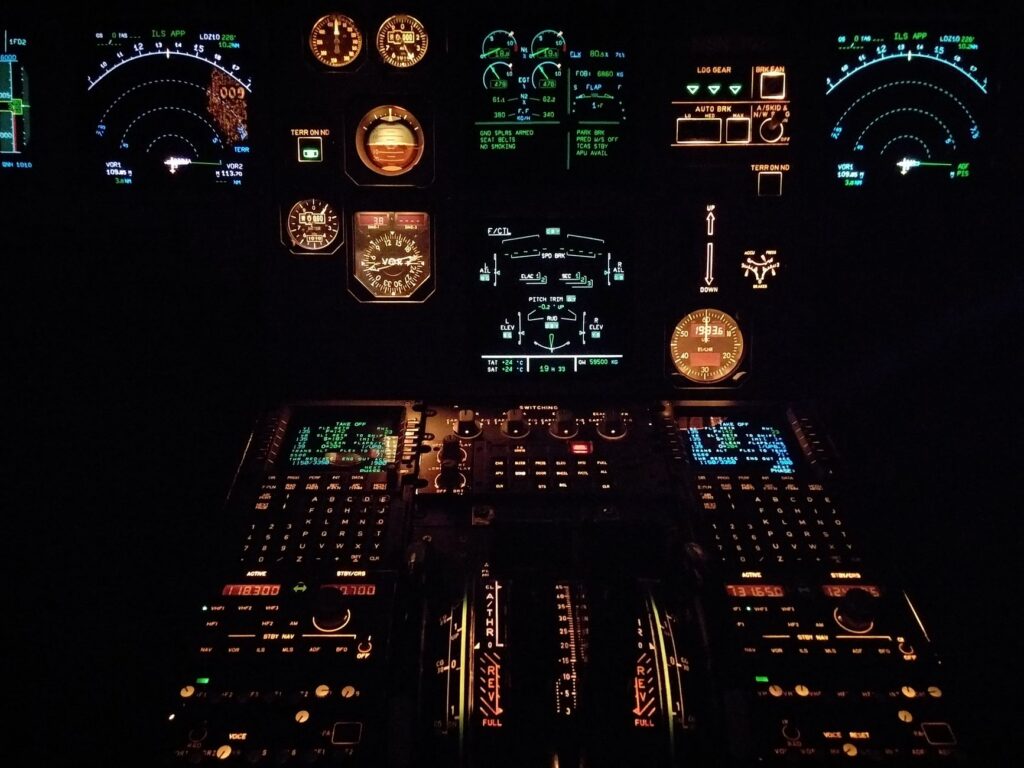
The 1976 Tehran incident remains one of the most thoroughly documented examples of this dual-confirmation dynamic. In the early hours of September 19, civilian radar operators and military observers tracked an intensely luminescent aerial body above the Iranian capital. When two F-4 Phantom II interceptors were scrambled to intercept the object, both flight crews experienced sudden avionic anomalies as they closed distance.
“During high-speed interception attempts, crews frequently report simultaneous avionic degradation, losing communications and navigational instruments precisely at closest approach, only to regain telemetry upon disengaging.”
The pilots reported that weapons guidance computers malfunctioned precisely when targeting locks were attempted. Crucially, the target was tracked simultaneously by airborne radar sets and ground-based air traffic systems, ruling out simple pilot disorientation. While subsequent evaluations debated whether equipment failure was coincidentally triggered by electronic warfare experiments or unusual atmospheric ionization, the event underscores how multi-sensor incidents challenge standard aviation safety frameworks.
Physical Fragments and Atmospheric Bolides
While airborne intercepts represent one facet of unexplained encounters, ground recovery cases present a distinct challenge involving forensic analysis, metallurgy, and official accountability. An enduring archetype is the 1965 Kecksburg incident, where thousands across six North American states witnessed a brilliant fireball descending toward rural Pennsylvania.
Astronomers swiftly attributed the aerial trajectory to a steep-angle meteor bolide burning upon atmospheric entry. However, ground eyewitnesses and regional emergency responders reported military cordons around the impact site and the recovery of unusual metallic wreckage. Decades later, historical inquiries and litigation under Freedom of Information statutes prompted reassessments, suggesting the recovered hardware may have been the re-entry debris of an unannounced satellite experiment rather than an astronomical body.

Distinguishing extraterrestrial speculation from classified terrestrial technology is the central dilemma of physical recovery investigations. The post-World War II period saw extensive testing of high-altitude balloons, experimental lifting bodies, and early space capsules, many of which operated under strict secrecy. When such craft crashed or veered off course, official silence frequently allowed speculative interpretations to fill the informational void.
The Spectrum of Resolution
Systematic reviews by scientific panels and aerospace organizations demonstrate that the vast majority of aerial incidents eventually yield terrestrial explanations. In depth analysis consistently categorizes the bulk of reported anomalies into three primary domains:
- Atmospheric and Astronomical Phenomena: High-altitude weather phenomena, rare plasma discharges like ball lightning, and unusually bright planets such as Venus or Jupiter seen through temperature inversion layers.
- Human-Made Hardware: Unannounced military prototypes, commercial drones, stray weather observation instruments, and orbital debris undergoing atmospheric decay.
- Sensor Artifacts: Electronic jamming, radar clutter, compression artifacts on electro-optical infrared systems, and pilot parallax illusion.

Nevertheless, a small percentage of documented cases resist categorization. These core anomalies involve kinematic performance that defies standard aerodynamics, such as instantaneous acceleration, lack of visible propulsion plumes, and sustained high velocities in dense air layers. For defense analysts, these cases represent potential technological surprises or novel physics requiring methodical monitoring.

Institutional Transformation: From Speculation to Science
In recent years, the terminology and methodology surrounding aerial anomalies have undergone a profound shift. The transition from UFO to Unidentified Anomalous Phenomena (UAP) represents an institutional attempt to strip away cultural stigma and approach anomalous airspace incursions with scientific discipline.
Standardized reporting systems across civil aviation bodies and naval forces now prioritize raw sensor data, synchronized flight logs, and calibrated sensor packages over subjective narratives. By treating anomalous sightings not as proof of extraterrestrial life, but as empirical aviation safety questions, modern investigators have established a rigorous framework. Deciphering the true nature of an anomalous aerial incident requires neither credulity nor cynicism, but the dispassionate application of physics, telemetry, and verified evidence.