Across centuries of scientific inquiry, humanity has mapped the globe, decoded genomes, and peered into deep space. Yet, terrestrial nature still harbors phenomena that elude definitive explanation. From rare atmospheric discharges to inexplicable geomorphic patterns, the planet presents questions that challenge established physical and geological models. Rather than relying on folklore, modern science views these natural mysteries as frontiers where observation pushes the boundaries of current instrumentation.
Luminous Enigmas of the Terrestrial Atmosphere
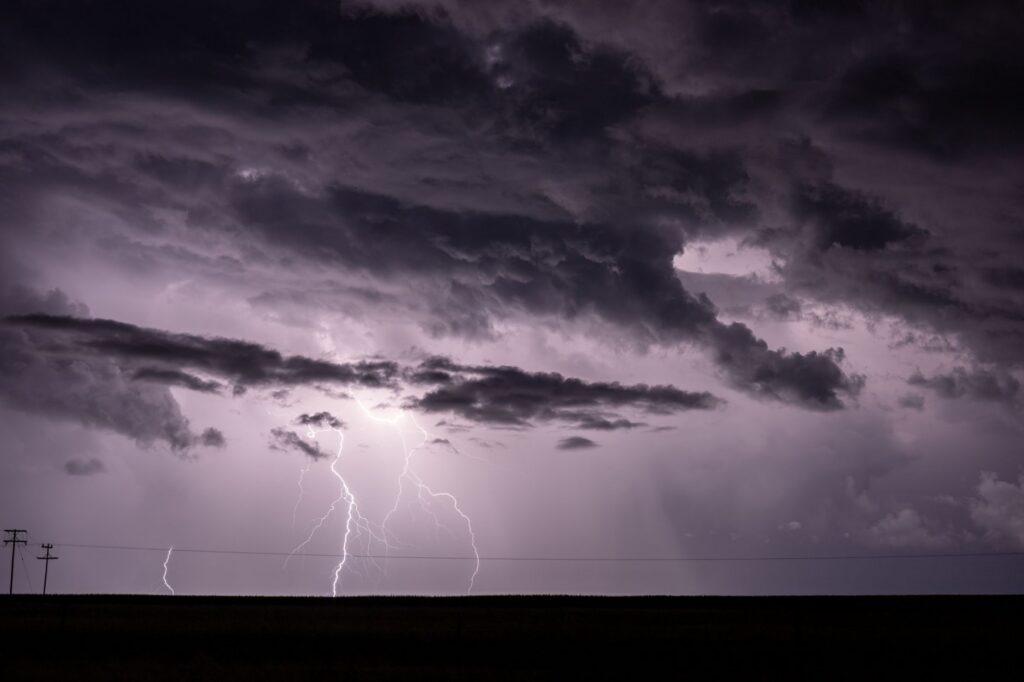
Atmospheric physics has decoded the primary mechanisms of thunderstorms, precipitation, and auroras. However, several transient luminous events continue to provoke debate among meteorologists and physicists alike.
Perhaps the most famous among them is ball lightning. Described for centuries as glowing, spherical plasmoids that drift near ground level during violent storms, ball lightning exhibits behavior that defies conventional electrodynamics. Eye-witness accounts describe spheres ranging from pea-sized to several meters wide, capable of passing through closed glass windows, floating horizontally, and vanishing with either a hiss or an explosive pop. While laboratory experiments have generated brief plasma vortexes using microwave cavities or vaporized silicon, replicating natural ball lightning under atmospheric conditions remains challenging.
Equally compelling are persistent regional displays, such as the Hessdalen lights in rural Norway. Observed regularly since the early 1980s, these luminous anomalies appear as white, yellow, or red lights hovering, flashing, or darting through the valley. Research stations equipped with radar, spectrographs, and magnetometers have confirmed their physical reality, yet hypotheses ranging from ionized dust combustion to piezoelectric releases from quartz-rich bedrock remain actively debated without consensus.

Hydrological and Geomorphic Paradoxes
The ground beneath our feet also preserves geological mechanics that defy straightforward analysis. Fluid dynamics and erosion generally follow predictable trajectories, yet certain landforms consistently baffle field researchers.
- Devil’s Kettle Falls (Minnesota, United States): Along the north shore of Lake Superior, the Brule River divides around a volcanic rhyolite outcrop. While the eastern branch tumbles down an ordinary waterfall, the western half plunges into a deep geological pothole known as the Devil’s Kettle. For decades, dyes, ping-pong balls, and tracking devices dropped into the hole failed to reappear, sparking theories of subterranean rivers or fault-line diversions. Recent hydrological flow measurements indicate the water likely rejoins the river below via hidden subsurface fractures, yet the exact subterranean conduit system has never been directly mapped.
- Singing and Booming Sand Dunes: In roughly three dozen deserts worldwide, including the Badain Jaran and Death Valley, massive dunes emit low-frequency acoustic hums or groans lasting several minutes. While friction among quartz grains is acknowledged as the sound’s origin, the exact synchronization mechanism—how billions of chaotic sand grains organize spontaneously into a coherent acoustic wave—remains a complex problem in granular physics.

Ecological Patterns and Spatial Self-Organization
Beyond inorganic geology and atmospheric currents, the biosphere exhibits its own complex puzzles. Biological structures frequently evolve patterns that seem engineered, even when no central organism directs the architecture.
A prime example lies in the fairy circles of the Namib Desert and Western Australia. These hexagonal arrays of barren circular patches, bordered by tall grasses, punctuate arid landscapes for hundreds of miles. Two primary camps of ecologists have contested their origins for decades: one attributing the geometry to subterranean termite colonies clearing vegetation around their nests, and the other pointing to self-organizing plant water competition in water-scarce soil. Despite field excavations and computational simulations supporting aspects of both models, the debate highlights the intricate, unsolved dynamics of arid ecosystems.
“Every natural anomaly is an invitation to refine our physical laws, demonstrating that nature is far richer than our current models assume.”

The Border Between Anomaly and Understanding
In 1634, John Bate authored The Mysteryes of Nature and Art, capturing the early modern impulse to investigate mechanics, pyrotechnics, and natural curiosities. Centuries later, that same curiosity drives geophysicists, climatologists, and ecologists to deploy satellite telemetry, remote sensing, and isotopic analysis.
The value of natural mysteries does not lie in perpetuating superstition or ungrounded speculation. Instead, anomalies act as catalysts for scientific advancement. Just as transient upper-atmospheric sprites and jets were once dismissed as pilot hallucinations before being validated by high-speed cameras, today’s unresolved terrestrial phenomena delineate the limits of current measurement tools. As sensor technologies and computational modeling advance, the mysteries of nature continue to transform our understanding of the living Earth.