For decades, the phrase “unidentified flying object” has evoked cultural images of otherworldly visitors and secretive aerospace projects. In scientific and defense communities, however, the concept is treated with sober analytical scrutiny. Reclassified broadly as Unidentified Aerial Phenomena (UAP) or Unidentified Anomalous Phenomena, these occurrences represent observational anomalies across atmospheric, maritime, and near-space environments that demand methodical evaluation rather than speculation.
The Evolution from Cultural Lore to Standardized Nomenclature
The term UFO originated in the early 1950s within the United States Air Force as an effort to replace sensationalized media labels such as “flying discs” with operational terminology. When an aviator or ground observer detects a craft or light source whose flight dynamics, structural form, or origin cannot be confirmed immediately, it enters the investigative pipeline as an unidentified observation.
Today, national aviation authorities and space agencies utilize standardized definitions to categorize these events. The goal is straightforward: enhance airspace safety, safeguard national defense corridors, and isolate authentic natural or artificial anomalies from mundane clutter.
The Leading Conventional Explanations
Rigorous evaluations across several decades reveal that the overwhelming majority of reported sightings resolve into identifiable phenomena once adequate contextual data is obtained. Investigators consistently group resolved cases into four distinct categories:
- Atmospheric and Meteorological Events: Lenticular clouds, temperature inversions producing mirages, ball lightning, and ice crystals reflecting terrestrial searchlights can mimic coherent, moving structures.
- Airborne Clutter and Debris: Weather balloons, scientific sensor payloads, commercial quadcopters, and even loose industrial plastic sheets drift at high altitudes, creating irregular radar or visual signatures.
- Celestial and Astronomical Targets: The planet Venus, bright meteors entering the mesosphere, and passing orbital debris frequently deceive human depth perception, especially against featureless horizons.
- Modern Aerospace Development: Classified military platforms, experimental uncrewed aerial vehicles (UAVs), and hypersonic test bodies often account for sightings displaying uncommon flight silhouettes.

Instrumentation and Sensor Artifacts
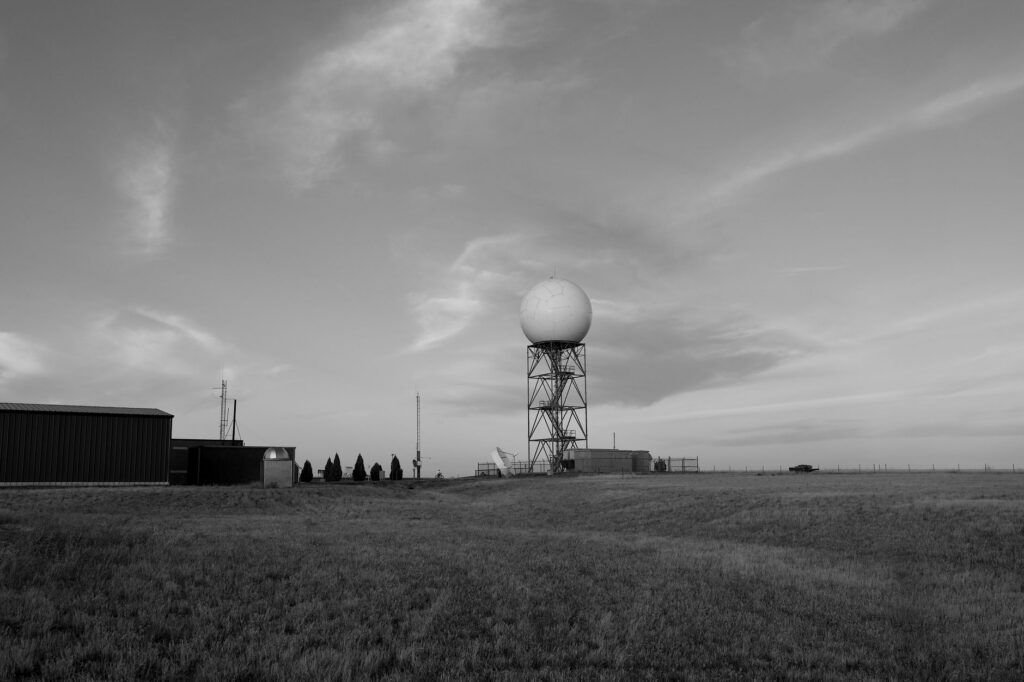
In modern encounters, raw witness testimony is subordinate to multi-sensor telemetry, including electro-optical cameras, forward-looking infrared (FLIR) pods, and active phased-array radars. While digital sensors yield precise measurements, they introduce unique electronic and optical artifacts that can distort human perception.
A well-documented optical phenomenon is the parallax effect. When an airborne sensor tracks a slow-moving target from a high-velocity aircraft, the background ocean or cloud deck shifts rapidly. This relative motion creates an illusion of extreme target velocity on cockpit displays, even if the tracked object is drifting passively at wind speed.

Similarly, infrared glare, lens flare within gimbaled camera mounts, and algorithmic tracking glitches have historically produced visual indicators resembling propulsion fields or rapid rotational movements. Disentangling true kinematic behavior from sensor artifacts requires deep knowledge of optical design and signal processing.
Investigating the Residual Core
Despite thorough investigative protocols, a small fraction of cases remains unresolved. These persistent anomalies generally lack the high-fidelity sensor coverage required to reach a conclusive diagnosis. Without simultaneous radar, spectroscopic, and optical calibration, scientists cannot determine whether an unexplained incident stems from an unprecedented physical event or merely an incomplete telemetry record.
“Scientific investigation requires high-resolution data and empirical verification, turning ambiguity into quantifiable knowledge.”
Future inquiries depend heavily on open scientific architectures. Civilian observatories, automated sky-scanning arrays, and shared commercial aviation reporting platforms are gradually superseding fragmented military reports. By systematically gathering calibrated multi-spectral data, researchers hope to clarify whether unresolved aerial occurrences represent novel atmospheric dynamics, undisclosed technology, or simply rare optical coincidences.