A signal in the data
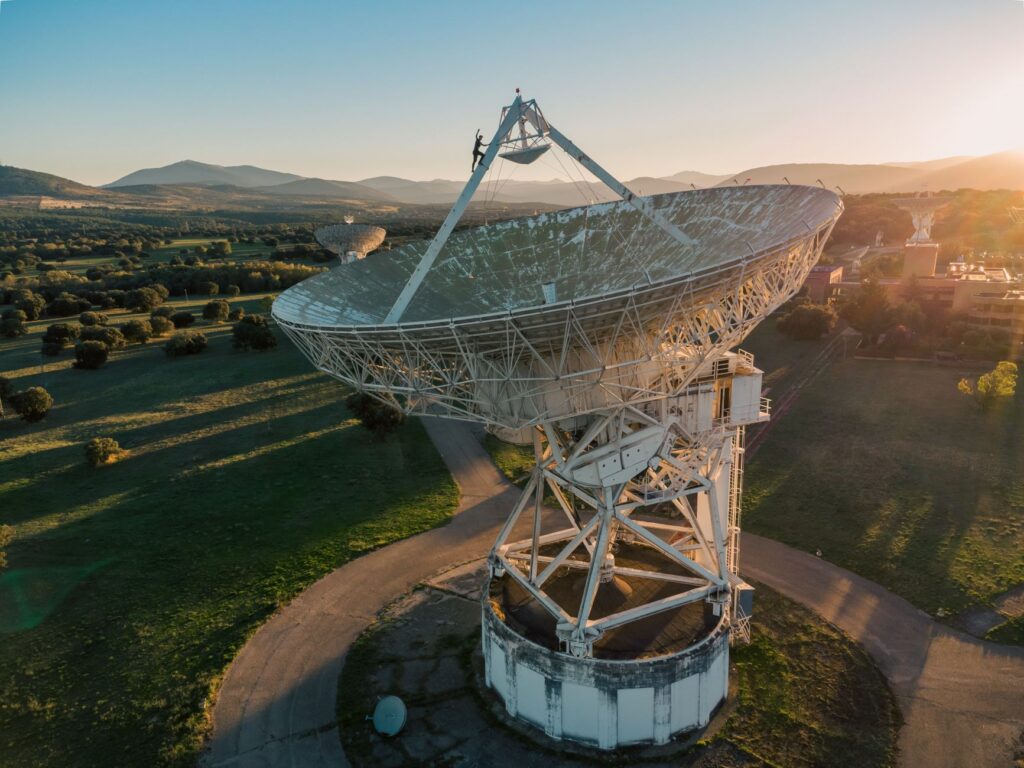
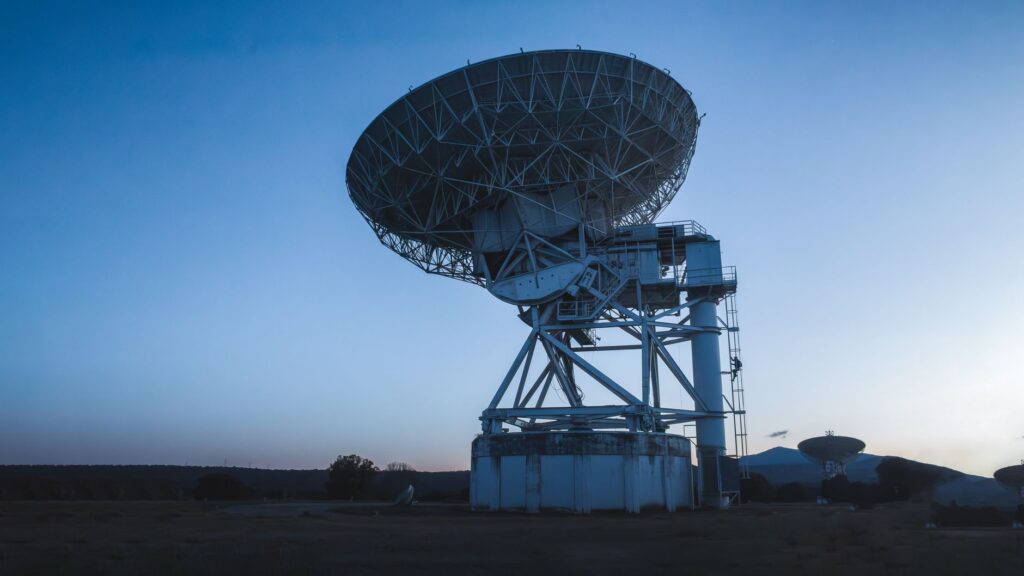
On the night of August 15, 1977, Ohio State University’s Big Ear radio observatory was conducting a search for signals that might come from beyond Earth. The telescope did not take conventional photographs or steer like a dish antenna. Its fixed structure scanned the sky as Earth rotated, recording radio energy from passing regions of space.
Several days later, astronomer Jerry Ehman reviewed a computer printout of the observations. One line stood out: a sequence of characters, “6EQUJ5,” marking a brief, unusually strong signal near the 1420-megahertz hydrogen line. Ehman circled the sequence and wrote “Wow!” beside it. The handwritten reaction gave the event its lasting name.

The signal’s rise and fall in strength broadly matched the pattern expected as a fixed point in the sky passed through the telescope’s field of view. It lasted for the 72 seconds that Big Ear could observe a given patch of sky during its scan. That duration was not evidence that a transmitter switched on for precisely 72 seconds; it reflected the observatory’s observing window.
What the famous code means
The characters on the printout were not a message decoded from an alien language. They represented signal intensity. In Big Ear’s notation, numerals marked lower levels and letters represented progressively higher ones. “6EQUJ5” therefore records a steep increase, a peak, and a decrease in measured strength.
The signal was narrowband: its energy was concentrated in a small range of radio frequencies. That characteristic made it interesting to researchers searching for artificial transmissions, because many natural radio sources produce broader emissions. The signal appeared close to the hydrogen line, a frequency of scientific interest in searches for extraterrestrial intelligence.
Those features made the observation unusual, not conclusive. A radio signal can appear strong and narrow without being produced by an extraterrestrial transmitter. Human technology, interference, or an unusual natural event would also have to be considered. The printout alone could not establish the source.
The missing confirmation
Confirmation is central to evaluating a possible contact signal. A repeat observation could show that the source was real, help determine whether it moved with the sky, and allow researchers to compare its frequency and structure. Big Ear’s team searched the relevant region again, but the signal did not return. Other attempts to detect it also failed to produce a confirmed repeat.
That absence leaves a basic ambiguity. The signal may have been a short-lived event, a source that varied, or interference that happened to enter the telescope’s observing path. Because the original observation was brief and could not be independently examined in real time, later investigators had limited ways to test these possibilities.
Big Ear’s observing system also complicates efforts to identify a precise location. Its design produced two slightly separated observing beams. A source passing through one beam should leave a different pattern from a source passing through the other. The 1977 record did not provide a clear enough pair of detections to settle which beam registered the signal, leaving two possible sky positions rather than one definitive coordinate.
Why it remains an open case
The Wow! signal is often described as an alien transmission, but the careful description is narrower: it was an unusual radio observation with characteristics that made it worth investigating, and its source remains unidentified. No message was recovered, no sender was located, and no repeat signal established that it came from an intentional transmitter.
That distinction does not make the event unimportant. It shows how a possible contact claim should be handled: preserve the original data, check for terrestrial interference, seek independent observations, and repeat the search when and where possible. A compelling first detection is a starting point, not a conclusion.
For a signal to become credible evidence of extraterrestrial technology, researchers would need more than an intriguing pattern on a printout. They would want repeatable measurements, confirmation from independent instruments, and evidence that ordinary terrestrial or natural explanations do not fit. The Wow! signal has never met that standard, but it remains a vivid example of both the promise and the limits of a single observation.