At its foundational level, a computer program is a structured collection of instructions designed to direct a machine in executing specific tasks and solving well-defined problems. While modern technology surrounds users with polished graphical interfaces and seamless automation, every digital experience ultimately rests upon the deliberate execution of program logic. Exploring what constitutes a program reveals not only the mechanics of computing hardware, but also the formal structures through which human intent is translated into mathematical action.
The Core Anatomy of a Program
Every computer program operates as a convergence of data structures and computational algorithms. Algorithms establish the sequence of procedural steps necessary to achieve an outcome, while data structures define how information is organized, stored, and retrieved during that process. When combined, these elements allow a system to process inputs, maintain state, and produce deterministic outputs.
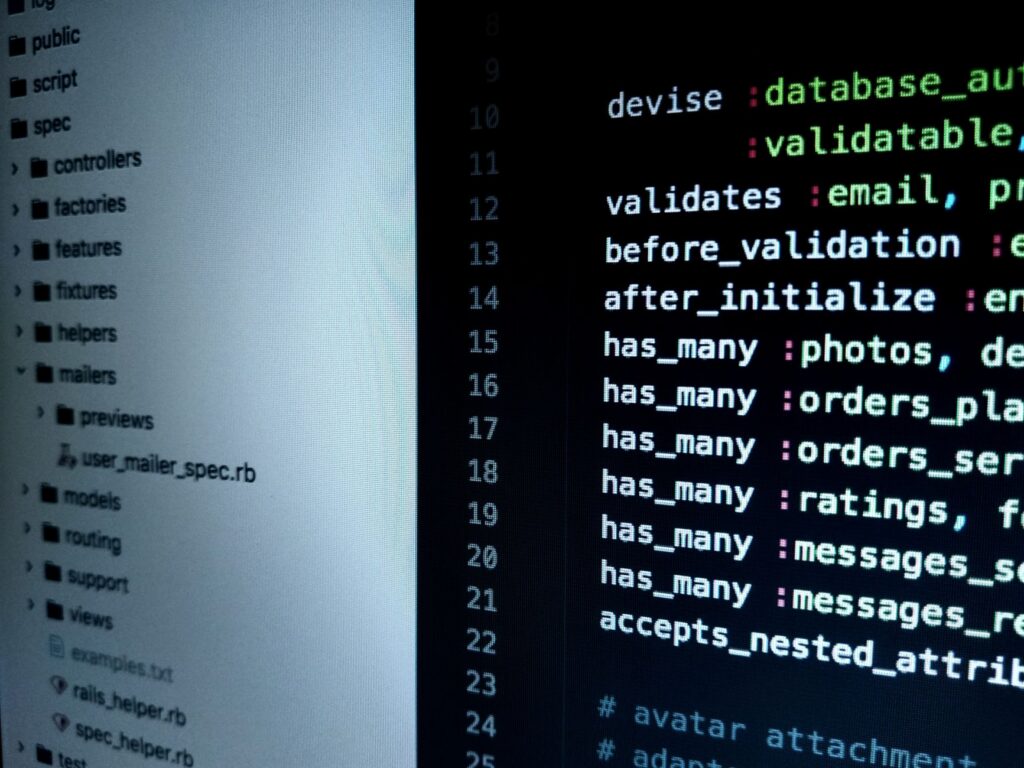
In human-readable form, a program exists as source code written in a high-level programming language such as C++, Python, or Java. High-level languages introduce layers of abstraction, allowing engineers to express logical constructs using recognizable syntax and algebraic notation rather than raw binary sequences. However, computing hardware cannot directly comprehend textual source code; it operates purely on machine instructions encoded in binary form.
From Source Code to Machine Execution
The journey from human-authored source text to physical machine execution involves specialized translation pipelines. Depending on the design of the language and the requirements of the runtime target, translation generally occurs through compilation, interpretation, or hybrid approaches.
- Compilation: A compiler analyzes the entire source codebase, performs semantic validation and optimization, and translates the code directly into machine-dependent object code or an executable binary file. Languages like C and Rust rely on compilation to achieve maximum runtime efficiency.
- Interpretation: An interpreter parses and evaluates the instructions step by step during runtime without producing a standalone binary beforehand. While this introduces an execution overhead, it facilitates rapid prototyping and interactive development.
- Bytecode and Just-In-Time (JIT) Compilation: Modern environments, such as the Java Virtual Machine (JVM) or the V8 JavaScript engine, translate source code into intermediate bytecode. At runtime, a JIT compiler converts frequently executed bytecode into native machine instructions on the fly, balancing platform portability with execution speed.
Once transformed into machine code, the program resides on secondary storage until invoked. When launched, the operating system loads the program’s binary into system memory, allocating the necessary system resources and transforming static code into an active process.
The Process Lifecycle and System Resources
A static program must be distinguished from an active process. A process represents an instantiated program in execution, encompassing the current program counter, allocated memory spaces, register states, and open file handles managed by the operating system.
Memory allocation for a running program is conventionally segmented into distinct regions:
- The Text Segment: Contains the executable machine instructions read by the central processing unit (CPU).
- The Data Segment: Holds initialized global and static variables whose lifespans persist across the duration of the execution.
- The Heap: Serves as a dynamic memory pool where memory is allocated and freed at runtime as required by complex data structures.
- The Stack: Manages local variables, function parameters, and return addresses via a last-in, first-out (LIFO) discipline, enabling recursive execution and organized call hierarchies.
During execution, the CPU’s control unit continuously cycles through the fetch-decode-execute pipeline. It fetches an instruction from memory, decodes the operation, executes the commanded transformation, and increments the program counter to the next sequential address unless altered by conditional control flow.
Concurrency, Modularity, and Modern Paradigms
As computational demands have grown, the structural paradigm of programs has expanded beyond linear, single-threaded execution. Modern software design leverages modularity—decomposing monolithic tasks into smaller, reusable libraries, modules, and functions. This modularization improves maintainability, simplifies automated testing, and allows collaborative engineering at enterprise scale.

Simultaneously, multicore hardware architectures have necessitated concurrency and parallelism. Rather than executing sequentially, contemporary programs often spawn multiple threads that share memory space or communicate via message passing. Managing synchronization across concurrent operations requires rigorous discipline to avoid race conditions, deadlocks, and memory corruption.
The evolution of software programming reflects a constant quest to manage complexity—moving from direct memory manipulation toward higher abstractions that preserve performance while preventing systemic error.
In distributed environments, the concept of a program transcends single machines. Microservices and networked APIs decouple monolithic binaries into federated services operating across cloud infrastructure. Yet, regardless of whether a program is a lightweight embedded script or an orchestration layer spanning thousands of virtual servers, the governing principles remain unchanged: deterministic logic, deliberate data manipulation, and precise execution.
Conclusion
A program is far more than a file on a disk or a script in an editor. It represents the structural formalization of logic, providing the exact directives that turn silicon, electricity, and memory into functioning digital tools. Understanding how programs are constructed, translated, and executed provides indispensable clarity into the foundational mechanics powering modern computational infrastructure.