Beyond Science Fiction: Redefining the Alien Question
For centuries, the term alien occupied the boundary between folklore, speculative literature, and cinematic imagination. Depictions ranged from hostile invaders to benevolent cosmic mentors. However, in contemporary astrophysics and astrobiology, the search for extraterrestrial life has evolved into a rigorous empirical pursuit. Rather than relying on speculative encounters, modern science approaches the alien question through planetary geology, organic chemistry, and observational astronomy.
When astrobiologists evaluate the potential for life beyond Earth, they distinguish between two primary categories: simple biogenic life (microorganisms capable of metabolic activity and reproduction) and advanced technological civilizations capable of deliberate interstellar communication. While public imagination tends to gravitate toward the latter, empirical science suggests that single-celled organisms, flourishing in subterranean oceans or extreme planetary niches, are statistically far more probable across the galactic landscape.
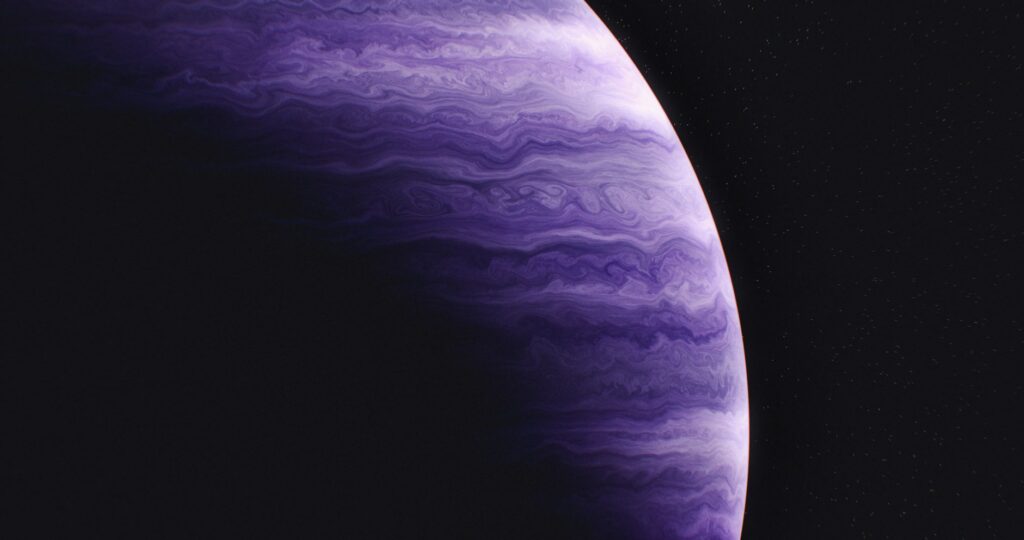
Searching for Biosignatures: The Planetary Detective Work
The primary avenue for detecting extraterrestrial organisms does not involve listening for radio transmissions, but rather inspecting the atmospheric composition of distant worlds. With thousands of confirmed exoplanets cataloged by space-based observatories, astronomers now analyze the transmission spectra of planetary atmospheres as they transit their host stars.
Scientists look for biosignatures—atmospheric anomalies that cannot be easily explained by non-biological geochemical processes. Key indicators include:
- Atmospheric Disequilibrium: The simultaneous presence of reducing gases (such as methane) and oxidizing gases (such as oxygen or ozone), which would naturally neutralize each other unless continually replenished by biological activity.
- Surface Pigment Features: Distinct reflection patterns, analogous to Earth’s ‘vegetation red edge,’ indicating photosynthetic or light-absorbing organisms on a planet’s crust.
- Subsurface Environments: Moons within our own solar system, such as Europa and Enceladus, harbor deep liquid water oceans protected by thick ice shells, warmed by tidal dissipation and hydrothermal vents.
“The detection of extraterrestrial biology may not arrive as a triumphant radio message, but as a subtle deviation in a distant planet’s atmospheric absorption spectrum.”
The Fermi Paradox and the Great Silence
If the universe is vast, ancient, and composed of billions of star systems with habitable zones, a fundamental question emerges: Where is everybody? Formulated in the mid-twentieth century by physicist Enrico Fermi, this contradiction between high statistical probability and total lack of observable evidence is known as the Fermi Paradox.
Astrophysicists and philosophers have proposed several compelling hypotheses to address this cosmic silence:
- The Great Filter: Evolutionary bottlenecks may exist along the trajectory from prebiotic chemistry to an interstellar civilization. Whether this insurmountable barrier lies behind us (making life vanishingly rare) or ahead of us (spelling inevitable self-destruction) remains an open debate.
- The Mediocrity of Scale: The distances between stellar systems are staggering. Electromagnetic transmissions diminish exponentially across cosmic voids, and civilizations may simply exist outside each other’s brief window of technological capability.
- The Zoo Hypothesis: Highly developed civilizations may intentionally avoid interference with emerging species, observing Earth unobtrusively until humanity reaches a specific developmental benchmark.
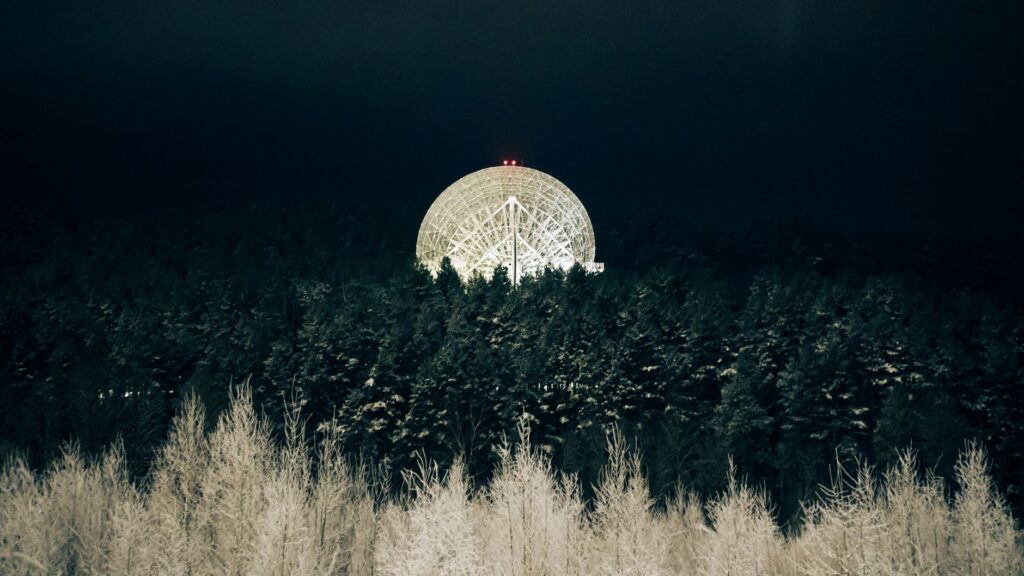
Listening for Technosignatures: Modern SETI Initiatives
Parallel to astrobiology, the Search for Extraterrestrial Intelligence (SETI) focuses on technosignatures—unmistakable signs of engineered technology. Historically dominated by narrow-band radio observations, modern SETI initiatives have expanded into optical laser pulses, anomalous megastructures like Dyson swarms, and computational analysis powered by machine learning algorithms capable of filtering terrestrial noise from genuine celestial signals.
Today’s observatories can process petabytes of data from across the electromagnetic spectrum, scrutinizing millions of stars with unprecedented precision. While no unambiguous artificial transmission has yet been confirmed, researchers emphasize that humanity has examined only a minuscule fraction of the parameter space—a drop of water taken from a planetary ocean.
The Broader Implications of Discovery
The philosophical and societal implications of confirming alien life cannot be overstated. Even the discovery of a distinct microbial genesis on Mars or Titan would prove that life is not a miraculous Earth-bound fluke, but an emergent cosmic imperative. Such an event would fundamentally decentralize humanity’s place in natural history.
Conversely, continuing to find an empty cosmos would emphasize the fragile rarity of Earth’s biosphere, placing a heightened moral responsibility on human civilization to endure, explore, and protect its unique spark of consciousness. Whether through atmospheric spectroscopy, robotic exploration of icy moons, or deep-space radio astronomy, the quest to find alien life remains fundamentally a journey to understand ourselves.