The Summer of 1947 and the Desert Mystery
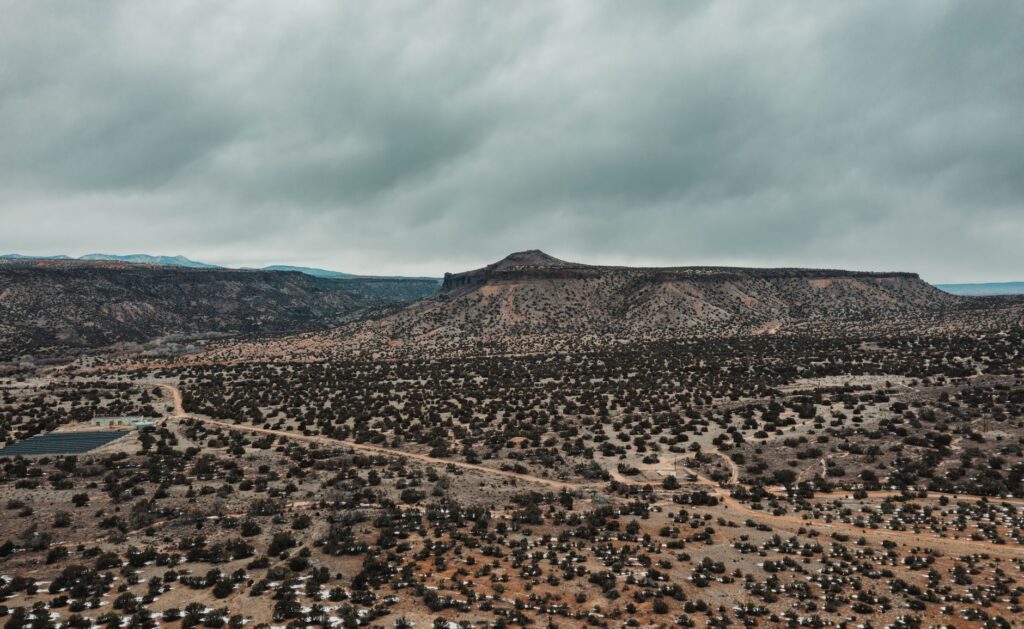
In early July 1947, an unremarkable stretch of ranchland northwest of Roswell, New Mexico, became the focal point of modern ufology. Following severe thunderstorms, ranch foreman W.W. ‘Mac’ Brazel discovered unusual debris scattered across a wide expanse of pasture. The wreckage consisted of lightweight wooden structural beams, metallic-looking foil, dense paper parchment, and tough synthetic cordage. Unsure of what he had encountered, Brazel gathered samples and alerted local authorities, who in turn contacted the nearby Roswell Army Air Field (RAAF), home to the 509th Bomb Group—at the time, the world’s only operational atomic bomb wing.
Intelligence officer Major Jesse Marcel and counterintelligence personnel were dispatched to inspect the site and recover the fragments. What followed within the next twenty-four hours would permanently embed the quiet desert town into international consciousness and trigger decades of intense speculation.
An Explosive Press Release and Immediate Retraction
On July 8, 1947, public information officer Lieutenant Walter Haut issued an extraordinary press release authorized by Colonel William Blanchard. The release stated plainly that military personnel had recovered a ‘flying disc’ from a local ranch and transported it to higher headquarters for analysis. The announcement landed like a thunderclap across global newsrooms. Headlined by major newspapers as proof that the military had captured an extraterrestrial craft, the story circulated rapidly during the height of early post-war ‘flying saucer’ excitement, sparked weeks earlier by pilot Kenneth Arnold’s reported sightings over Washington State.
However, the narrative shifted abruptly within hours. Brigadier General Roger Ramey, commander of the Eighth Air Force in Fort Worth, Texas, convened a hurried press conference with Major Marcel. Presenting remnants of lightweight tinfoil and wooden struts, military officials announced that the recovered material was merely the remnants of a standard weather balloon equipped with a hexagonal radar target known as a rawin device. The story vanished from headline news as quickly as it had emerged, accepted by contemporary journalists as an embarrassing military misidentification.

Decades of Silence and the 1970s Resurgence
For roughly three decades, the Roswell incident remained a minor historical footnote, largely forgotten by mainstream media and early UFO researchers. That trajectory changed decisively in the late 1970s when nuclear physicist and ufologist Stanton Friedman interviewed a retired Jesse Marcel. Marcel publicly contested the original 1947 retraction, maintaining that the debris he examined possessed extraordinary physical properties—unusual durability, extreme heat resistance, and structural hieroglyph-like markings—that could not have originated from a standard weather balloon.
Marcel’s testimony rekindled international interest, spawning dozens of investigative books, documentaries, and witness interviews. Subsequent accounts introduced new and increasingly dramatic claims, including reports of a secondary crash site in the Plains of San Agustin, recovered alien bodies, and elaborate government cover-ups orchestrated to conceal extraterrestrial technology inside secret facilities such as Area 51 and Wright-Patterson Air Force Base.
Project Mogul: Declassifying the Cold War Reality
Under mounting public and congressional pressure, the United States General Accounting Office initiated an audit of historic government records in the mid-1990s. In response, the United States Air Force published two exhaustive investigative reports: Report of Air Force Research Regarding the ‘Roswell Incident’ (1994) and The Roswell Report: Case Closed (1997).
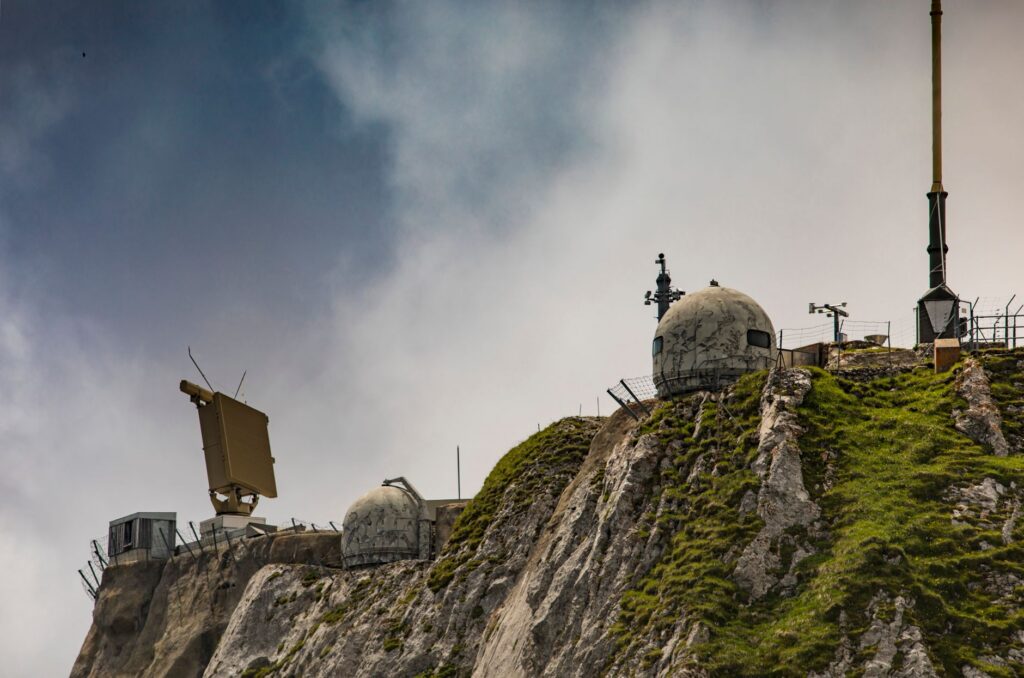
These declassified investigations revealed that the debris recovered on the Foster ranch did not originate from a simple weather balloon, nor from an alien spacecraft. Instead, it was traced directly to Project Mogul, a top-secret Cold War reconnaissance program operated by New York University researchers on behalf of the Army Air Forces. Mogul utilized extensive trains of high-altitude neoprene and polyethylene balloons carrying low-frequency acoustic microphones, designed to detect shockwaves from Soviet nuclear detonations in the upper atmosphere.
- Flight 4: Records confirmed that Mogul Flight 4 was launched from Alamogordo Army Air Field in early June 1947 and drifted toward the ranch where Brazel discovered the wreckage.
- Exotic Materials: The foil-backed paper, lightweight balsam beams, and reinforced tape adorned with geometric patterns—manufactured by a toy company in New York—matched the exact visual descriptions provided by early witnesses.
- Anthropomorphic Dummies: The Air Force accounted for reports of ‘alien bodies’ as misremembered timelines involving high-altitude anthropomorphic crash-test dummies dropped over New Mexico during the 1950s.
The Intersection of Secrecy, Skepticism, and Folklore
The historical reality of the Roswell incident underscores the profound tension between genuine Cold War national security protocols and public transparency. In 1947, the United States military could not publicly disclose the existence of Project Mogul without alerting Soviet intelligence to ongoing nuclear monitoring capabilities. Consequently, the rapid deployment of a mundane ‘weather balloon’ cover story was deemed essential to safeguard classified surveillance technology.
‘The true mystery of Roswell lies not in outer space, but in the intersection of deep Cold War secrecy, institutional compartmentalization, and humanity’s innate desire to believe we are not alone.’
While skeptics and historians view the Project Mogul explanation as thoroughly documented and scientifically coherent, Roswell remains the defining archetype of government conspiracy within modern popular culture. The town of Roswell itself has transformed into a global tourism hub, celebrating both the history of early aerospace testing and the rich mythology of extraterrestrial contact.
Conclusion: An Enduring Symbol of the Space Age
More than three-quarters of a century after debris was cleared from the New Mexico desert, the Roswell UFO incident endures as a dual phenomenon: a pivotal example of early Cold War reconnaissance secrecy and the definitive origin story of modern ufology. Whether viewed through the lens of military intelligence history or the sociology of myth-making, Roswell continues to capture the imagination, bridging the gap between rigorous scientific skepticism and humanity’s fascination with the unknown.