Few concepts have captivated the human imagination as persistently or deeply as that of the alien. Etymologically rooted in notions of otherness and foreign domains, the word has transcended terrestrial geography to signify the ultimate unknown: extraterrestrial life. For centuries, philosophers, storytellers, and scientists have gazed toward the night sky, driven by an existential query that borders both wonder and dread: Are we alone in the vast cosmic expanse, or are we merely one conscious outpost among countless civilizations?
Today, the quest to comprehend alien life occupies a peculiar intersection. On one side lies decades of folklore, Cold War mythos, and media-driven archetypes of flying saucers and enigmatic visitors. On the other stands empirical astrobiology, planetary science, and advanced radio astronomy. Bridging this divide requires examining both the cultural mirror that alien stories hold up to humanity and the rigorous scientific tools currently scanning the heavens for real evidence of life beyond Earth.
The Cultural Genesis of the Modern Alien Archetype
While ancient and medieval thinkers regularly speculated about the “plurality of worlds,” the modern mythology of extraterrestrial encounters emerged distinctly in the mid-twentieth century. The post-World War II period saw a rapid acceleration in technological capability alongside profound existential anxiety. The advent of nuclear weapons, the onset of the Cold War, and the dawn of space exploration created fertile ground for public fascination with unidentified aerial phenomena.
The seminal moment arrived in the summer of 1947 near Roswell, New Mexico. The initial local press release announcing the recovery of a “flying disc,” followed swiftly by the military’s clarification that the debris belonged to a weather balloon, catalyzed an enduring subculture of government cover-ups and extraterrestrial lore. Historical declassifications later revealed that the debris was linked to Project Mogul—a classified effort to detect Soviet nuclear tests using high-altitude acoustic sensors. However, the cultural momentum was unstoppable. The alien visitor evolved from a speculative literary trope into an enduring modern myth.
These cultural archetypes—whether benevolent interstellar custodians or hostile invaders—often reveal more about contemporary human psychology than about extraterrestrial realities. During periods of geopolitical friction, alien fiction reflects our terror of subjugation or annihilation. Conversely, in eras of ecological or social despair, the extraterrestrial is frequently cast as an enlightened cosmic elder capable of guiding humanity toward collective maturity.
The Scientific Paradigm: From Speculation to Astrobiology
While popular culture remains fixated on advanced civilizations navigating the cosmos in gleaming craft, scientific inquiry approaches the alien question through a far more systematic and grounded lens. Astrobiology—the interdisciplinary study of the origin, evolution, and distribution of life in the universe—does not begin with assumptions of hyper-intelligent starfarers. Instead, it begins with chemistry, thermodynamics, and the resilient extremes of terrestrial biology.
The discovery of extremophiles on Earth radically expanded our understanding of habitability. Microorganisms thriving in superheated hydrothermal vents, acidic hot springs, and hyper-saline subglacial lakes proved that life can persist under environmental conditions previously deemed inhospitable. Consequently, targets within our own solar system became primary candidates for exploration:
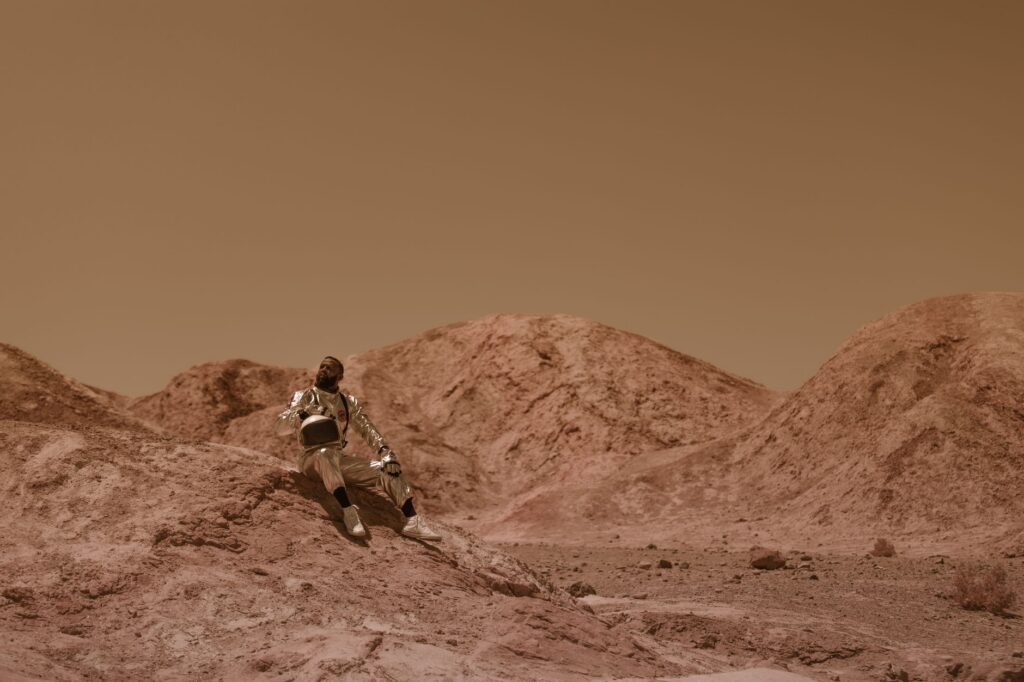
- Mars: Subsurface water ice, ancient river deltas, and organic molecules detected by robotic rovers suggest that early Mars may have harbored microbial life.
- Europa: Jupiter’s icy moon harbors a subsurface global ocean containing more liquid water than Earth, kept warm by tidal flexing and potential hydrothermal activity.
- Enceladus: Saturn’s moon actively vents plumes of water vapor, simple organic compounds, and molecular hydrogen into space from its hidden ocean.
- Titan: Possessing a dense nitrogen atmosphere and liquid hydrocarbon lakes, Titan serves as a natural laboratory for pre-biotic organic chemistry.
The Exoplanet Revolution and the Drake Equation
Beyond our local solar neighborhood, the discovery of thousands of exoplanets over the past three decades has fundamentally altered our statistical assessment of alien life. Instruments such as the Kepler Space Telescope and the James Webb Space Telescope have demonstrated that planetary systems are the norm rather than the exception. Statistically, billions of rocky, Earth-sized planets orbit within the circumstellar habitable zones of their host stars across the Milky Way alone.
In 1961, astronomer Frank Drake formulated a probabilistic framework, now known as the Drake Equation, to stimulate dialogue regarding the number of active, communicative extraterrestrial civilizations in our galaxy. While several variables—such as the rate of star formation and the fraction of stars with planetary systems—have been constrained with remarkable precision, others remain purely speculative:
“The fraction of planets where life actually arises, and the probability that such life evolves intelligence and sustainable technology, remain the greatest unquantified variables in modern astrophysics.”
To identify life across light-years of void, researchers focus on biosignatures and technosignatures. Biosignatures consist of atmospheric chemical disequilibria—such as the simultaneous presence of methane and oxygen—that are difficult to explain solely through geological processes. Technosignatures, meanwhile, encompass observable manifestations of technology, ranging from narrow-band radio signals to planetary-scale energy capture structures.
The Fermi Paradox: The Deafening Cosmic Silence
The statistical abundance of potentially habitable worlds introduces a profound problem famously articulated by physicist Enrico Fermi: Where is everybody? If the universe is billions of years older than our solar system, and if intelligent life arises naturally under favorable conditions, advanced civilizations should have had ample time to colonize or signal throughout the galaxy. Yet, empirical observations have yielded no definitive evidence of extraterrestrial presence.
Scientists and theorists have proposed numerous hypotheses to resolve this paradox:
- The Rare Earth Hypothesis: While simple microbial life may be common, the complex confluence of environmental, geochemical, and astrophysical stability required for complex multicellular organisms may be exceedingly rare.
- The Great Filter: Advanced evolutionary transitions contain one or more nearly insurmountable evolutionary barriers. If the filter lies ahead of us, it implies that civilizations inevitably destroy themselves through technological hubris or ecological collapse.
- The Zoo Hypothesis: Highly developed civilizations intentionally avoid contact or observation to allow emerging civilizations to develop organically without external disruption.
- Spatial and Temporal Disconnect: Given the staggering scale of the universe, technological civilizations may flourish and perish across millions of years without their operational windows ever overlapping.
Modern Surveillance: Big Data and Computational Astronomy
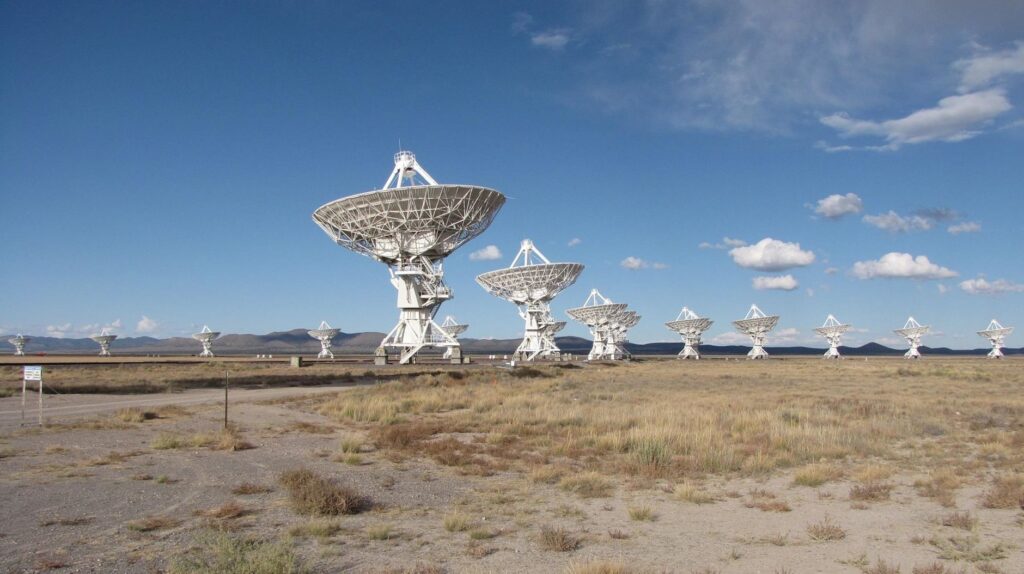
The contemporary search for extraterrestrial intelligence (SETI) has evolved far beyond passive listening with single radio dishes. Modern observational campaigns utilize automated wide-field arrays, optical infrared pulses, and high-throughput computational pipelines. Massive sky surveys generate petabytes of data daily, far exceeding the capacity of human analysis.
Artificial intelligence and machine learning now play a foundational role in filtering terrestrial radio interference from anomalous astronomical signals. Deep-learning algorithms are trained to detect faint, non-random patterns that traditional Fourier analysis might overlook. Simultaneously, astronomers closely scrutinize interstellar interlopers—such as ‘Oumuamua and Comet 2I/Borisov—evaluating whether their trajectories, compositions, and accelerations reflect natural planetary dynamics or artificial constructs.
Philosophical Impact of the Eventual Discovery
The verification of alien life, regardless of its complexity, would represent the most profound paradigm shift in human history. The discovery of even a solitary extraterrestrial bacterium—possessing a biochemistry distinct from Earth’s universal genetic code—would confirm a “second genesis,” demonstrating that life is not an improbable cosmic anomaly, but an inevitable consequence of natural physical laws.
Such an event would de-center human existence in a manner far more radical than the Copernican or Darwinian revolutions. It would redefine biology, dissolve parochial divisions, and compel humanity to view itself as a singular species sharing a fragile habitat amidst a living cosmos. Until that threshold is crossed, the figure of the alien will continue to serve as both an empirical quarry for science and a profound mirror reflecting our own deepest aspirations and vulnerabilities.