For millennia, humanity has cast its gaze toward the night sky, captivated by a question as humbling as it is profound: Are we alone in the universe? The concept of the extraterrestrial—the alien—has evolved from mythological deities and celestial travelers into a rigorous focal point of modern science, philosophy, and global popular culture. While the term encompasses everything from hypothetical microscopic organisms beneath the ice of Europa to hyper-advanced civilizations capable of interstellar transit, it fundamentally represents humanity’s eternal drive to confront the unknown.
The Dual Archetype: Scientific Inquiry versus Cultural Lore
Our understanding of alien life operates along two parallel tracks: rigorous scientific investigation and cultural mythology. In popular discourse, the alien often arrives wrapped in mystery, suspense, and sensationalism. Accounts of unidentified aerial phenomena, enigmatic disappearances, and personal testimonies—such as the debated Huang Yanqiu incident in China or the classic Roswell narrative in the United States—demonstrate how deeply embedded the concept is within our collective psyche. Sociologists and folklorists frequently note that such encounters, regardless of their empirical verification, serve as modern mythologies that reflect societal anxieties, technological transitions, and the persistent desire for transcendence.
Conversely, empirical science approaches the question through astrobiology, astrophysics, and planetary geology. Rather than hunting for flying saucers, scientists search for biosignatures: subtle alterations in atmospheric chemistry, anomalous radio frequencies, and fossilized organic structures preserved in ancient strata. The gap between these two worlds is vast, yet they both stem from the same foundational realization: Earth is merely one minor world among trillions orbiting an unfathomable sea of stars.
The Mathematical Probability: Drake, Fermi, and Cosmic Silence
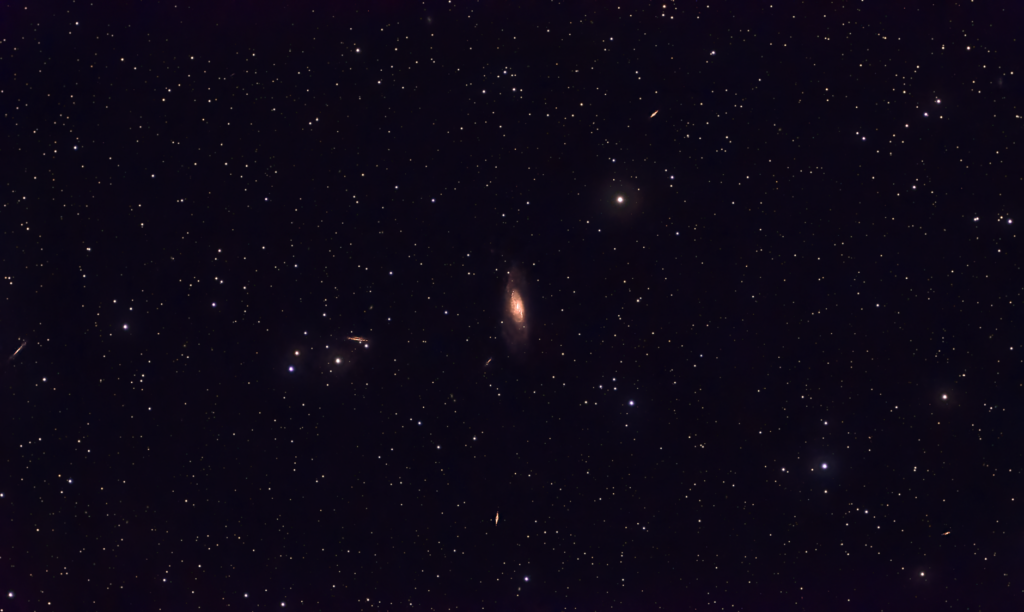
In the mid-twentieth century, astrophysicists began treating the question of extraterrestrial intelligence with mathematical formalism. Astronomer Frank Drake proposed his famous Drake Equation, a probabilistic framework designed to estimate the number of active, communicative civilizations in the Milky Way galaxy. By multiplying the rate of star formation by the fractions of stars with planets, habitable environments, and technological societies, Drake demonstrated that intelligence should, statistically speaking, not be unique to Earth.
However, this mathematical optimism immediately collides with a haunting counterpoint: the Fermi Paradox. Formulated by physicist Enrico Fermi, the paradox poses a deceptively simple dilemma: If extraterrestrial civilizations are theoretically common, where is everybody? Given the billions of years available for older civilizations to explore or colonize the galaxy, humanity ought to have encountered obvious signatures of their presence.
“The silence of the cosmos is not necessarily evidence of absence; it may simply reflect the boundaries of our perception, our timescale, and our technological infancy.”
Scholars have advanced numerous hypotheses to resolve this discrepancy:
- The Great Filter Hypothesis: Evolutionary transitions from non-living matter to interstellar civilizations may encounter insurmountable barriers, such as self-annihilation, natural cataclysms, or extreme biogenesis rarity.
- The Rare Earth Hypothesis: The specific confluence of conditions that allowed complex life to flourish on Earth—tectonic stability, a large moon, a protective planetary magnetic field—may be statistically improbable.
- The Temporal Mismatch: Human civilization has utilized electromagnetic communications for barely a century. Across a cosmological timeline spanning 13.8 billion years, technological civilizations may simply bloom and fade without ever overlapping in time.
- The Zoo or Isolation Hypothesis: Advanced intelligences might intentionally avoid interference with emerging species, observing quietly from afar or remaining indifferent to cosmic expansion.
The Technological Leap: Machine Learning and Deep Space Data
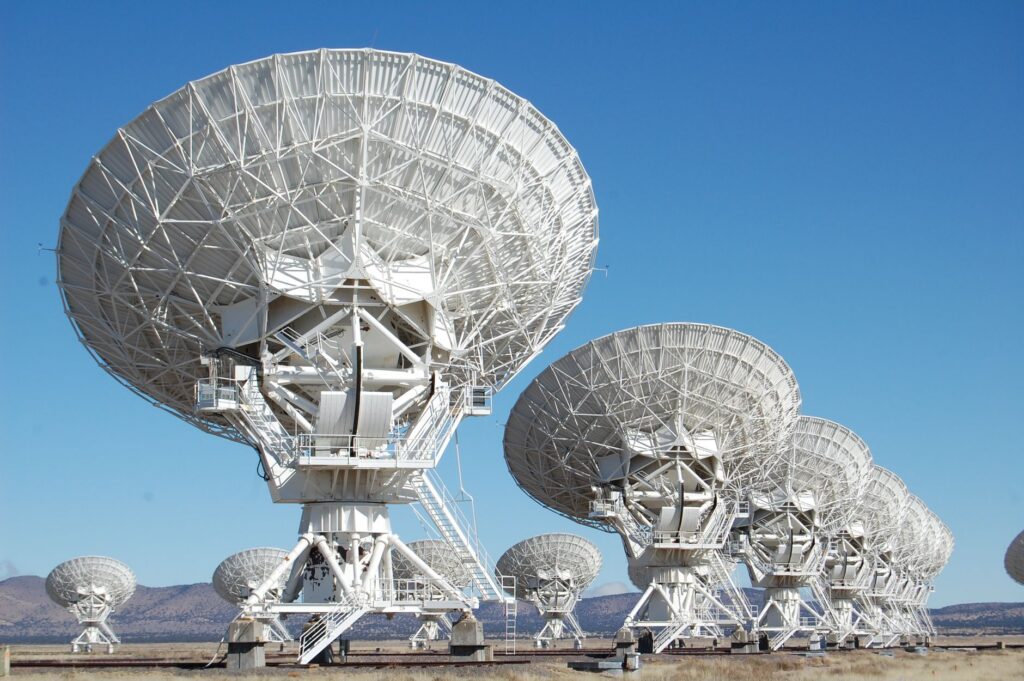
In recent years, the hunt for extraterrestrial signals has undergone an unprecedented transformation driven by computational power. Historically, initiatives like the Search for Extraterrestrial Intelligence (SETI) were constrained by human processing capacity and traditional signal processing techniques. Radio telescopes recorded petabytes of ambient cosmic noise, requiring researchers to manually isolate narrow-band anomalies that stood out from the static.
Today, machine learning algorithms and artificial intelligence are revolutionizing this methodology. Modern neural networks can analyze millions of data streams simultaneously, identifying faint, non-random signal patterns that human analysts or traditional software would miss. Unsupervised learning algorithms are now trained to flag genuine anomalies rather than predefined templates, significantly reducing false positives generated by terrestrial radio frequency interference (RFI).
Furthermore, machine learning plays an indispensable role in exoplanetary discovery. Telescopes such as Kepler and the Transiting Exoplanet Survey Satellite (TESS) have cataloged thousands of planets beyond our solar system by measuring minuscule dips in stellar brightness as planets transit their host stars. AI algorithms filter out stellar flare variations and system noise, pinpointing rocky worlds positioned squarely within their stars’ habitable zones—regions where liquid water can pool on a planet’s surface.
Astrobiology on the Home Front: Extremophiles and Ocean Worlds
While the search for distant radio transmissions continues, planetary scientists are finding compelling reasons to believe that the first definitive proof of alien life might be found within our own solar system. Terrestrial discoveries over the past four decades have confirmed that life can thrive in environments previously considered utterly hostile—a realization driven by the study of extremophiles.
Organisms have been documented living within superheated hydrothermal vents along the oceanic abyss, inside hyper-acidic volcanic springs, and buried deep beneath Antarctic ice shelves without access to sunlight. These discoveries have fundamentally redefined the boundaries of habitability. Astrobiologists no longer view scorching radiation or freezing subterranean depths as impassable barriers.
Attention has consequently shifted toward the icy moons of the outer solar system:
- Europa: Jupiter’s fourth-largest moon harbors a vast subterranean ocean concealed beneath an icy shell, kept liquid by tidal heating generated by Jupiter’s gravitational field.
- Enceladus: A moon of Saturn that actively expels geysers of water vapor, silica, and complex organic molecules directly into space from hydrothermal vents beneath its crust.
- Titan: Saturn’s largest moon, featuring a dense nitrogen atmosphere and surface lakes of liquid methane and ethane, offering a testing ground for alternative, non-water-based biochemistry.
If robotic probes confirm the presence of independent microbial life in any of these planetary biomes, it would definitively answer the cosmic question: life is not a miraculous terrestrial anomaly, but a universal imperative of organic chemistry.

The Philosophical Horizon: Redefining Humanity’s Place
The discovery of alien life—whether as fossilized microbes on a Martian ridge or an unambiguous technosignature from a star system thousands of light-years away—would mark the most seismic philosophical shift in human history. It would finalize the Copernican revolution, permanently dismantling any lingering anthropic exceptionalism.
Culturally, such an event would compel our species to re-evaluate our political, scientific, and spiritual frameworks. In confronting an extraterrestrial presence or even its ancient remnants, humanity would be forced to look into a mirror, recognizing our shared biological heritage on this fragile planetary oasis. Until that day comes, the word “alien” remains both a scientific target and an existential compass, guiding our endeavors to explore the dark, quiet, and boundless frontier of space.