In 1845, two Royal Navy ships sailed from Britain to search for a navigable route through the Arctic. HMS Erebus and HMS Terror carried 129 officers and crew under the command of Sir John Franklin. Neither ship returned. Their disappearance became one of the most closely investigated episodes in Arctic exploration, but the evidence does not yield a single, complete account of the expedition’s final days.
A voyage that stopped in the ice
The expedition entered the Canadian Arctic with provisions intended to support a long voyage. Its ships were last seen by European whalers in 1845, near the entrance to Lancaster Sound. After that, the trail depended on searches, accounts from Inuit witnesses, and evidence left behind by the expedition itself.
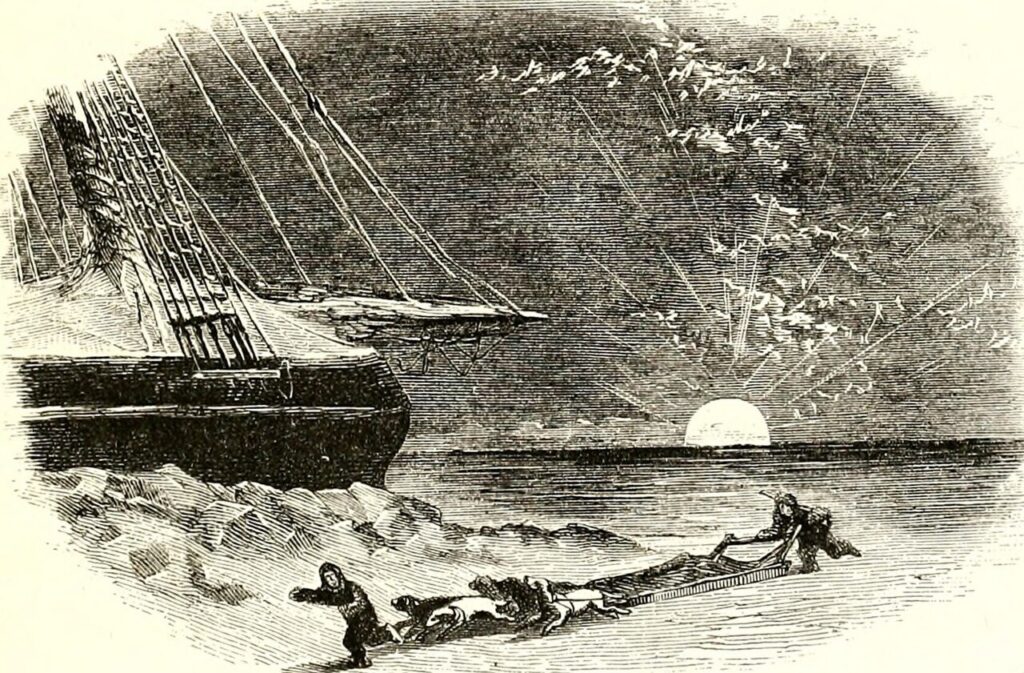
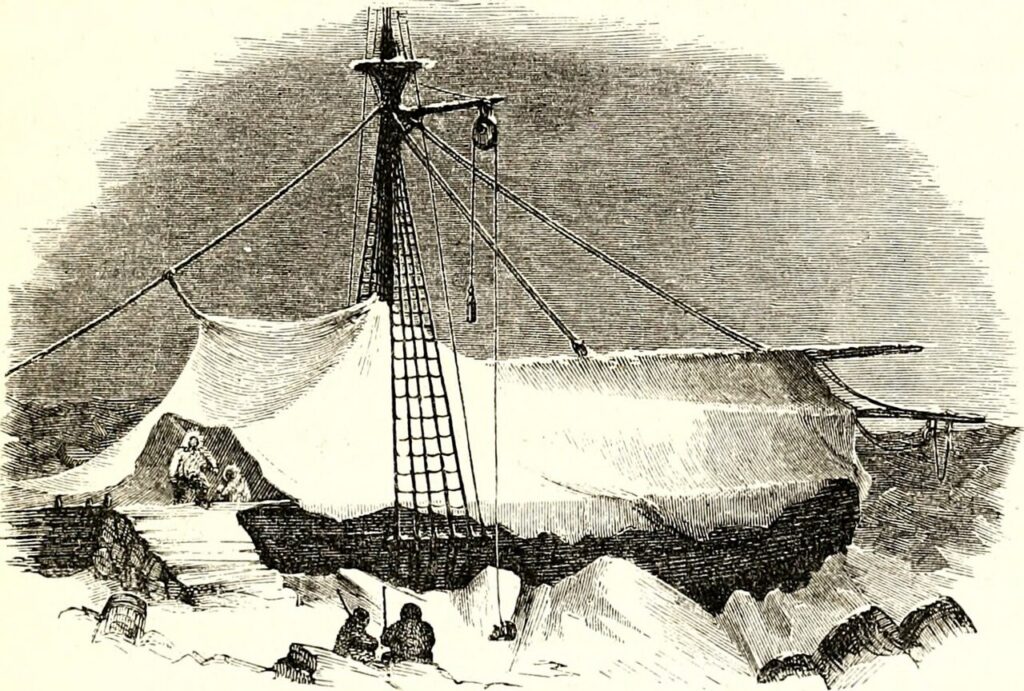
The ships became trapped in ice near King William Island. A written record later found at Victory Point provides the clearest dated account of what followed. The message, written on a printed form and annotated over time, states that the ships had been beset since September 1846. It also records Franklin’s death in June 1847 and the decision to abandon the vessels in April 1848. At that point, the surviving officers and men planned to head south on foot.
What the paper record establishes
The Victory Point note is valuable because it was produced by the expedition, rather than reconstructed from later reports. Its two entries capture a change in circumstances: an initial expectation that the ships might be freed, followed by the abandonment of both vessels. It also gives a basic chronology for Franklin’s death and the departure from the ships.
Yet the note leaves major gaps. It does not describe the crew’s condition in detail, identify why the ships could not be recovered, or explain what happened to each group after the men set out. The planned route south was not a guarantee of safety. The party faced extreme cold, difficult terrain, limited mobility, and the challenge of carrying supplies across a sparsely populated landscape.
Because the record is brief, researchers have had to weigh it alongside other kinds of evidence. Material remains and human bones found in the region indicate that some men travelled farther south than the ships’ original position. Inuit testimony, collected by later searchers, also preserved reports of ships, camps, and groups of starving people. Such accounts are important evidence, though they were recorded after the events and interpreted across differences in language, memory, and circumstance.
From searching to locating the ships
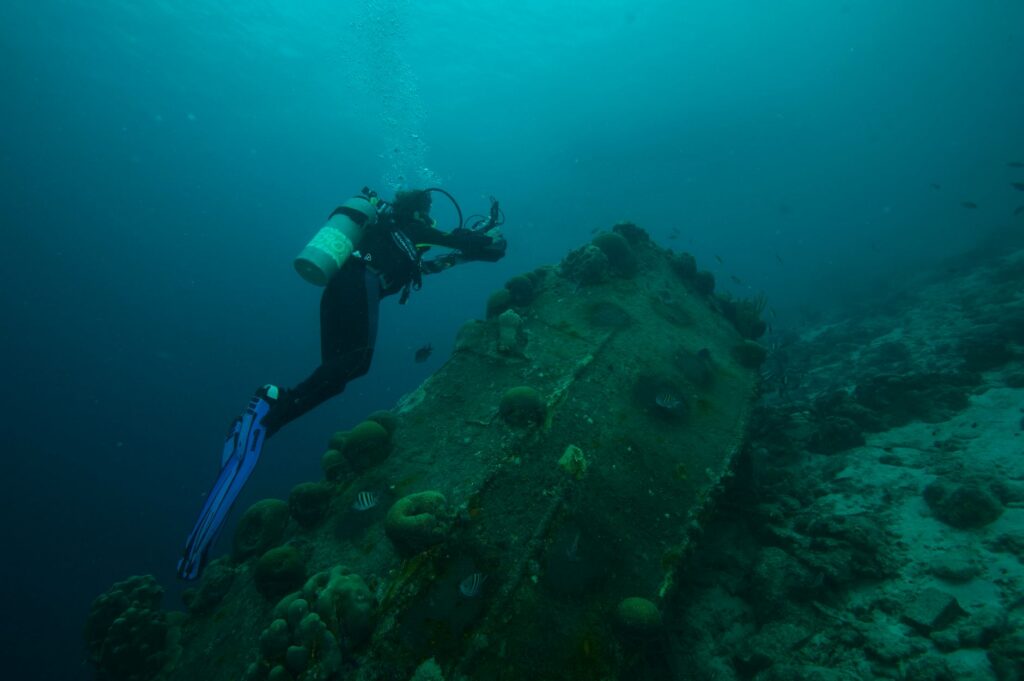
For decades, expeditions searched the Arctic for the missing ships and their crews. The search recovered documents and personal objects, but the vessels themselves remained undiscovered. In 2014, a Canadian search team located the wreck of Erebus in the waters east of King William Island. The wreck of Terror was found in 2016 in a different part of the region.
Finding the ships transformed the investigation. Underwater surveys could document their position and condition, while archaeological work could examine objects and structures preserved inside them. The discoveries confirmed that the ships had not simply vanished into open water. They had come to rest in separate locations, and their physical remains offered new evidence about the expedition’s movements.
Even so, a wreck is not a complete logbook. The ships’ locations do not, by themselves, explain precisely when or why each vessel was abandoned, how the crews divided their efforts, or what decisions were made as conditions worsened. Arctic ice, changing shorelines, and the passage of time also complicate the interpretation of remains.
Why the ending remains incomplete
The Franklin expedition is sometimes presented as a puzzle with one hidden answer. In practice, it is a set of related questions: how long the crews remained with the ships, what routes they attempted, how their health and supplies changed, and whether all members met the same fate. The evidence may answer some questions more firmly than others.
Studies of human remains have contributed information about the crew’s hardship and possible causes of death. However, no single finding accounts for the loss of all 129 people or replaces the missing day-by-day record. Explanations must be tested against the chronology, the geography, physical evidence, and Inuit accounts rather than treated as certain simply because they are vivid.
The case remains significant because it shows how historical knowledge can grow without becoming complete. A short note, oral testimony, scattered objects, and two shipwrecks each illuminate a different part of the story. Together they establish the expedition’s broad trajectory, while leaving its final sequence open to careful, ongoing investigation.