For decades, the concept of alien contact occupied the realm of speculative science fiction and sensational folklore. Today, it has transitioned into an empirical discipline guided by astrobiology, observational astronomy, and theoretical physics. As observational tools become increasingly sophisticated, the search for extraterrestrial intelligence (SETI) no longer relies on passive hope. Instead, it systematically interrogates the cosmos for measurable physical anomalies known as technosignatures.
Understanding what contact might look like requires moving past cultural cliches of flying saucers and diplomatic delegations. In practical scientific terms, first contact is far more likely to arrive as an faint electromagnetic pulse, an anomalous spectral absorption line in an exoplanetary atmosphere, or a silent artifact drifting through interstellar space.
The Spectrum of Technosignatures
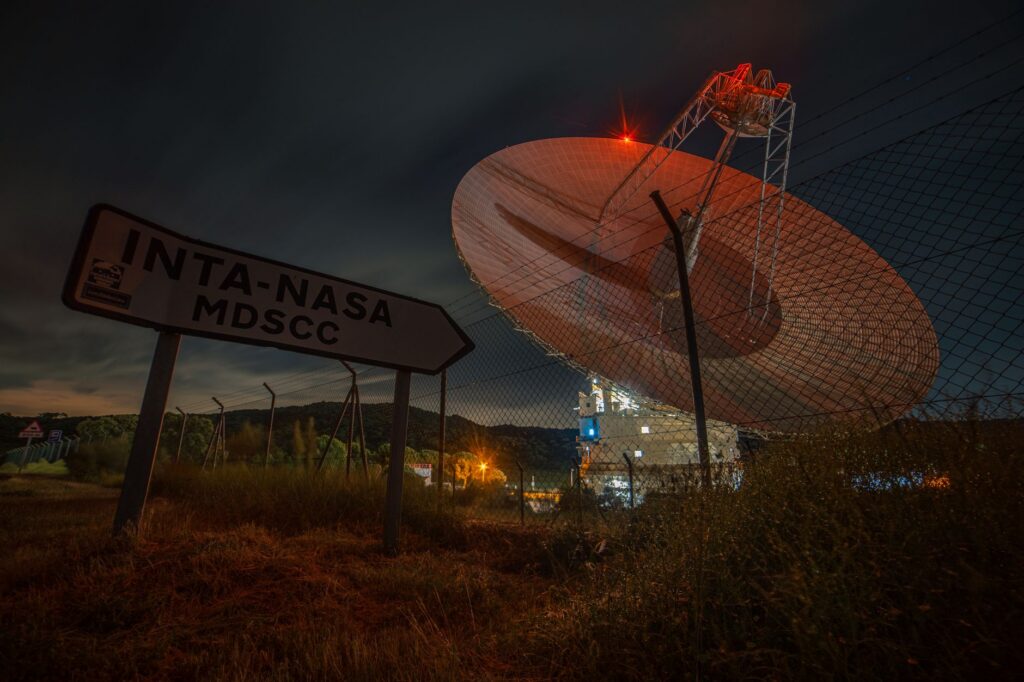
The contemporary search for extraterrestrial civilizations operates on the premise that technologically capable societies inevitably alter their physical environments in detectable ways. Scientists classify these signatures across several observational spectra:
- Narrowband Radio Transmissions: Astrophysical sources like pulsars emit radio waves across wide frequency bands. A persistent, ultra-narrow signal spanning just a few Hertz remains the quintessential marker of artificial modulation.
- Optical and Infrared Laser Pulses: High-powered directed energy, whether utilized for propulsion or deep-space communication, could produce brief, intensely focused nanosecond bursts detectable across light-years.
- Atmospheric Megastructures and Pollutants: As transit spectroscopy refines our view of exoplanet atmospheres, the detection of artificial gases—such as chlorofluorocarbons (CFCs) or nitrogen dioxide signatures inconsistent with natural chemical equilibria—offers a compelling remote indicator of industrial activity.

The Physical Constraints of Interstellar Dialogue
Popular depictions of alien contact often assume instantaneous, reciprocal dialogue. However, special relativity imposes a universal speed limit that profoundly reshapes the operational meaning of “contact.” Because light travels at roughly 300,000 kilometers per second, any confirmed artificial transmission originating from outside our immediate solar neighborhood will represent historical communication rather than real-time conversation.
“A signal originating from a star system five hundred light-years away does not initiate a dialogue; it uncovers an archaeological transmission. The civilization that transmitted it may have changed completely—or ceased to exist—by the time the wavefront reaches Earth.”
This temporal delay means that first contact will likely be asymmetrical. Humanity would receive an artifact of information, requiring meticulous preservation and computational analysis without the immediate prospect of an active reply.

Post-Detection Protocols: What Happens When a Signal Is Found?
To prevent false alarms and international confusion, the scientific community established formalized post-detection protocols under the auspices of the International Academy of Astronautics (IAA) and related advisory bodies. These guidelines outline a clear sequence of actions once a candidate signal is detected:
- Verification: The initial discovering team must confirm the signal is neither terrestrial interference nor an instrumentation artifact. Independent observatories worldwide must observe and verify the anomaly at the same coordinates.
- International Notification: Before any public statement or political action, verified findings must be communicated to the International Astronomical Union (IAU), the United Nations Office for Outer Space Affairs (UNOOSA), and world scientific bodies.
- Open Data Dissemination: The raw data must be made publicly available to the global scientific community to foster transparent peer review and collaborative analysis.
- No Unilateral Response: Current protocols emphasize that no response to an intelligent signal should be transmitted until formal international consultations take place.
The Decipherment Dilemma
Should humanity capture a structured artificial transmission, a formidable semantic obstacle immediately arises: how do we interpret a message conceived by a non-human cognitive architecture? Without shared biological roots, historical context, or vocal structures, conventional translation methodologies cannot function.
Scientists frequently look to mathematics and fundamental physics as the only plausible universal bridge. Constants such as pi, Planck’s constant, and atomic resonance frequencies provide invariant reference points across the universe. Early transmissions, if deliberately structured for contact, would likely begin with fundamental arithmetic progressions or diagrams based on universal atomic physics before advancing to more complex linguistic frameworks.
Existential Implications for Humanity
The philosophical aftermath of confirmed alien contact would mark a profound transformation in human self-perception. Overcoming the Fermi Paradox—the troubling silence despite the immense statistical probability of habitability across billions of planetary systems—would permanently dispel human biocentrism.
Moreover, receiving evidence of an advanced technological society offers proof that technological civilizations can survive their own planetary bottlenecks, such as resource depletion, climate destabilization, and destructive warfare. Contact would demonstrate that longevity across deep time is achievable, providing not only answers to cosmic questions but a renewed imperative for humanity to manage its own technological maturity.