A repository built around integrations
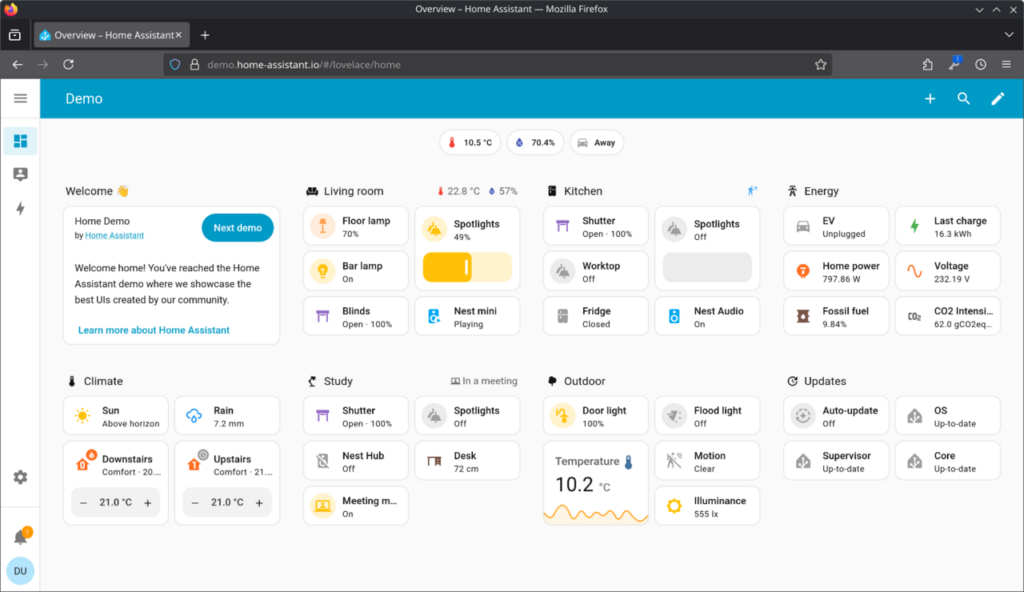
Home Assistant is an open-source home automation platform whose appeal depends in part on connecting software to devices and online services. A person may use it to bring lights, sensors, media players, or other supported equipment into one interface. That broad reach creates a practical challenge: the central project cannot treat every connection as a single feature with the same behavior.
Instead, Home Assistant organizes many connections as integrations. An integration represents a device type, service, or other system that Home Assistant can communicate with. Some are maintained as part of the main project; others may be distributed separately. This structure gives contributors a more focused unit of work than the platform as a whole.
What an integration has to do
A connection is useful only if it can be set up, report information reliably, and respond appropriately when something changes. An integration may need to discover a device, authenticate with a service, expose entities such as a switch or temperature sensor, and handle interruptions. The details vary by integration, but the user-facing expectation is consistent: the connection should be understandable and should not silently behave in surprising ways.
That makes an integration more than a small adapter. It sits between Home Assistant’s common concepts and the distinct rules of an external system. One device may expose several controls; another may have limited network availability or require account credentials. Contributors must account for those differences without making the rest of the platform depend on one vendor’s terminology or quirks.
For users, the result is visible in configuration and the dashboard. For maintainers, it means a change that looks local can affect setup flows, entity names, stored configuration, or behavior after an upgrade. A carefully scoped change is easier to review, but it still needs to fit the project’s conventions.
How a change moves through the project
A contributor can begin by reproducing a problem or identifying a missing capability. The useful first step is to check the relevant integration’s documentation, existing issues, and recent changes. That helps establish whether the behavior is already known, whether the external service has changed, and whether the proposed fix belongs in Home Assistant or elsewhere.
When implementation is appropriate, a pull request makes the proposed change visible for review. Reviewers can examine the code, ask for clarification, and consider effects beyond the immediate example. Automated checks may help catch formatting errors or failures in tests, but they cannot demonstrate every real-world device combination. Clear reproduction steps and focused tests therefore matter, especially when a change depends on hardware or a third-party service that reviewers may not have available.
Documentation is part of this work, not merely a final polish. Users need to know what an integration supports, how to configure it, and what limitations to expect. When setup or behavior changes, outdated instructions can make a correct implementation appear broken. Keeping code and guidance aligned reduces uncertainty for both users and future contributors.
The maintenance cost of popularity
A widely used integration can attract reports from people with different devices, network conditions, and expectations. That activity supplies valuable information, but it also creates triage work. A report may describe a defect in Home Assistant, a change in an external service, a local configuration issue, or an unsupported feature. Distinguishing among these cases is part of maintaining the project.
External dependencies can make maintenance especially demanding. A service may alter its API, a device may receive new firmware, or authentication requirements may change. The integration then has to adapt while preserving reasonable behavior for existing users. Contributors cannot control those outside systems; they can document requirements, handle errors clearly, and avoid promising support that the code does not provide.
What readers can learn from the project
Home Assistant illustrates why a popular GitHub project is not simply a large collection of code. Its practical value depends on boundaries: shared concepts at the platform level, focused responsibilities in integrations, and review practices that help changes remain understandable. Those boundaries also offer newcomers a way to approach a large codebase. Rather than trying to understand everything, they can start with one integration, trace its setup and behavior, and identify a small, reproducible improvement.
For users evaluating an integration, popularity alone is not enough. Check whether it supports the device or service you actually have, read its setup requirements, and look for current documentation and issue activity. For prospective contributors, the same details provide context before making a change. In a project that connects many independently evolving systems, careful scope and clear communication are as important as writing code.