A ship without a crew
On December 4, 1872, the brigantine Dei Gratia came across the Mary Celeste drifting in the Atlantic, east of the Azores. The vessel was under sail, but no one answered the other ship’s signals. When a boarding party climbed aboard, they found it empty. The captain, his family, and the crew—ten people in all—were gone.
The discovery turned an ordinary merchant voyage into one of the most persistent maritime mysteries. The Mary Celeste had left New York for Genoa, Italy, on November 7, carrying a cargo of industrial alcohol. Its captain, Benjamin Briggs, was an experienced mariner. His wife, Sarah, and their young daughter, Sophia, were traveling with him.
The last surviving entry in the ship’s log was dated November 25 and placed the vessel near the island of Santa Maria in the Azores. The exact circumstances of the crew’s disappearance remain unknown. Investigators could examine the ship, but they could not ask its passengers what had happened or verify the sequence of events after the final entry.
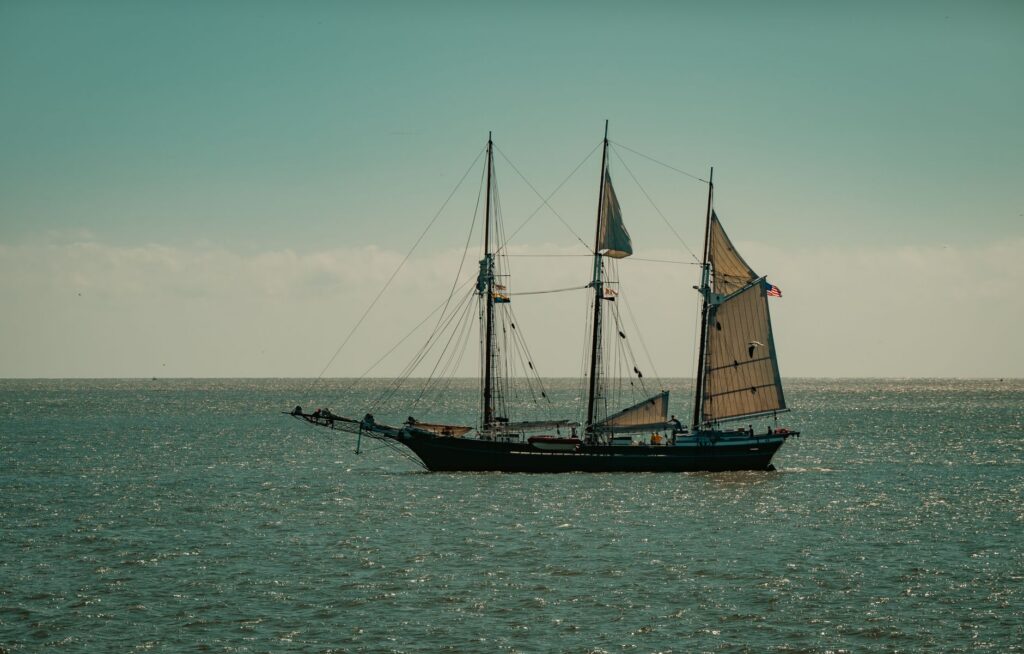
What the boarding party found
The Mary Celeste was not a wreck. It remained afloat and was capable of sailing, although it was wet inside and had taken on some water. The ship’s sails and rigging were not all in perfect condition, but accounts do not describe a vessel destroyed by a major collision or fire. Its cargo was largely present, as were many personal belongings.
One important piece of equipment was missing: the ship’s small lifeboat. Some navigational instruments and the ship’s papers were also absent. These details suggest that the people aboard may have left deliberately, at least in the sense that they used the boat rather than remaining on the brigantine. But leaving a seaworthy ship in mid-ocean would itself have carried grave risks. The evidence does not establish whether the departure was planned, urgent, or forced by circumstances.
There was no confirmed trace of the missing ten people. Nor was there a definitive sign of violence aboard. The absence of such evidence does not prove that nothing dangerous happened; it only limits what can responsibly be concluded from the ship’s condition.
The inquiry and its limits
After the Mary Celeste reached Gibraltar, authorities investigated the case. The court examined the vessel and questioned members of the Dei Gratia crew, who had brought the abandoned ship into port. Their salvage claim and the possibility of wrongdoing drew attention to the circumstances of the discovery. The inquiry did not establish that the rescuing crew had harmed anyone, and it did not produce a verified explanation for the disappearance.
The investigation took place in a period when maritime travel depended on written logs, instruments, and reports from other ships. None could supply a reliable account of the final hours aboard the Mary Celeste. The log ended before the discovery, and the missing lifeboat removed the most direct clue to how the crew might have left. With no survivors and no known eyewitnesses, the case rested on indirect evidence.
Theories, and what they can explain
One possibility is that the captain believed the ship was in danger and ordered everyone into the boat temporarily. The cargo included alcohol, and some barrels were reported to have leaked. Fears of fumes or a possible explosion have therefore been proposed as a reason to leave the vessel. Yet the known evidence does not prove that a dangerous build-up of vapor occurred, or that it prompted an evacuation. Even if the crew abandoned ship in response to a perceived threat, it remains unclear why they could not return.
Other explanations focus on rough weather, water entering the vessel, or uncertainty about the ship’s position. A temporary concern could have led the crew to use the lifeboat while keeping it attached by a line. If that connection failed, the small boat could have been separated from the larger ship. This scenario is possible, but no recovered boat or reliable account confirms it.
Popular retellings have added mutiny, piracy, and elaborate conspiracies. The surviving evidence offers no solid basis for treating those claims as established fact. A mystery can attract dramatic explanations precisely because its central witnesses are missing; that does not make every proposed story equally plausible.
Why the case remains open
The Mary Celeste was found in a condition that narrows the possibilities without settling them. It had not simply vanished beneath the waves, and the missing boat indicates that the people aboard may have left the ship. But the evidence cannot tell us what they feared, whether they stayed together, or what happened after they set out.
The case endures because its clues are physical but incomplete: a ship still afloat, a lifeboat gone, and a log that stops before the crucial events. Each fact invites a reasonable question, yet none completes the story. Without new evidence from the missing crew or their boat, the final departure from the Mary Celeste remains unresolved.