Despite remarkable advances in observational technology, planetary modeling, and empirical physics, the terrestrial world remains populated by phenomena that resist definitive explanation. Across dense atmospheric layers, subterranean voids, and abyssal oceanic trenches, nature frequently presents anomalies that disrupt established paradigms. These puzzles are not mere curiosities; they represent frontiers where existing scientific frameworks intersect with unknown thermodynamic, chemical, or biological dynamics.
Investigating the unresolved mysteries of the natural world requires balanced epistemological inquiry. While sensationalism often surrounds unexplained events, genuine scientific inquiry relies on rigorous observation, reproducible measurements, and disciplined hypothesis testing. By examining these frontiers objectively, researchers gradually illuminate the fundamental mechanisms governing planetary and ecological systems.
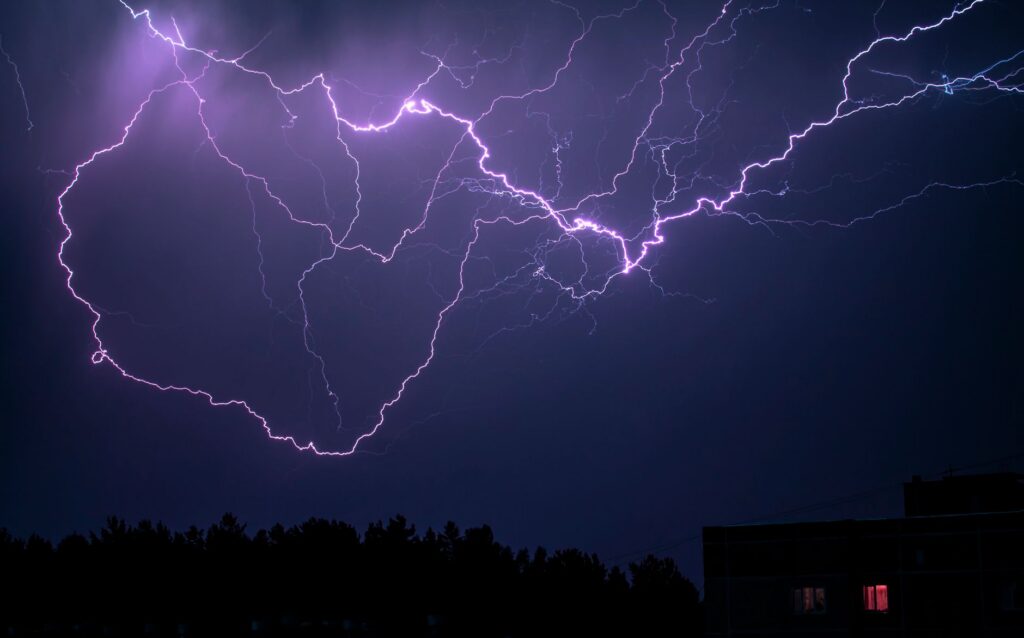
Atmospheric Enigmas: Luminous Phenomena and Transient Discharges
The atmosphere is a dynamic, highly charged system whose upper and lower boundaries remain challenging to study comprehensively. Among the most enduring atmospheric puzzles is ball lightning—a phenomenon characterized by spherical, luminous masses that appear during electrical storms. Accounts describe these plasmatic spheres as hovering, drifting horizontally above the ground, and occasionally passing through glass or solid barriers before silently dissipating or abruptly detonating.
While laboratory recreations using microwave radiation, silicon vapor, and high-voltage electrical arcs have produced short-lived luminous plasmoids, no unified theory fully explains the stability, longevity, and kinetic behavior of ball lightning observed under open sky conditions. Competing models suggest oxidation of vaporized nanoparticle networks, localized microwave cavities, or atmospheric antimatter interactions, yet empirical verification in natural settings remains elusive due to the phenomenon’s unpredictable and brief occurrence.

Higher above the troposphere, in the mesosphere and lower ionosphere, lies an entire class of Transient Luminous Events (TLEs). Discovered through photographic confirmation only in the late 20th century, these events include red sprites, blue jets, and elves. While broad dielectric breakdown mechanisms explain their general occurrence during severe convective thunderstorms, the precise microphysical triggers, chemical effects on upper atmosphere ozone balance, and magnetic couplings are still under active investigation by orbital observatories.
The Abyssal Frontier: Hydrodynamic Anomalies and Oceanic Deep Sounds
Covering more than seventy percent of Earth’s surface, the oceans represent an immense reservoir of unexplored terrain. The abyssal plains and hadal trenches experience hydrostatic pressures exceeding a thousand atmospheres, complete darkness, and near-freezing temperatures. In this extreme biome, acoustic tracking networks deployed during the late 20th and early 21st centuries have repeatedly recorded ultra-low-frequency sound signatures that defy straightforward classification.
While many deep-water acoustic emissions have subsequently been traced to cryogenic fractures in Antarctic ice sheets or submarine volcanic activity, several historical signatures exhibited harmonic resonance and spectral variations that closely resemble biological vocalisations, albeit at an amplitude far surpassing any cataloged marine mammal.
Beyond acoustics, deep-sea benthic exploration consistently uncovers biological ecosystems operating entirely independent of solar energy. The chemosynthetic communities surrounding hydrothermal vents and cold seeps demonstrate metabolic pathways based on hydrogen sulfide, methane, and metal reduction. However, the geographic distribution of isolated vent endemic fauna raises fundamental biogeographical questions: how fragile, benthic organisms traverse thousands of kilometers of hostile, nutrient-barren seabed to colonize new, ephemeral hydrothermal outlets remains one of marine biology’s most compelling mysteries.

Geological Dynamics: Cryptic Kinetic and Seismic Events
The solid earth beneath our feet is similarly prone to behaviors that challenge intuitive mechanics. In isolated environments like dry playa lake beds, the phenomenon of sailing stones puzzled geologists for generations. Heavy dolomite boulders moved across completely flat terrain, leaving linear and curved tracks across the mud. While time-lapse photography eventually revealed a delicate synergy of rare, paper-thin ice sheets, light thermal winds, and thawed mud surfaces driving specific movements, variations in friction mechanics and anomalous directional trajectories on different dry lakes continue to prompt refinement of physical friction models.
More volatile are earthquake lights (EQL), which manifest as atmospheric luminescence before or during seismic ruptures. Observed as diffuse glows, floating orbs, or column-shaped flashes near active faults, these luminous manifestations were historically dismissed as subjective anomalies. Modern geophysical models attribute them to triboluminescence, piezomagnetic effects, or mobile positive hole charge carriers (p-holes) generated when quartz-rich tectonic rocks undergo extreme mechanical stress. Nevertheless, the precise conditions required to transform mechanical strain into visible photons remain partially modeled and cannot yet be used reliably for short-term seismic early warning systems.

Biological Marvels: Collective Intelligence and Cryptic Navigation
Perhaps no realm of natural science presents more sophisticated puzzles than living systems. Biological coordination at scale presents profound questions about computation and sensory perception in nature. Flocking murmurations of European starlings, where tens of thousands of individuals maneuver in unison without centralized control or mid-air collisions, behave mathematically like critical systems near a phase transition. The velocity and orientation fluctuations propagate across the flock virtually without delay, faster than simple acoustic or visual reaction times would theoretically allow.
- Magnetoreception mechanisms: Diverse organisms, including sea turtles, migrating passerines, and specialized bacteria, possess remarkable navigational capabilities aligned with Earth’s geomagnetic field. Current models invoke either cryptochrome-based radical pair mechanisms in ocular tissue or localized biogenic magnetite crystals, yet deciphering how neural architectures translate microscopic quantum phenomena into macroscopic direction-finding remains unresolved.
- Coordinated synchrony: Firefly populations across Southeast Asia and the Great Smoky Mountains synchronize bioluminescent rhythmic flashing across miles of riverbanks with millisecond precision, pointing to sophisticated distributed nonlinear oscillators in simple biological neural networks.
- Long-distance migration fidelity: Pacific salmon, monarch butterflies, and Arctic terns complete multi-generational migrations over thousands of nautical miles, returning to precise natal tributaries or overwintering groves through complex multi-sensory integration that modern synthetic robotics cannot match.

The Scientific Value of Unresolved Phenomena
Acknowledging the limits of current scientific comprehension is not an admission of defeat; rather, it is the primary engine of intellectual progress. The mysteries of nature expose the boundaries of contemporary instrumentation, revealing gaps in mathematical models and forcing interdisciplinary synthesis across fields such as meteorology, condensed matter physics, marine ecology, and neuroscience.
As remote sensing technology, deep-submergence exploration vehicles, and quantum computing simulations continue to mature, humanity will gradually unlock the operational rules behind many of these terrestrial riddles. Yet, as each mystery is unraveled, deeper, more subtle questions inevitably emerge, preserving the natural world as an enduring landscape of discovery and intellectual humility.